Blood Records Sells Out Vinyl in 10 Minutes by Making It Weird
Blood Records sells limited-edition pressings—liquid-filled, powder-filled, swirled—that routinely sell out in 15 minutes, growing 30% a year on vinyl's 19-year sales boom.
By Amara Osei
4 min read
Updated
What's News
- Blood Records' $40, 3,000-copy vinyl edition of Sienna Spiro's Visitor sold out in 10 minutes; most of its drops sell out within 15 minutes.
- The company has grown 30% year over year since 2018, funds pressings of 250 to 30,000 albums through preorders, and has never taken outside investment.
- Overall vinyl sales rose 8.6% in 2025, the 19th consecutive year of growth; Discogs found 32% of 18-to-24-year-olds collect vinyl for its visual appeal.
A $40 vinyl edition of Sienna Spiro's debut album Visitor sold out in 10 minutes this July. Just 3,000 copies existed, each disc swirled with orange and black—deeply pigmented on some, nearly translucent on others—and each pressed by London-based Blood Records, a company that has turned limited-edition vinyl into a fast-moving scarcity business.
Since 2018, Blood Records has sold limited pressings from artists ranging from indie newcomers like Spiro to Olivia Rodrigo and Elton John. Today it drops new pressings every other day. Most sell out within 15 minutes. Founder and CEO Craig Evans says the business has grown 30% year over year since inception and is tracking to do the same in 2026.
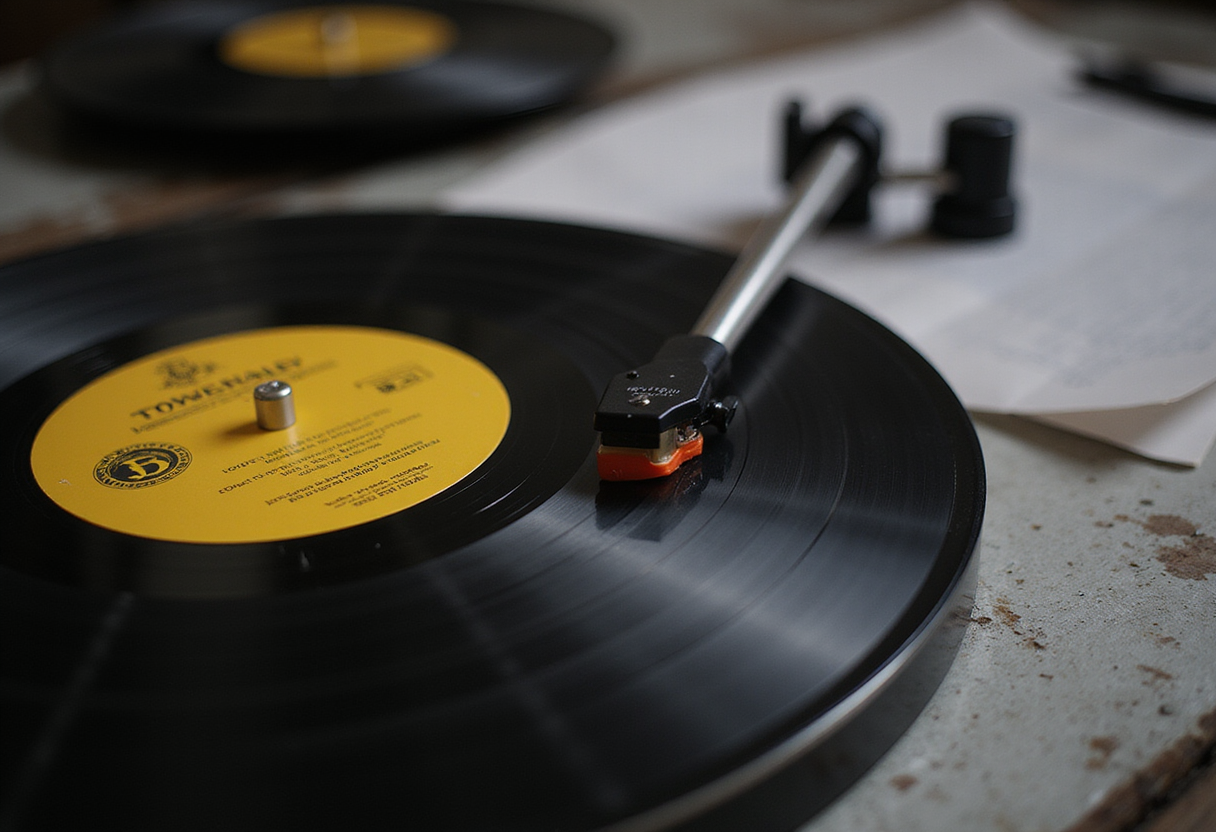
The company's edge is visual. As single-color vinyl has become routine, Blood Records produces discs with multicolored starbursts, swirls, and zoetrope images that appear to move as the record spins. Working with the Press On Vinyl plant in Northern England, which churns out roughly 100,000 discs per month, it has also developed machines that mass-produce filled vinyl. Under its Bad World imprint, it has pressed records containing powder (a cheeky white substance for the remix version of Charli XCX's Brat), liquid (coffee-colored, for a two-year anniversary pressing of Sabrina Carpenter's "Espresso"), and even hair, for Chappell Roan's single "The Subway."
The manufacturing is deliberately analog. To create the Spiro run, a worker at Press On Vinyl extruded a snake of black plastic, wrapped it around a puck of amber PVC heated to roughly 225 degrees Fahrenheit, then pressed them together with a master cutting under a hydraulic press. Translucent brown and black vinyl wrapped around the orange created a ripple effect.
The market backdrop is strong. Overall vinyl sales rose 8.6% in 2025, the 19th consecutive year of expansion for the format. Industry executives attribute the boom partly to streaming's flattening of the listening experience. "Listening on Spotify is the same as listening on Apple or Amazon," says Gary Kelly, general manager and chief revenue officer of Interscope Capitol, which has partnered with Blood Records for limited-run vinyl and sells its own special editions through the Interscope Vinyl Collective. "People don't just want access to music. Ownership is still important to them."
But owning the same black record as everyone else holds less appeal, particularly for younger fans. Discogs, the online marketplace for records, cassettes, and CDs, found in a recent user survey that 32% of 18-to-24-year-olds collect vinyl for its visual appeal. "I've often thought that records are the most perfect form of kinetic art," says Jen Agosta, Discogs's vice president of brand and product design.
That demographic shift is central to Blood Records' model. Evans says the company initially over-indexed with middle-aged men; its core customers are now 14-to-25-year-olds. The company keeps prices accessible for them, with most albums priced between $40 and $60 depending on design complexity. Blood Records has never taken outside investment and funds each pressing—runs range from 250 to 30,000 albums—entirely through preorders.
"We learned early on that our audience didn't want things that were standard," Evans says. "We want people to have a visceral reaction when they see our records for the first time. The worst thing for me is when someone buys a record and they open it and go, 'Oh, it's an orange LP.'"
Sustainability also plays a role in production. Press On Vinyl shreds and mixes the plastic trimmings from pressed records, known as flash, to create "eco-mix" discs with random color combinations.
Evans plans to keep what he calls "pushing the boundaries." Blood Records is already experimenting with pressing 3D-printed parts and flowers into albums as it works with musicians to realize their visions for limited-edition discs. "Artists are used to going to their record label and being told, 'There's no way that's going to happen,'" he says. "They come to us and we say, 'Yeah, we can probably do that. We just need to find a way.'" That willingness to engineer the impossible, rather than the music itself, is what Blood Records is betting will keep physical format sales climbing into a third decade of growth.
Original: blood-records.co.uk
More from Amara Osei
Show full bio
Senior reporter covering consumer brands and retail at Business Bearings.
320 articles