Construction Robotics Funding Hits $1.6B, Tripling Previous Peak
Construction robotics startups raised $1.6B through Oct. 29, tripling 2021's $506M peak. But three companies — Bedrock, Icon and Gravis — account for 83% of the sector's record haul.
By Olivia Hart
4 min read
What's News
- Construction robotics companies raised about $1.6 billion through Oct. 29, more than 4x the $389 million in all of 2025.
- Bedrock Robotics raised $870 million across two rounds and was valued at $4.1 billion in its October Series C.
- Bedrock, Icon and Gravis together accounted for about 83% of the sector's total funding.
- Procore closed its roughly $845 million cash acquisition of DroneDeploy in September.
- EquipmentShare raised about $747 million in its January IPO, selling 30.5 million shares at $24.50 each.
Construction and robotics startups have raised about $1.6 billion this year through Oct. 29 — more than 4x the $389 million recorded in all of 2025 — according to Crunchbase data. The total triples the sector's previous high of $506 million, set in 2021, in a dataset going back to 2018.
With roughly two months left in the year, funding has already surpassed the previous five years combined. Yet the surge reflects much bigger bets rather than more deals: the sector has recorded 30 rounds this year, compared with 28 in all of 2025. In plain terms, investors are concentrating capital in a handful of companies rather than spreading it widely.
Why are investors rushing in?
Contractors cannot hire enough skilled workers, and the AI-driven data center building boom is intensifying that competition for labor. Labor shortages remain the biggest cause of project delays, according to a recent survey by the Associated General Contractors of America and NCCER.
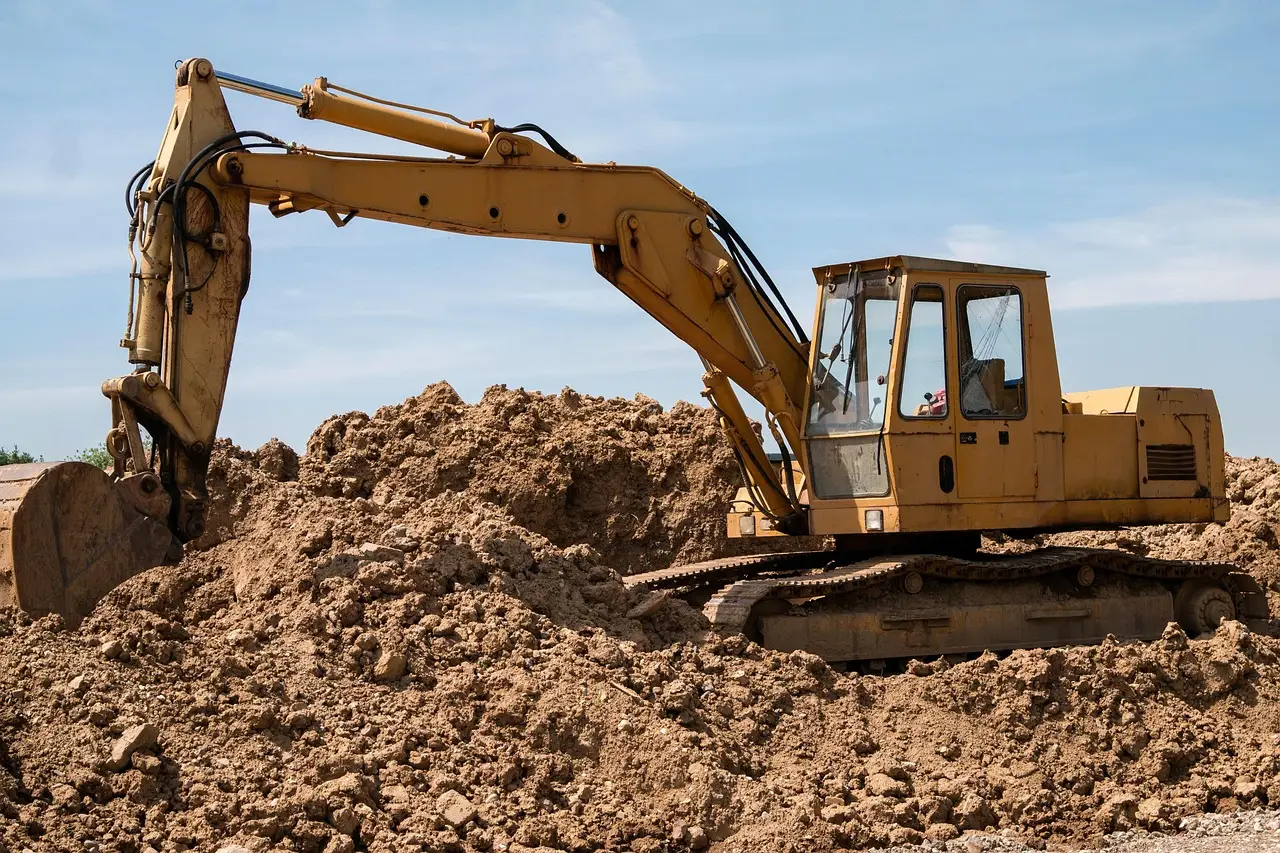
Some of the technology is already working on job sites. San Francisco-based Bedrock Robotics, this year's largest funding recipient in the sector, said in August that excavators equipped with its autonomous systems were operating without human operators on commercial projects in Texas and Nevada.
What are the notable deals?
Bedrock Robotics raised $870 million across two rounds — more than half of the sector's total. The 2-year-old company, which converts existing heavy construction equipment into autonomous machines, announced a $600 million Series C in October led by CapitalG and Emergence Capital. That round valued Bedrock at $4.1 billion, following a $270 million Series B in February led by CapitalG and Valor Atreides AI Fund.
Austin-based Icon, which builds homes using 3D printing, raised two rounds in 2026 totaling $265 million in listed funding: a $200 million Series D in October led by Baillie Gifford and BlackRock, and a $65 million Series C in March. Icon has raised nearly $800 million since its 2017 inception.
Zurich-based Gravis Robotics, which retrofits construction machinery for autonomous earthmoving and excavation, raised $200 million in a SoftBank-led Series A in August that valued the startup at $1 billion post-money.
Smaller rounds targeted homebuilding and specific tasks:
- Reframe Systems, Andover, Massachusetts, which uses AI, robotics and automation to build homes, raised $40 million in August led by Energy Impact Partners.
- Amsterdam-based Monumental, developer of robots for on-site masonry, secured a $32 million Series B in July led by Khosla Ventures.
- Las Vegas-based August Robotics raised a $30 million Series B in May led by Big Pi Ventures.
- Belmont, California-based Gritt, which builds AI-powered robotic systems for infrastructure construction, raised a $26 million Series A in July led by Obvious Ventures.
- London-based All3, which uses AI and robotics to design, manufacture and assemble buildings, raised $25 million in April led by RTP Global.
- San Francisco's Origin, developing a general-purpose construction robot, secured $20 million in October led by Accel and Zacua Ventures.
Can Icon deliver at volume?
Icon says it has built more than 270 homes and structures across five states and two countries, and that it is on pace to grow revenue 4x this year. A company spokesperson said its technology has moved from an experiment to "an in-the-field system that can build faster, with fewer people, less waste, greater design freedom and lower cost."
"Early on, the question was whether a robotic construction system could build a good home," the spokesperson wrote via email. "Today, the question is whether a company can deliver at volume, across geographies and project types, and improve its economics with each build. That's only answerable with time in the field."
How are investors exiting?
Acquisitions have dominated exit activity this year. Procore, based in Carpinteria, California, announced an approximately $845 million cash acquisition of San Francisco's DroneDeploy in July and closed it in September. DroneDeploy combines imagery from drones, ground robots and cameras to track construction progress and site conditions.
Other buyers focused on automating the work itself. In January, Oshkosh subsidiary JLG Industries acquired the core technology of Canvas, a San Francisco startup known for robotic drywall finishing. In March, HavocAI completed its acquisition of Palo Alto-based Teleo, whose technology lets operators remotely oversee heavy machinery.
In April, San Francisco-based Pronto confirmed that Atoms, Travis Kalanick's physical AI company, had completed its acquisition for an undisclosed price. Pronto's autonomous haulage technology now reportedly underpins Atoms' mining division.
No known IPOs have come from companies focused specifically on construction robotics. The broader construction technology market did produce one sizable debut: Columbia, Missouri-based EquipmentShare raised approximately $747 million in gross proceeds in its January IPO, selling 30.5 million shares at $24.50 each.
What does the concentration mean?
For all the variety among funded companies, this year's surge rests largely on three names. Bedrock, Icon and Gravis together accounted for more than $1.3 billion — about 83% of the roughly $1.6 billion raised. Investors are placing unusually large bets on a small group of companies, even as acquisitions give others a route into larger businesses already serving construction customers.
Original: agc.org
More from Olivia Hart
Show full bio
Staff writer covering people, launches and day-to-day practice in entrepreneurship, startups and venture funding at Business Bearings.
1,533 articles