Copa Jet and UPS Boeing 767 Collide on Miami Taxiway as FAA Investigates
A Copa 737 clipped a UPS Boeing 767 at Miami International just weeks after a fatal Amazon crash, as the FAA probes a string of air traffic control failures.
By Olivia Hart
3 min read
What's News
- A Copa Boeing 737 carrying 166 passengers and six crew clipped a UPS Boeing 767 at Miami International around 9 p.m. Saturday
- The FAA is investigating; it follows September's Amazon cargo crash in Miami that killed five people on the ground
- The collision came a day after a data overload caused the longest U.S. nationwide grounding in over two decades, canceling more than 6,600 flights
- Transportation Secretary Sean Duffy will ask Congress Monday for $50 billion in emergency air traffic control funding
- Miami is the busiest U.S. airport for total freight, with almost 3.5 million tons of shipments in 2025
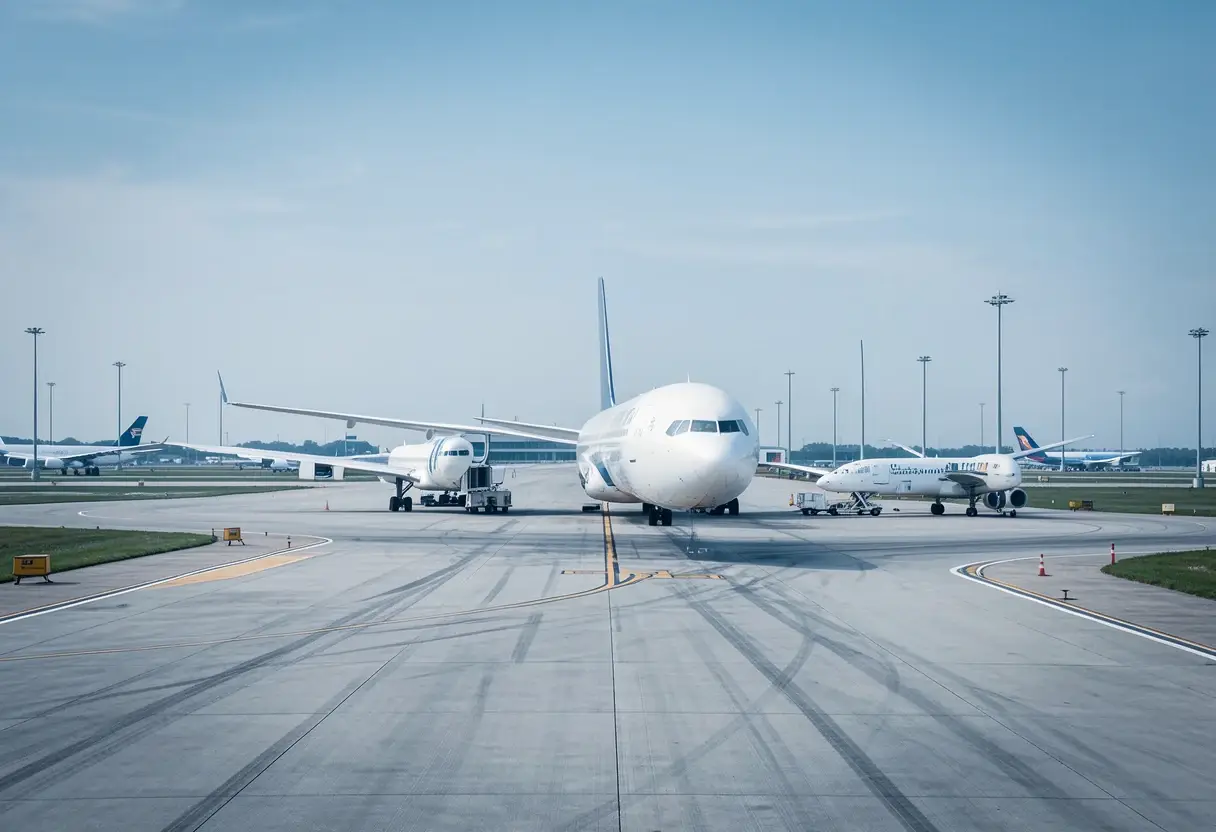
A Copa Airlines Boeing 737 clipped a UPS Boeing 767 with its wingtip while taxiing at Miami International Airport on Saturday night, the Federal Aviation Administration said — the third serious aviation incident to hit U.S. skies in under three months.
The collision occurred around 9 p.m. local time. Controllers had instructed the UPS crew, bound for Bogota, to give way to Copa flight 427 as it taxied toward its gate, according to the FAA and audio of communications between controllers and pilots. The cargo aircraft nonetheless moved into the passenger jet's path, and the Copa wingtip struck the 767's nose.
The UPS pilot conceded the error on the radio. "We went too far and then he clipped us with the wing," the pilot told the controller after being asked whether the aircraft had hit the Copa flight. The FAA said it is investigating the collision.
Copa said its aircraft, arriving from Panama City, carried 166 passengers and six crew. Paramedics evaluated two passengers for apparent minor injuries. UPS said its two-person crew is safe. Both airlines said they will cooperate with authorities.
What does the crash follow?
The Miami taxiway strike lands at a moment of unusual strain for U.S. air traffic control. In September, an Amazon.com Inc. cargo plane overran a runway at the same Miami airport, killing five people on the ground.
A preliminary investigation report found a controller cleared the aircraft to land but failed to provide wind information before the crash. FAA procedures require controllers to relay wind direction and velocity whenever a tailwind exists. Whether that procedural gap has since been closed, the report does not say.
Saturday's collision also came one day after a technical failure triggered the longest nationwide grounding in more than two decades. Officials blamed a data overload that crippled air traffic control communications and radar.
How bad was the disruption?
The numbers from aviation data firm FlightAware quantify the fallout:
- More than 6,600 flights into, out of, and within the U.S. were canceled on Saturday — roughly one in twenty of the nation's daily departures
- Another 8,350 trips were delayed
- As of 12:40 a.m. New York time Sunday, another 1,100 flights had been canceled and more than 600 delayed
Transportation Secretary Sean Duffy said he will formally ask Congress on Monday to authorize $50 billion in emergency funding to overhaul the U.S. air traffic control system. That figure equals roughly $150 per U.S. household. Duffy did not specify a timeline for the upgrades or how the money would be allocated.
Why does Miami matter?
Miami International is the busiest airport in the United States for total freight, handling almost 3.5 million tons of shipments in 2025, according to the airport. It serves as the primary cargo gateway to Latin America and the Caribbean, which makes any operational disruption there commercially significant well beyond passenger travel.
Both aircraft in Saturday's incident — a passenger 737 and a cargo 767 — reflect that dual role. The airport moves cargo and travelers through the same taxiways, under the same controller workload, that regulators are now scrutinizing.
What happens next?
Three federal inquiries now converge on the same question: whether the U.S. air traffic control system, managing both the world's largest passenger market and its biggest freight hub, has outgrown its infrastructure.
The FAA investigation into the Miami collision, the final report on the Amazon crash, and Duffy's $50 billion funding request to Congress will each test that proposition in the coming months. None of them, on the record so far, promises a near-term fix.
Source: insurancejournal.com
More from Olivia Hart
Show full bio
Staff writer covering people, launches and day-to-day practice in entrepreneurship, startups and venture funding at Business Bearings.
2,205 articles