Exowatt’s P3 Gen 2 targets AI data centers with a 2.4 GW plan
Exowatt redesigned P3 for AI data centers, added a 1 MW validation block and outlined a 2.4 GW West Texas data-center project built around renewable power.
By Olivia Hart
4 min read
What's News
- Exowatt announced P3 Gen 2 on November 12, 2026.
- P3 Gen 2 reflects P3 Gen 1 deployment experience and more than 7,000 hours of testing.
- Exobloc is a standardized 1 MW validation block for testing P3 alongside other energy resources.
- Athena is a planned 2.4 GW AI data-center development in West Texas.
- Athena’s proposed energy mix includes more than 800 MW of solar, 2.4 GWh of storage and 80% renewable energy.
By Olivia Hart
Exowatt plans a 2.4 GW AI data center in West Texas, with a proposed energy mix designed to run on 80% renewable energy. The project, named Athena, remains a development plan rather than an operating facility.
On November 12, 2026, Exowatt announced P3 Gen 2, a redesign of its modular solar-thermal system for utility projects and large energy users, including AI data centers. The company also introduced Exobloc, a standardized 1 MW validation block, and set out the details of Athena.
Exowatt says P3 Gen 2 incorporates lessons from deploying P3 Gen 1 and more than 7,000 hours of testing. The revised architecture aims to improve performance, simplify installation and maintenance, and make manufacturing easier. Exowatt also says a higher capacity factor would increase the system’s firm-power output.
Exowatt CEO and co-founder Hannan Happi said: “AI is creating demand for power faster than the grid can be built. We believe the answer is to productize energy infrastructure: make it standardized, repeatable and less expensive with scale.” The statement positions Gen 2 within Exowatt’s broader manufacturing and deployment strategy for AI power infrastructure.
What changes in P3 Gen 2?
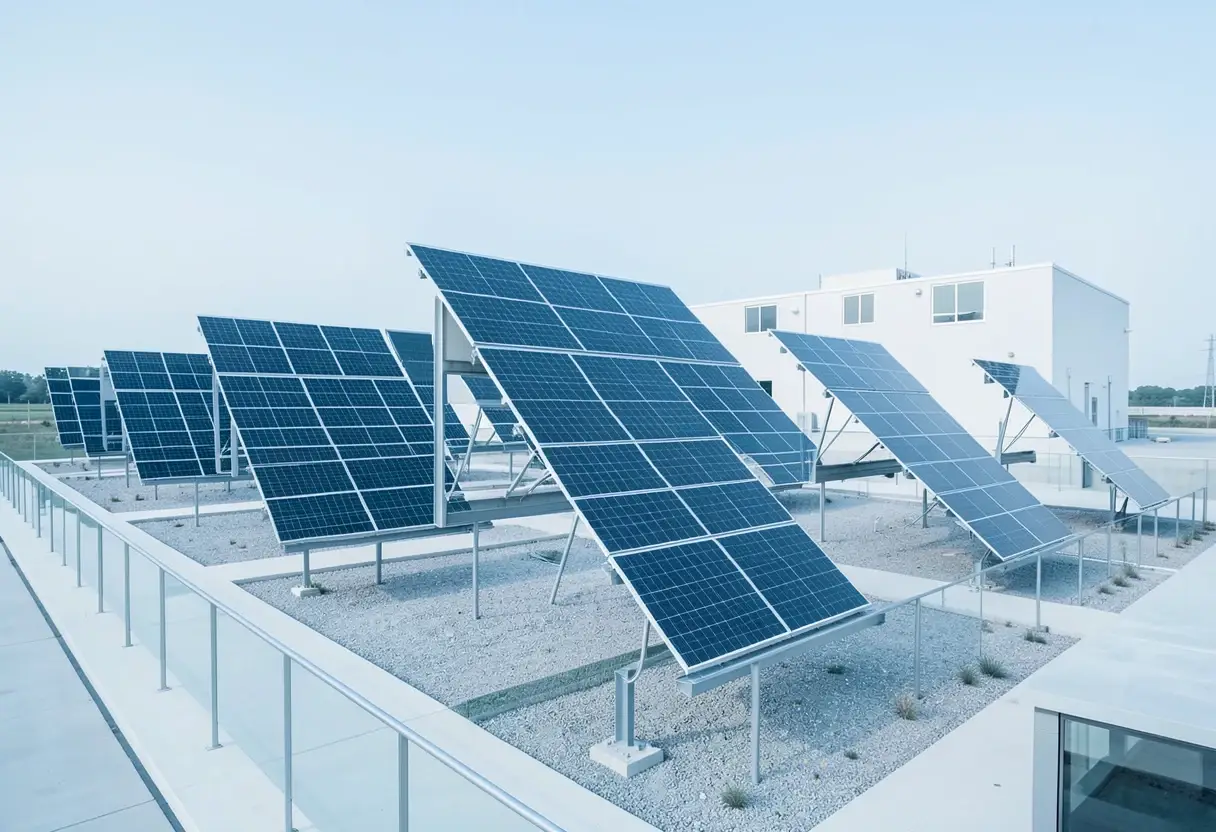
P3 collects sunlight as heat, holds it in long-duration thermal storage and converts it into electricity when needed. Exowatt integrates solar collection, storage and generation into a standardized architecture that it says can be manufactured at scale and assembled into larger systems to match customer demand.
Exowatt calls this method “neo-thermal.” The company uses the term to distinguish P3’s solar heat input and storage-based dispatch from conventional thermal generation. The announcement supplies no capacity-factor value, unit cost or third-party benchmark with which to test those claims.
Takeaway: Gen 2 standardizes the product, but the announcement leaves its cost and performance advantages unproven.
How will Exobloc validate P3?
Exobloc gives customers a standardized 1 MW block for testing P3’s performance and operation alongside other energy resources in real-world conditions before they pursue larger installations. Exowatt says the validation process should reduce deployment risk and accelerate scale-up.
The announcement does not specify how many blocks Exowatt plans to deploy, their cost or the customers involved. A 1 MW test can expose operating issues before larger installations, but it cannot settle the economics of Athena’s proposed 2.4 GW scale.
Takeaway: Exobloc is a risk-control step, not yet proof that a utility-scale P3 installation will perform as intended.
How will the software coordinate generation?
Exowatt is developing an AI-powered energy management system to coordinate P3 and other generation and storage resources as one dispatchable power plant. The design combines real-time monitoring and control, forecasting and automated dispatch, so the software can adjust generation, storage and delivery as conditions change.
Critical controls would run on site under an edge-first architecture, independent of cloud connectivity. Industry-standard protocols would support integration with existing energy infrastructure. The design pairs local continuity for essential controls with coordination across a changing mix of power resources.
Exowatt’s announcement did not disclose a software name, deployment schedule, performance target or customer deployment. Those omissions leave the system’s commercial readiness unmeasured.
Takeaway: Local control addresses connectivity risk, but the software still needs field evidence before it can dispatch a large mixed power fleet.
What does Athena require beyond a power plan?
The three announcements connect as one scale-up strategy: redesign the hardware, validate it in standardized blocks and coordinate it with other resources through software. Athena provides a specific project for that approach, although its energy mix and grid connection remain plans.
Athena is the first site for ExoRise, Exowatt’s data-center development arm launched in January 2026. The project belongs to the company’s Frontier Land strategy, which targets AI infrastructure in regions with abundant land and renewable resources and the potential to build power at scale.
Exowatt says Athena is designed to run on 80% renewable energy. Its proposed mix combines more than 800 MW of on-site and adjacent solar with high-capacity-factor wind and P3 generation. The plan also includes 2.4 GWh of storage.
A separate connection to the ERCOT grid is planned as part of Batch Zero, with 1,200 MW across two phases. The announcement gives no construction timetable, financing terms, capital cost or tenant commitments, and does not say when either the renewable mix or grid link will operate.
Takeaway: The next proof point is measured performance from Exobloc; without it, Athena remains a plan rather than a proven deployment.
Source: unite.ai
More from Olivia Hart
Show full bio
Staff writer covering people, launches and day-to-day practice in entrepreneurship, startups and venture funding at Business Bearings.
2,006 articles