Flock Safety's Drone Pivot Targets Half Its Revenue as ALPR Backlash Bites
Flock Safety expects drones to drive nearly half of its future revenue. The $8.4 billion surveillance firm is making that bet as license-plate-reader bans mount across U.S. cities.
By Olivia Hart
4 min read
Updated
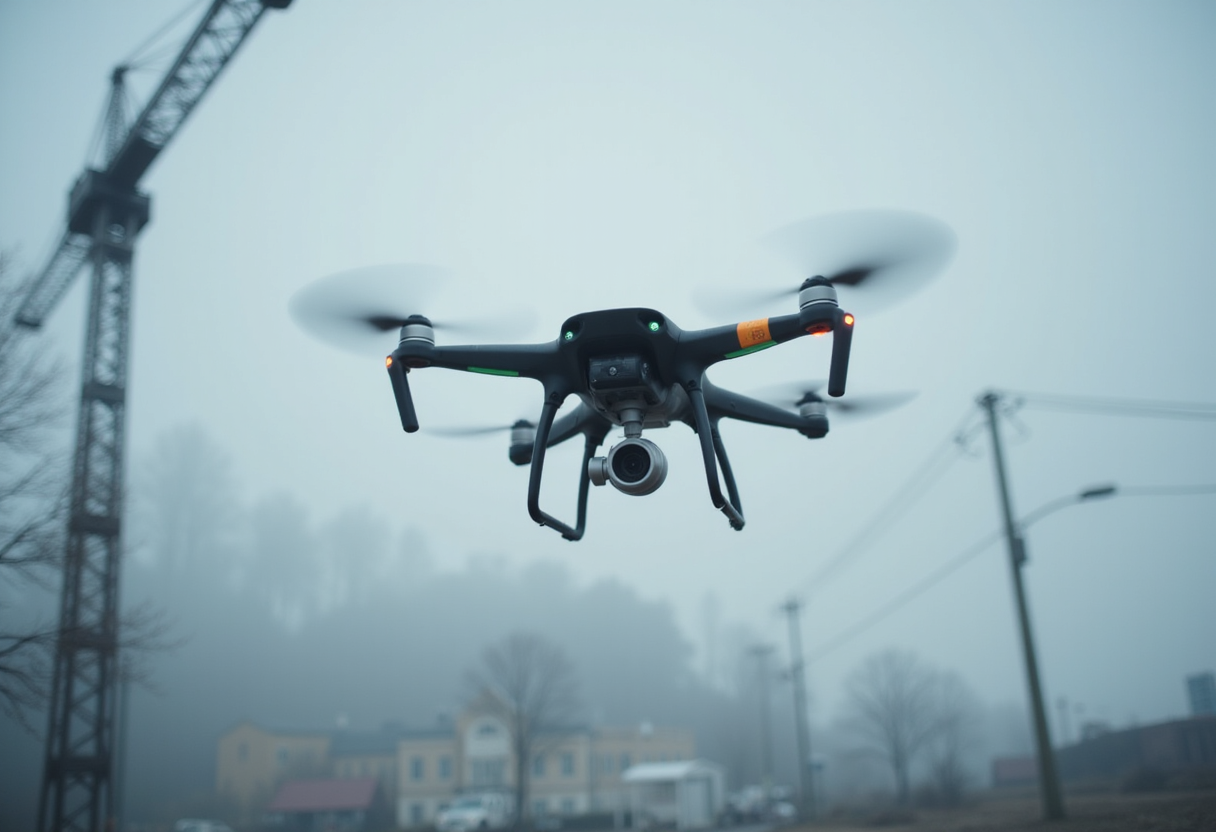
What's News
- Flock Safety is valued at $8.4 billion, founded in 2017
- Company has roughly 175 drone-as-first-responder customers across the U.S.
- FAA approves about 125 new DFR programs each month, per Droneresponders
- Alpha drone travels at 60 mph with 45-minute flight time per charge
- San Francisco drones responded to 4,000 incidents between March 2024 and August 4, 2026, per SFPD
Flock Safety expects drones to drive nearly half of its future revenue, CEO Garrett Langley said on the All-In Podcast in September. The $8.4 billion Atlanta-based firm is making that bet while its license-plate-reader cameras face bans in cities across the country.
Langley called drones the company's "fastest-growing business unit right now." Flock now counts roughly 175 drone-as-first-responder customers among police departments, a sliver of the roughly 2,000 U.S. agencies that already fly drones to 911 calls.
Workforce shortages and the desire to skip high-speed car chases have made aerial tools attractive. Retired Chief Charles L. Werner, founder of the Droneresponders industry group, said the FAA approves about 125 new drone-as-first-responder programs each month.
Flock entered the market by acquiring Aerodome in 2024. Its new Alpha drone travels at 60 mph and flies 45 minutes per charge. A Georgia factory is planned to open by 2027, a domestic play that matters after President Donald Trump banned Chinese drone exports in December 2025.
How big is the surveillance backlash?
Cities have painted over, blacked out, and bagged Flock's automated license-plate readers. Several jurisdictions have banned the cameras outright, contributing to the several hundred layoffs Reuters reported in October.
The pivot to drones draws its own critics. "The public conversation hasn't caught up to how much of a problem drones are at this point," says Beryl Lipton, senior investigative researcher at the Electronic Frontier Foundation. "There are very high-resolution cameras that can see thousands of feet away and are designed to not be seen by the people on the street."
Takeaway: Flock is swapping one surveillance controversy for another, betting speed-to-market outruns the rule-makers.
Why is San Francisco the test case?
Voters approved Proposition E in 2024, unlocking real-time crime centers and a fleet now numbering nearly 100 drones. From March 2024 through August 4, 2026, San Francisco's drone-as-first-responder program fielded 4,000 incidents, aided more than 1,550 cases, and contributed to 655 arrests, per SFPD data. In 2026 alone, drones accompanied 40 search warrants and more than 70 chases.
District Attorney Brooke Jenkins credits the technology with sharp drops in car crime, though she concedes no formal causal study exists. A preliminary, un-peer-reviewed review of more than 200 departments suggested drones correlate with lower crime rates—evidence Flock leans on but skeptics dismiss.
Flock public safety manager Paris Lewbel argues the systems are restrained by design. An officer must press a button to launch, and Flock drones cannot run automatic license-plate scans, he says. Critics counter that an officer reading a plate on a drone feed can simply enter it into an ALPR database.
"The technology really speaks for itself," Lewbel told Fast Company. "If you speak to law enforcement agencies that have started to deploy drones as a first responder, they're seeing significant positive impact."
Takeaway: San Francisco's nearly 100-drone fleet is the proof-of-concept Flock wants every other city to copy.
Do drones rewrite the rules of privacy?
Constitutional questions remain unresolved. Jenkins argues drones see only what a beat cop could see in public, requiring no warrant. "You have a constitutional expectation of privacy when you talk on the phone," she said. "When you are in public, you do not."
Bryan Cox, head of police accountability at the San Francisco Public Defender's Office, disagrees. He warns that constant aerial surveillance chills freedom of association. Federal appellate courts have begun weighing whether retrospective Flock searches violate the Fourth Amendment, per Courthouse News; no controlling ruling exists.
Flock defaults to retaining drone video for seven days. San Francisco's draft policy would shorten retention to 30 days, down from 12 months. But flight logs and re-uploaded evidence files can outlast the raw footage, Cox and others note, meaning deletion may be largely cosmetic.
"This is the exact sort of mission creep that I think we kind of anticipated was going to happen," Lipton said.
Jenkins pushes back on restrictions. "We can't go back to that place out of fear," she said. "You do what it takes to put guardrails in. You don't throw out the baby with the bathwater because it's dirty, right?"
Takeaway: Without a court ruling, the privacy-versus-policing trade-off will be decided city by city—and Flock's revenue will rise with every decision that tips toward the drones.
Original: newsweek.com
More from Olivia Hart
Show full bio
Staff writer covering people, launches and day-to-day practice in entrepreneurship, startups and venture funding at Business Bearings.
719 articles