Sanders Bill Would Ban Federal Use of Flock's License Plate Cameras
Sanders' Ban Flock Act would bar federal agencies from using ALPRs, cut grants to non-compliant states, and cap data retention at 48 hours.
By Grace Kim
2 min read
Updated
What's News
- Sanders introduced the Ban Flock Act on Friday, barring federal agencies from using any ALPR systems or their data.
- Flock runs more than 120,000 cameras and processes over 20 billion vehicle reads monthly, according to the company and Sanders.
- CEO Garrett Langley cut default data retention from 30 days to 7 in August amid contract cancellations.
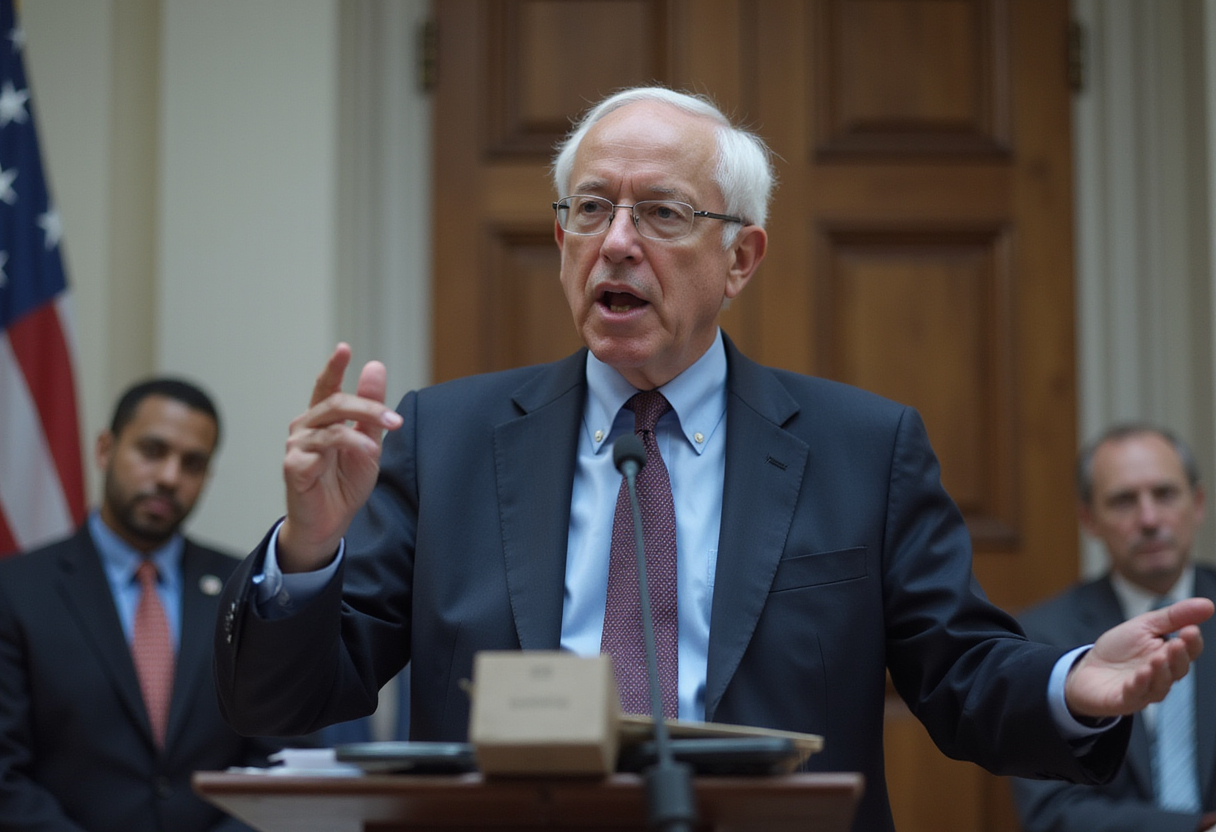
Senator Bernie Sanders wants to pull the federal government out of the license plate surveillance business. On Friday, the Vermont Democrat introduced the Ban Flock Act, legislation that would bar federal agencies from using automatic license plate readers — or from tapping into data collected by readers run by local police departments and private companies.
Despite its title, the bill never names Flock. It covers any and all ALPR systems.
The legislation is narrow in its carve-outs. It permits license plate reader use only for toll collection and for purposes Congress approves in future legislation. Any such future approvals would have to cap data retention at no longer than 48 hours.
The bill carries financial teeth for state and local governments. Starting the first fiscal year after enactment, those governments would lose grants from five federal departments — including the Justice Department and the Department of Homeland Security — unless they ban the technology outright. Like most bills, this one faces long odds in Congress.
The measure also creates enforcement channels. Americans could sue the federal government over violations, and state attorneys general would have authority to enforce the law.
Sanders frames the target as an industry giant. Flock is the largest ALPR vendor in the U.S., according to the senator, with more than 120,000 cameras deployed. The company said in a February blog post that its network processes more than 20 billion vehicle reads each month.
Flock has been tightening its own rules as pressure builds. Communities are protesting the product, suspending its use, and — at an escalating rate — canceling their contracts. In August, CEO Garrett Langley announced a new default data retention period of seven days, down from 30. Langley had previously said that how police use the cameras is up to local agencies.
The company also now requires customers to use an audit tool that locks officers out of the platform pending review when it flags unusual searches. The change follows one of the highest-profile cases of an officer abusing Flock's system: a former Milwaukee officer pleaded guilty to misconduct after searching for his then-partner and her ex 179 times, listing the reason as "investigation."
More changes may be coming. During a recent podcast interview, investor Jason Calacanis suggested a "double-key" system requiring two people to approve a search. Langley said the idea is "on the whiteboard."
Representative Alexandria Ocasio-Cortez of New York and Senator Jeff Merkley of Oregon are co-sponsors of the bill.
The political spotlight on Flock is unlikely to dim soon. Langley is scheduled to appear at TechCrunch's Disrupt event, running October 13–15 in downtown San Francisco, where he will face questions about the company's practices — and its growing list of critics.
Original: sanders.senate.gov
More from Grace Kim
Show full bio
Market editor covering industry trends and analytics at Business Bearings.
424 articles