Florida's $250,000 Tax Break Saves Billionaires About $2,000 a Year
Florida's expanded homestead exemption cuts a $50 million mansion's tax bill by roughly $2,000. The real money, and the real risk, sits in second homes and local budgets.
By Olivia Hart
4 min read
What's News
- Florida's Amendment 3 passed November election with 62% of the vote, raising the homestead exemption from $50,000 to $250,000 by 2028.
- A $50 million homestead saves about $2,000 a year; state economists project local governments lose $11.86 billion annually.
- The amendment cuts the annual cap on non-homestead property taxable value growth from 10% to 5%.
- Newcomers not resident by Dec. 31 wait five years for the full exemption, forgoing roughly $8,400 in savings.
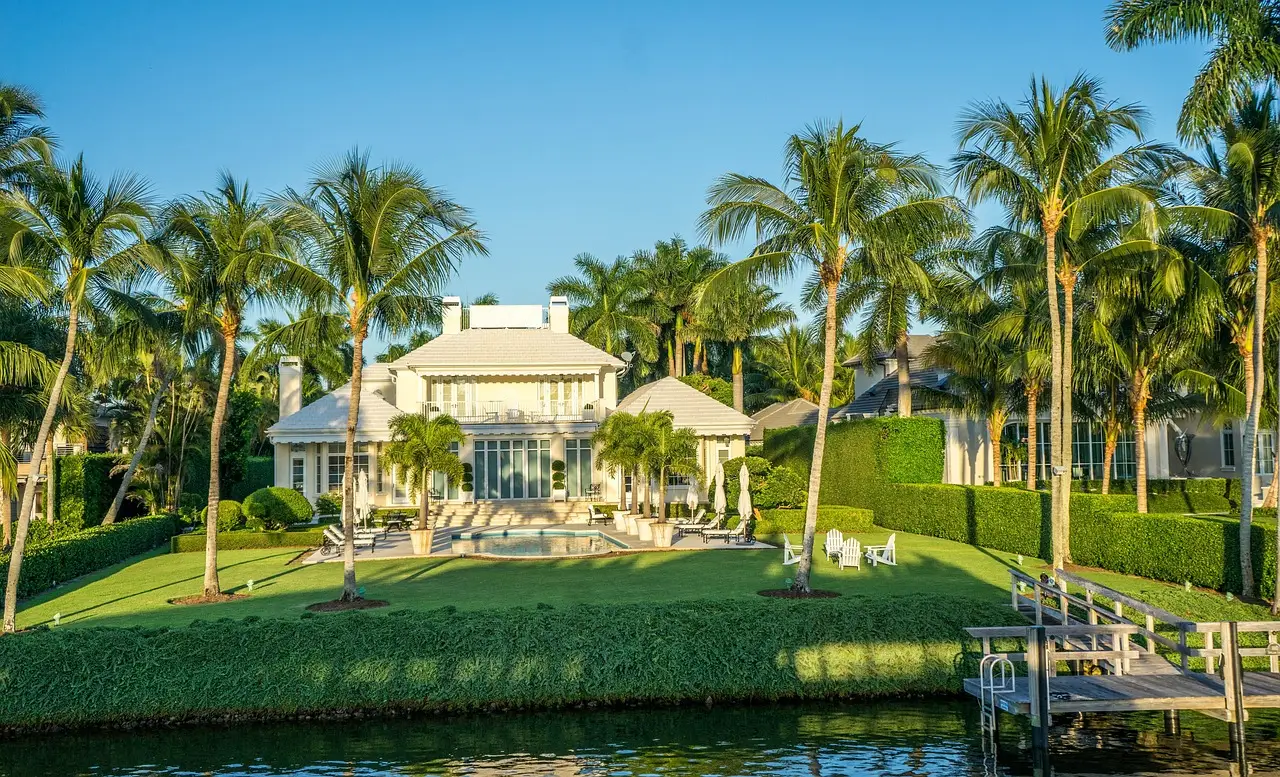
Florida's newly approved $250,000 homestead exemption will cut the annual property tax bill on a $50 million mansion by roughly $2,000 — a rounding error for the billionaires who moved to Miami, but a genuine break for mid-market homeowners.
Voters passed Amendment 3 on Tuesday with 62% of the vote, according to the Associated Press. The measure raises the homestead exemption on non-school property taxes from $50,000 to $150,000 in 2027 and to $250,000 in 2028. Because the exemption is a flat dollar amount, its headline benefit barely registers for the ultrawealthy who turned South Florida into one of the country's richest enclaves.
The list of recent transplants is short and familiar. Citadel CEO Ken Griffin moved his firm from Chicago to Miami. Amazon founder Jeff Bezos relocated in 2023 and bought a $237 million compound on Indian Creek, the island nicknamed "Billionaire Bunker." Bezos is also reportedly buying a $69.5 million oceanfront estate in nearby Golden Beach.
What does the exemption actually save?
Raul Gastesi, a real estate attorney and cofounder of Miami law firm Gastesi Lopez Mestre & Cobiella, ran the numbers at the statewide average non-school tax rate. A home assessed at $350,000 would see its local services tax bill fall from about $3,135 to about $1,050 — roughly $2,085 a year in savings once the exemption is fully in place.
A $50 million homestead would fall from about $524,000 to about $522,000.
"For the typical family it is real money," Gastesi said. "For the mansion owner, it is a rounding error."
The relief concentrates in the middle of the market. By 2028, a homeowner with a $400,000 house will see much of the portion of their tax bill that funds cities, counties and local services disappear, Michael Ligon, a strategic capital investor with The Ligon Group in Miami, told Fortune.
"Proportionally, this is middle-class relief wearing a luxury headline," Ligon said.
Is the break moving billionaire decisions?
No, according to the brokers who serve them. Michael Martirena, a South Florida luxury real estate advisor, said the change is not driving his clients' choices.
"Someone buying a $20 million or $50 million home in Miami is coming for no state income tax, the lifestyle, and the business climate," Martirena said. "A few thousand dollars a year, and a five-year wait for the full exemption does not change that math. Where it does register is with clients who hold several properties."
That five-year wait applies to anyone who is not a permanent Florida resident by Dec. 31. They start at the current $50,000 exemption and do not reach the full amount until their fifth year. Gastesi estimated the delay costs about $8,400 in forgone savings — unlikely to sway the next billionaire weighing a move.
"Amendment 3 may influence timing, but likely not destination," Abigail Hall, an economics professor at the University of Tampa, told Fortune.
Where is the real money — and the risk?
For owners of multiple Florida properties, the more consequential change is quieter: Amendment 3 cuts the annual cap on taxable value growth for second homes, rentals and other non-homestead properties from 10% to 5%. In a market where values rise 8% a year, Gastesi estimated, that saves the owner of a $50 million second home about $15,750 in the first year and roughly $280,000 over five years.
Local governments still have to cover the cut. State economists estimate cities, counties and special districts will eventually lose $11.86 billion a year, and the amendment provides no new state money to replace it. Miami-Dade County alone estimated it could lose roughly $385 million in the first year.
"There is not a reasonable way for local and municipal governments to fully close these gaps," Hall said.
If they raise rates instead, an increase of just $1 per $1,000 of taxable value would cost the owner of a $50 million homestead about $49,750 a year, according to Gastesi's calculations — wiping out the exemption's savings many times over.
"Homeowners should read their tax bills closely next year, because the savings on one line may come back on another," Gastesi said.
The takeaway in plain words: Florida's marquee tax cut delivers real relief to middle-market homeowners while leaving billionaire balance sheets essentially untouched — and it hands local governments a funding gap they will have to fill somehow.
Original: floridataxwatch.org
More from Olivia Hart
Show full bio
Staff writer covering people, launches and day-to-day practice in entrepreneurship, startups and venture funding at Business Bearings.
1,528 articles