From $12 an Hour to $10K Franchise: Brandon Hurst's Chick-fil-A Rise
Brandon J. Hurst paid Chick-fil-A's $10,000 fee at 26 and now runs two of its highest-grossing Brooklyn restaurants — sales he says are "well north" of the $9.2 million chain average.
By Olivia Hart
4 min read
What's News
- Brandon J. Hurst became a Chick-fil-A operator at age 26 in April 2015, opening his first restaurant in downtown Baltimore.
- Chick-fil-A's franchise fee has been $10,000 for 50 years; roughly 100,000 annual applicants compete for about 200 spots (0.2%).
- Operators typically earn $200,000–$400,000 a year from profit-sharing, with top performers exceeding $500,000, but build no equity.
- Chick-fil-A stand-alone restaurants averaged nearly $9.2 million in sales in 2025; Hurst says his two Brooklyn locations are 'well north' of that.
- Hurst opened his second Brooklyn restaurant in Clinton Hill in November 2024; his first, near Barclays Center, opened in 2019.
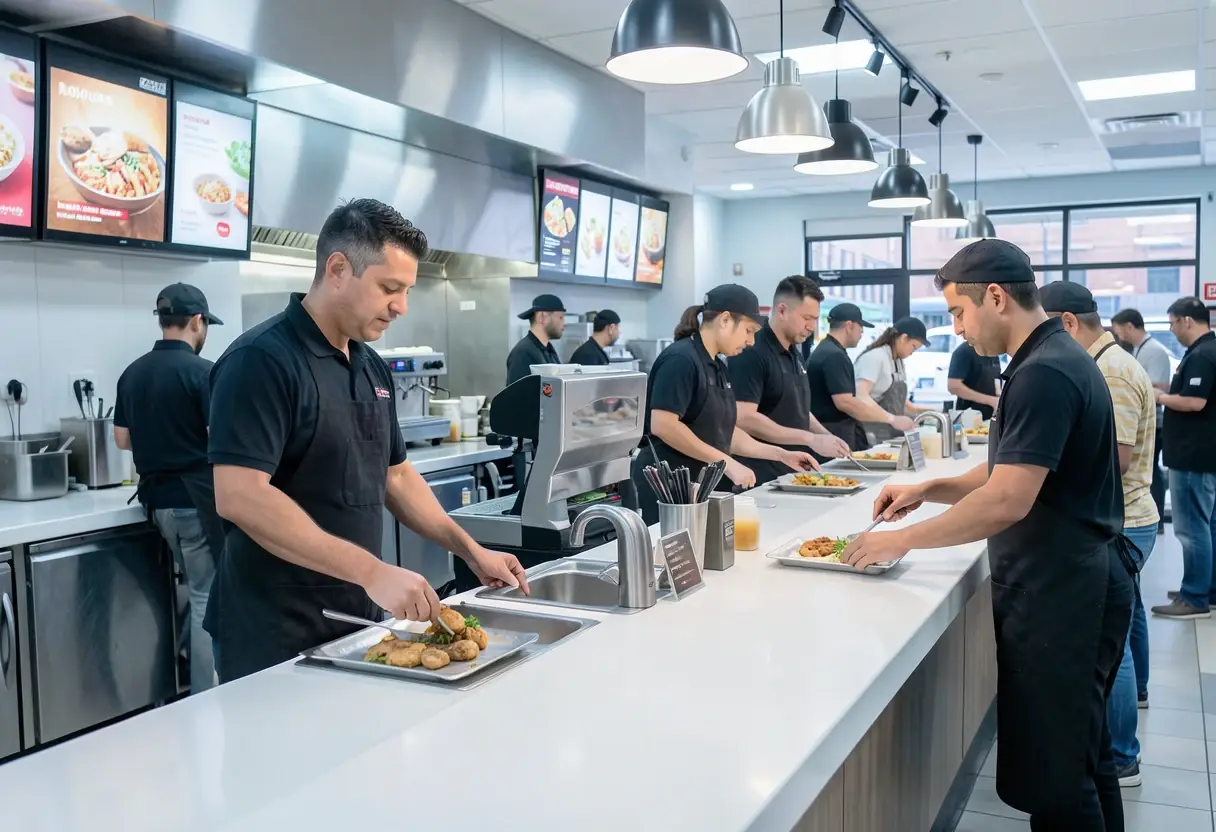
A $10,000 check — the same fee Chick-fil-A has charged for 50 years — made Brandon J. Hurst a franchise operator at age 26. Today he runs two of the chain's highest-grossing restaurants in Brooklyn, and he says their sales sit "well north" of an industry-leading average of nearly $9.2 million per location.
Hurst's path began with a decision that looked like a step down. In 2010, fresh from a bachelor's degree at Alabama State University, he had three options: a Master's in accounting, law school followed by Wall Street, or a $12-an-hour job in Chicago inside a Chick-fil-A restaurant. He chose the chicken.
"Two weeks after graduation, I packed everything I owned and drove 14 hours straight to start a brand new life in Chicago to work inside of a Chick-fil-A restaurant," Hurst said in an interview with Entrepreneur. The role made him director of operations at the branch, learning the business directly from an operator. "I knew whatever I would be doing, I had to be in some type of entrepreneurial capacity," he said.
How Unusual Is Chick-fil-A's Franchise Model?
Unusual enough to reframe what "buying in" means. Chick-fil-A's initial franchise fee is $10,000 — unchanged for five decades, per The New York Post — and applicants must pay it with their own money, not borrowed or gifted funds.
That payment buys no ownership. Chick-fil-A selects operators to run locations the company itself finances, covering construction and equipment while retaining the assets. Operators manage the business rather than acquire something they can sell or pass to their children.
The contrast with traditional franchising is sharp. ADP puts most franchise startup costs between $100,000 and $300,000, with restaurants among the most expensive — but those franchisees typically own their business. Chick-fil-A operators earn a percentage of net profits instead of a corporate salary, typically $200,000 to $400,000 a year, with high performers exceeding $500,000.
Admission is brutal. Roughly 100,000 people apply annually to become operators; about 200 are selected, per The New York Post — an acceptance rate of 0.2%. Selected operators must work full-time in the business and divest other non-passive interests. In plain terms: little capital required, no equity built.
Why Did Hurst Say Yes to a $12-an-Hour Job?
In 2012, Chick-fil-A selected Hurst for its leadership development program. Over three years he helped 14 operators launch restaurants across the country — 12 of them external candidates who had never owned or worked at a Chick-fil-A.
"You ever heard the saying, 'If you want to master something, teach it'?" Hurst said. "That's exactly what I had the opportunity to do." He rehearsed openings repeatedly before risking his own.
He also admits what many founders won't: impatience. "Although I have a strong entrepreneurial spirit, I don't have a whole lot of patience for building something from the ground up," he said. "I can cook, but I'm more of an operational strategy and leadership development person." Chick-fil-A's existing brand and systems let him, in his words, "hit the ground running."
What Do the Numbers Say About His Restaurants?
Hurst opened his first location in downtown Baltimore in April 2015, at 26, testing how the chain could operate in dense urban neighborhoods without suburban-style drive-thrus. After five years he handed Baltimore to other local operators and moved to Brooklyn.
His first Brooklyn restaurant opened across from Barclays Center in 2019; a second followed in Clinton Hill in November 2024. For context, Restaurant Business reports Chick-fil-A's stand-alone restaurants averaged nearly $9.2 million in sales in 2025, its busiest location tops $20 million annually, and its best mall restaurant recorded $14.4 million. Presented with those figures, Hurst said his restaurants were "well north of those numbers" — without giving an exact figure. He credits the neighborhoods, Barclays Center event crowds and, above all, his employees.
How Does He Keep Staff in a High-Turnover Industry?
Hurst spends real money on retention. He purchased a multi-family Brooklyn building where team members live at below-market rents, offers free mental health care including up to 10 therapy sessions, extends telehealth to employees and their households, and reimburses textbooks for eligible college students.
The payoff, by his account: leaders average about four years of tenure, and keeping regular team members beyond 12 to 16 months counts as a win. His interview questions screen for resilience — "Tell me about a time you wanted to give up and why you didn't" — and for self-care: "How do you define care for yourself?"
He also names his structural risk plainly. "If every major decision, relationship or problem has to come through the founder, then I really haven't built the capacity to scale," he said. An executive assistant hired five years ago freed his calendar for other work, including his book Outthink Yourself, due in January after a four-year process.
Hurst frames growth in three stages — see, become, build — and his stated ambitions are blunt: "More locations, more books. I do have very high aspirations for myself." Whether those ambitions translate into equity he can one day sell is a question the model itself forecloses.
Original: adp.com
More from Olivia Hart
Show full bio
Staff writer covering people, launches and day-to-day practice in entrepreneurship, startups and venture funding at Business Bearings.
2,205 articles