GM Compressed 34,000 Years of Battery Testing Into Under a Month
GM used 300 million CPU hours of virtual testing to evaluate 300,000 LMR battery configurations in under a month, aiming to halve vehicle development to two years.
By Amara Osei
3 min read
Updated
What's News
- GM virtually tested 300,000+ LMR battery configurations using 300 million CPU hours, equal to 34,000 years on a typical computer.
- GM aims to halve vehicle development time from 4-5 years to about 2 years using AI and virtual simulation.
- LMR batteries can offer 33% more energy density than lithium iron phosphate and more than 400 miles of range.
- GM's fourth-generation EV platform cuts wiring by 30% and motor/power electronics parts by 40%.
- Ultium Cells, GM's JV with LG Energy Solution, plans U.S. commercial LMR production in Spring Hill, Tennessee by 2028.
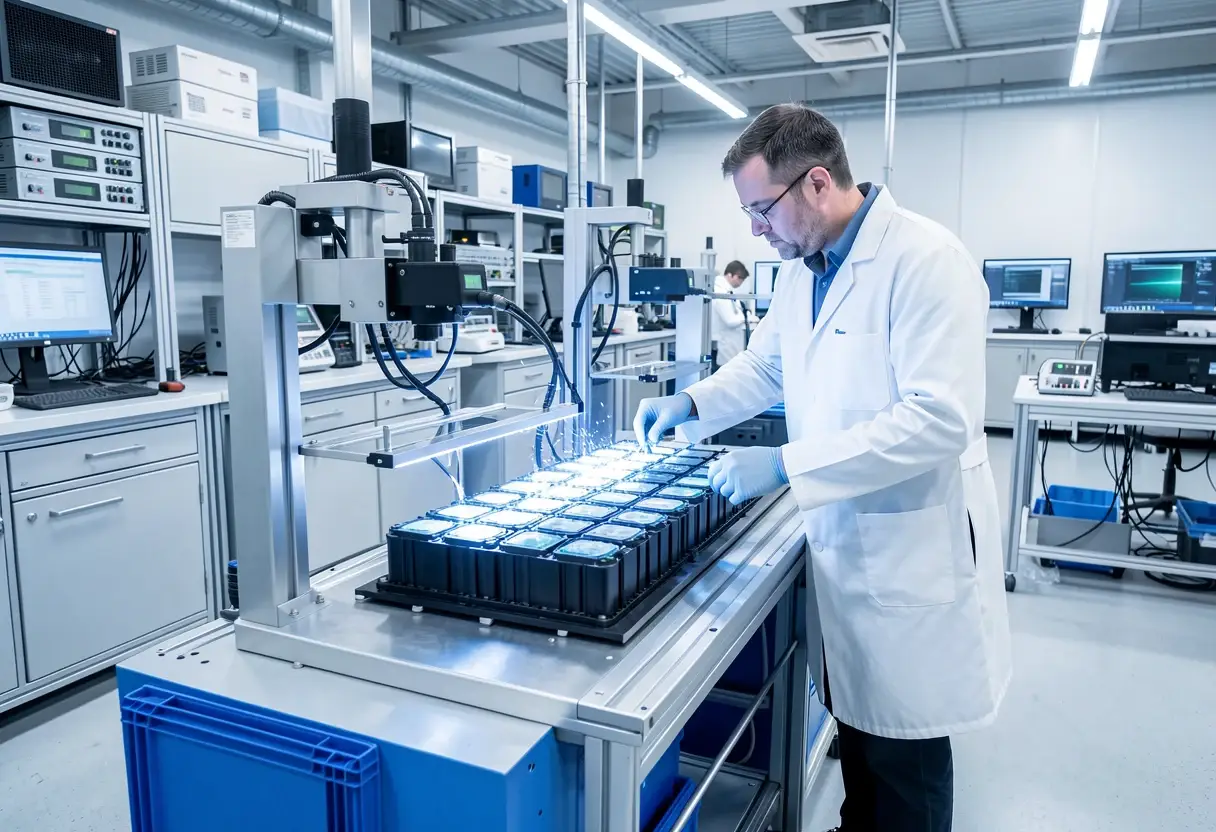
General Motors says it ran more than 300 million CPU hours of virtual battery testing — work that would take a typical computer 34,000 years of round-the-clock operation — in under a month. The effort covered more than 300,000 lithium manganese-rich (LMR) battery pack configurations, moving the program from first concept to formal approval in weeks.
The work targets LMR batteries, a chemistry GM says it has pursued for a decade and which isn't yet in any of its vehicles on the road. Sterling Anderson, GM's chief product officer, told Fast Company the 300,000 formulations examined different chemical combinations, temperature cycling, and other approaches to building a battery cell.
"If we had not had the luxury of some of these tools, we would have had to sample more sparsely from what was possible," Anderson said.
Why does virtual testing matter?
GM is leaning on artificial intelligence and simulation across vehicle development, not just batteries. The company says the approach cuts testing time and lets engineers evaluate far more options than picking the best of a handful of physical prototypes.
Car programs typically run four or five years, which allows a "limited number" of tests, from wind tunnel runs to crash tests, Anderson said. Virtual tools change that math.
"Now in the virtual world, instead of the X crash test that we could have done, or Y prototypes that could go through, we can run X times 100 and Y times 1000," he said.
The numbers behind GM's autonomous driving effort show the same pattern. Hundreds of data-collection vehicles are driving across the country, gathering 1 million miles of data a month. In simulation, GM's systems drive more than 3 billion simulated miles a day.
Can a two-year development cycle insulate GM from policy shocks?
GM's stated goal is to cut vehicle development time in half, down to about two years. Anderson frames that as insurance against external shocks that have battered automakers' product plans.
Many carmakers counted on Biden-era EV tax credits to support sales — then the Trump administration cut those credits. Tariffs, the war in Iran's effect on gas prices, shifting regulations, and weak consumer sentiment have all added uncertainty to product lineups that may have been in development for years.
A shorter development cycle "makes you more agile," Anderson said.
What's next for LMR batteries?
GM wants to be the first automaker to deploy LMR batteries, and Anderson says the company is on track to do it.
The chemistry carries real advantages over current options. LMR batteries can have 33% more energy density than lithium iron phosphate cells, and they rely more heavily on less-expensive minerals such as manganese instead of costly cobalt and nickel. That combination delivers more range — potentially more than 400 miles — at lower cost and lighter weight.
The batteries will arrive as part of GM's fourth-generation EV platform, which also includes a centralized, upgraded computing system and new electrical architecture.
The platform's engineering targets are specific:
- 30% less wiring than GM's current EVs
- 40% fewer parts in its motors and power electronics
- Lighter overall weight and improved efficiency as a result
Production plans are already set. GM and LG Energy Solution are developing the cells through their joint venture, Ultium Cells, which plans to begin commercial production of LMR battery cells in the U.S. by 2028 at its facility in Spring Hill, Tennessee.
If GM hits that timeline and the two-year development target holds, the company will have turned a decade of LMR research into a production advantage right as rivals face the same tariff and subsidy shocks that scrambled their longer-cycle product plans.
Original: images.fastcompany.com
More from Amara Osei
Show full bio
Senior reporter covering companies, deals and strategy in entrepreneurship, startups and venture funding at Business Bearings.
1,108 articles