Huawei Pulls Ahead: Ascend 960DT Launch Moved Up to Q1 2027
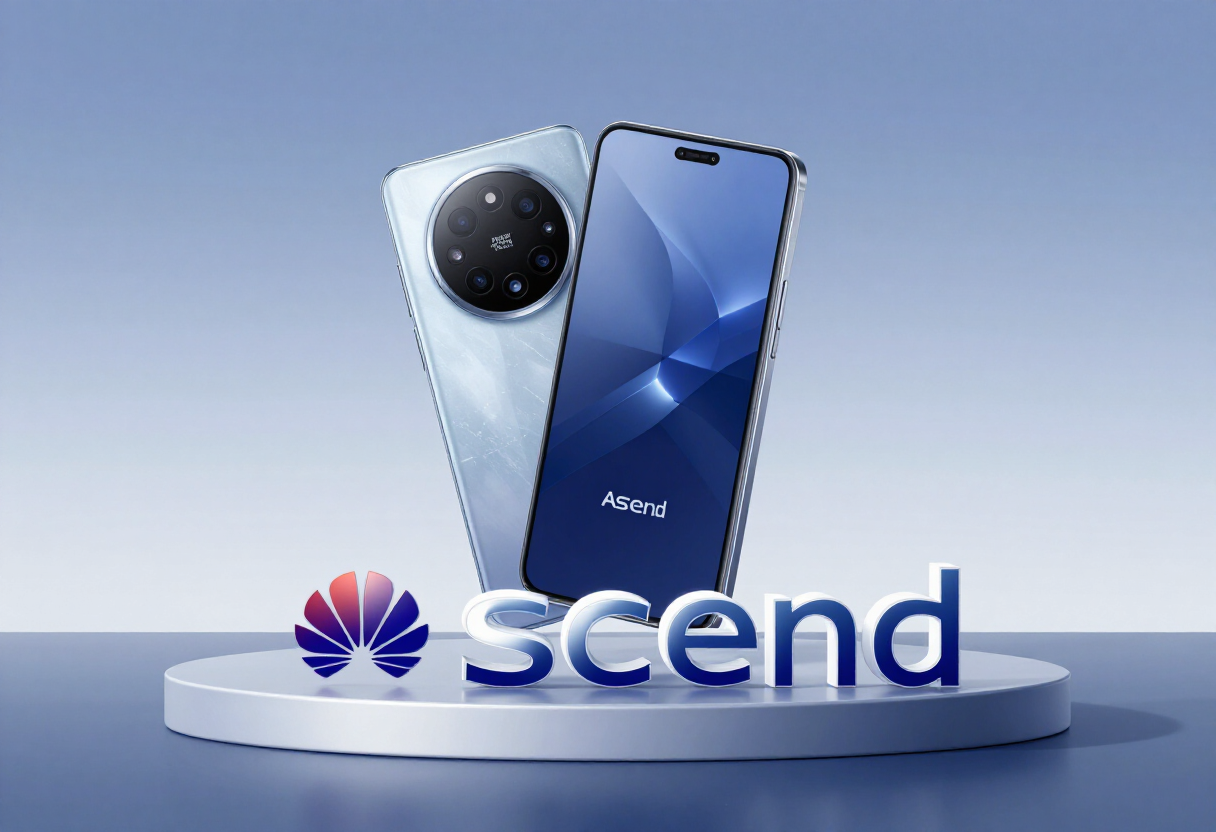
Huawei has pulled its Ascend 960DT AI chip launch forward to Q1 2027 and shipped over 1,000 supernode systems, pressuring Nvidia just as it posts a $96.2 billion quarter.
By Daniel Okafor
5 min read
Updated
What's News
- Huawei moved the Ascend 960DT launch up to Q1 2027 from Q3, with the Ascend 960PR to follow in Q3 2027.
- Nvidia's Q2 fiscal 2027 revenue rose 106% year-over-year to $96.2 billion, with Data Center revenue of $89 billion.
- Analysts hold a consensus 'Strong Buy' on NVDA with an average price target of $325.88, implying 43% upside.
Huawei has moved up the launch of its next-generation Ascend 960DT AI chip to the first quarter of 2027 from its previously planned Q3 timeline, according to reports, accelerating a roadmap that aims to expand China's domestic AI infrastructure. The company also plans to launch the Ascend 960PR in Q3 2027.
The move matters beyond individual chips. Huawei is developing UnifiedBus technology to connect groups of AI processors into larger computing systems. It has built 11 chips around the technology for its supernode and supercluster systems and has reportedly already shipped more than 1,000 supernode systems.
That scale of ambition puts Huawei on a collision course with Nvidia (NVDA), the company that has become almost synonymous with the AI infrastructure boom. Nvidia's advantage stretches beyond its GPUs into networking and a broad software ecosystem. Huawei is now targeting that system-level advantage, particularly in China, where U.S. export restrictions have made access to Nvidia's most advanced hardware more difficult.
Nvidia by the numbers
Founded in 1993 and headquartered in Santa Clara, California, Nvidia spent decades building GPU expertise before the technology became central to AI. Its processors now sit at the heart of AI data centers, cloud computing, robotics, autonomous vehicles, and high-performance computing. The company's market capitalization stands at roughly $5.3 trillion.
The stock has delivered extraordinary returns, but 2026 has shown that even an AI heavyweight can face volatility. NVDA shares have gained 22% in 2026, including a 32% advance over the past six months. Over 52 weeks the stock is up 29%, up 434% over three years, and up 12,875% over the decade.
The ride has not been smooth. The stock pulled back this year as investors questioned whether hyperscalers could keep spending on AI infrastructure at such a furious pace, while semiconductor competition intensified. Fresh skepticism arrived in late July, when a wave of AI-related deals put the staggering cost of the AI buildout back in focus. Shares have since recovered on strong AI infrastructure demand and easing concerns about hyperscaler financing. Nvidia now trades just 4% below its all-time high of $236.54, with a 14-day RSI of 58, close to neutral.
The valuation is more nuanced than the headline success suggests. NVDA trades at 24 times forward earnings, while its price-to-sales ratio of 24.8 times is higher than many peers. Nvidia raised its quarterly dividend from $0.01 to $0.25 per share in May 2026, a signal of growing capacity for shareholder distributions.
Q2 blowout
Nvidia reported second-quarter fiscal 2027 results on Aug. 26. Revenue jumped 106% year-over-year to $96.2 billion, comfortably ahead of Wall Street's expectations. Non-GAAP EPS climbed 120% to $2.22, and non-GAAP gross margin expanded 2.5 percentage points to 75%.
The Data Center segment pulled in $89 billion, up 117% year-over-year and representing more than 92% of total revenue. Hyperscaler spending on AI infrastructure remained the key driver, and sequential growth benefited from the initial volume rollout of Nvidia's next-generation Vera Rubin architecture, alongside full-scale production of Blackwell systems for major cloud customers including Microsoft (MSFT), Alphabet (GOOGL), and Oracle (ORCL). The Edge Computing business generated $7.2 billion, up 27%.
Nvidia returned about $26 billion through buybacks and dividends during the quarter, with roughly $99 billion still available under its repurchase authorization. Operating cash flow reached $24.1 billion and free cash flow came in at $21.3 billion. Cash, cash equivalents, and marketable debt securities totaled $56.6 billion at quarter-end.
Management guides to Q3 revenue of around $108 billion, plus or minus 2%, with GAAP and non-GAAP gross margins of 74%, plus or minus 50 basis points. It also expects fiscal 2028 revenue to grow approximately 70%, though supply is expected to remain a bottleneck through at least the end of that year.
Analysts forecast Q3 revenue of around $109 billion and EPS up 99% year-over-year to $2.47. For the full picture, EPS is projected to rise 102% to $9.25 in fiscal 2027, then climb another 66% to $15.33 in fiscal 2028.
What the Street says
Analysts maintain a consensus "Strong Buy" rating on NVDA. Of the 50 analysts covering the stock, 45 advise a "Strong Buy," three recommend a "Moderate Buy," one has a "Hold," and one suggests a "Strong Sell." The average price target of $325.88 implies 43% upside, while the Street-high target of $515 suggests as much as 127% upside.
The China question
For investors, Huawei's faster roadmap is less an immediate threat than a sign of where the AI chip race is heading. Nvidia remains deeply entrenched, with its GPUs, networking technology, and software ecosystem widely used by AI developers worldwide. Huawei is building its own ecosystem, with thousands of developers already working on its AI platform.
The China angle sharpens the stakes. Access to Nvidia's most advanced chips in China remains restricted, and U.S. policy has allowed only limited sales of products such as the H200, with only a small number of shipments having begun. That gives Huawei a natural opening to strengthen its domestic alternative.
Huawei is clearly moving faster, but turning a chip roadmap into a scaled, widely adopted AI platform takes time. For NVDA holders, this is not a panic signal yet — but Huawei's next moves, starting with the Ascend 960DT in early 2027, deserve close attention.
Source: Yahoo Finance
More from Daniel Okafor
Show full bio
Correspondent covering business strategy at Business Bearings.
234 articles