Life on Film Turns Strangers' Cameras Into a Seven-Figure Business
Life on Film hands strangers film cameras in cities worldwide, edits the footage into viral montages and runs a profitable seven-figure business on 8 million followers and 2 billion views.
By Grace Kim
5 min read
What's News
- 8 million followers and more than 2 billion views across Instagram, TikTok and YouTube, per co-founder Grant Weintrob
- Profitable seven-figure revenue business with no outside investment; on track for 90% year-over-year revenue growth
- Founded in 2023 by Grant Weintrob, Christian Baiocco and Griffin Katz; became a full-time business by the end of 2024
- About $50,000 expected in film costs for 2026, covering cameras, film and developing
- Fujifilm supplies disposable cameras under a long-term sponsorship; Super 8 content now outperforms the disposables
Life on Film runs a profitable, seven-figure revenue business built on 2 billion views and 8 million followers, with no outside investment. Co-founder Grant Weintrob said the studio is on track for 90% year-over-year revenue growth.
Grant Weintrob, Christian Baiocco and Griffin Katz — all in their late 20s — run Life on Film full time. The company started in 2023, handing strangers disposable cameras to document nights out, then cutting the returned photos into dramatic supercuts that read like montages from a coming-of-age film.
Within a year, the account was producing videos with Ed Sheeran, Lil Yachty, Ice Spice and the former president Joe Biden. By the end of 2024, enough traction and brand deals had arrived to make the project a full-time business. Instagram is now the biggest stage.
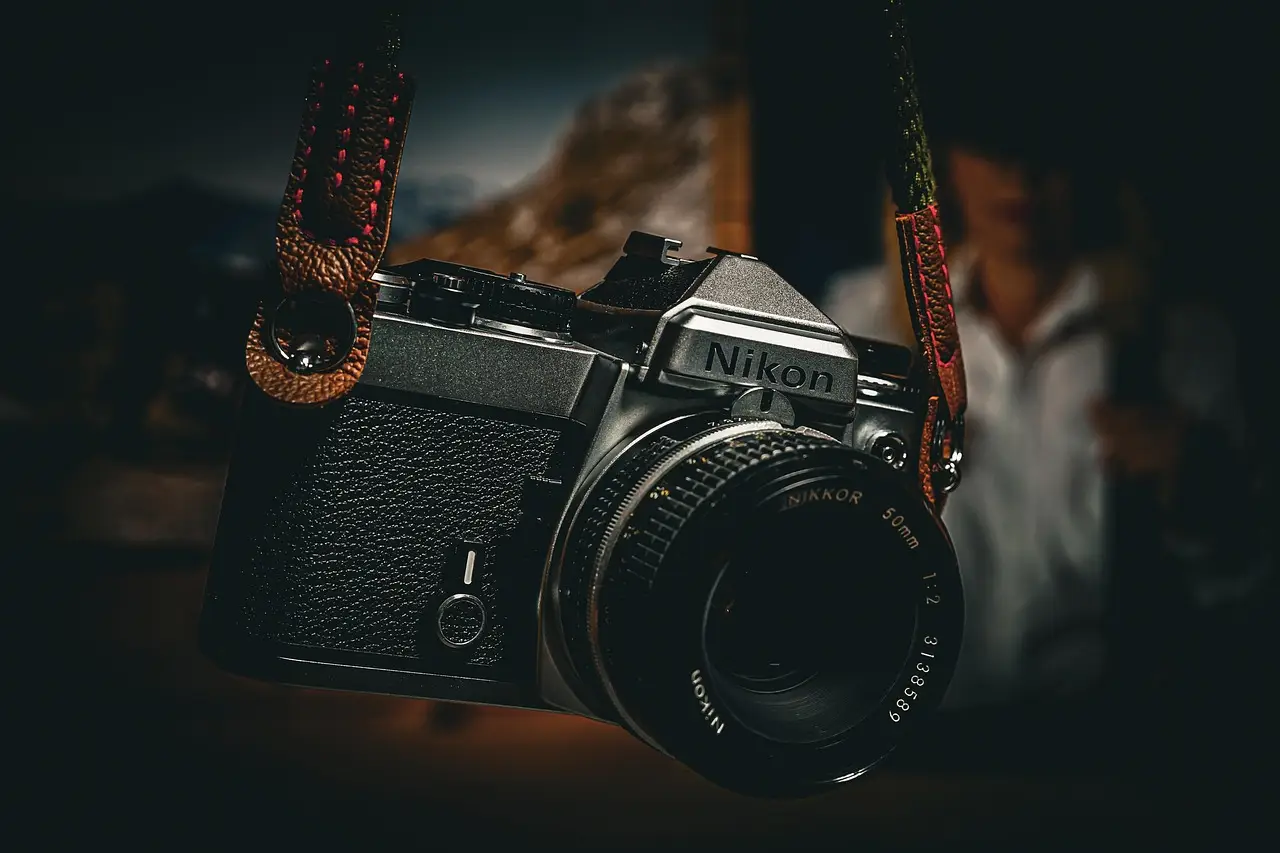
The mechanics are simple. Weintrob spends hundreds of hours in airports and train stations, his bag stuffed to the brim with dozens of old-school film cameras. He asks strangers: "If I gave you this camera, would you take photos on your trip?" and "We'll get it back and turn it into a video."
The payoff is a viral cut that can amass tens of millions of views on the Life on Film account. The format mixes man-on-the-street interviews with a nostalgic look, and the comment section carries its own marketing:
- "Life on Film is the antidote to AI slop."
- "I'm not crying, you're crying."
- "I'd watch this if it were a movie."
"We really see it as a human storytelling platform," Weintrob said, turning everyday — and sometimes famous — people's lives into "cinematic" short films.
Where does the money come from?
Most revenue comes from brand partnerships; the rest from ad-revenue splits on YouTube and Facebook. The client list reads like a roll call of consumer and tech brands:
- Nike
- Home Depot
- American Express
- Microsoft
- Meta
- Universal Studios
The team fields inbound offers and pitches brands itself, without talent management, because they see themselves as a studio rather than individual talent. Baiocco said any integration has to be "as entertaining as possible" and woven into the story.
Fujifilm is the biggest partner. Under the deal, Life on Film uses Fujifilm disposable cameras and runs a sponsored series called "Blind Date," giving two strangers an Instax camera to document their setup date on film. The team is pitching a longer-term series to travel companies that would send people on trips.
Beyond brand deals, Life on Film plans to expand into direct-to-consumer products such as coffee-table books and custom cameras.
Why film cameras, and what does the stock cost?
AI has left the general public feeling uneasy about what is real on the internet. "Life On Film is literally the opposite of that," Baiocco said. "It's literally truly unscripted content that's captured on analog cameras."
The aesthetic also taps a renewed appetite for analog tech — film photography, vinyl records, DVDs and even landlines — particularly among Gen Z. The company's office sits in Greenwich Village in New York City, steps from Washington Square Park, and is stocked with cameras, film and equipment.
Cameras and film are not cheap. Weintrob said the team expects to spend about $50,000 on film costs — cameras, film and developing — in 2026. Disposable cameras now come from Fujifilm under the long-term sponsorship, and expenses jumped after Super 8, a mass-produced video film stock Kodak introduced in the 1960s, entered the mix.
Most content still uses disposables, but the Super 8 videos are outperforming them. "It's like a movie," Baiocco said. The old gear also carries risk: equipment breaks, users make errors, film fails to turn out well, and cameras get stolen.
What happens on the street?
Yes, they really do approach strangers, and the setup is not staged except for some celebrity or branded videos. The crew is filming a series around New York, the hometown of all three founders. I rode the subway uptown to Harlem with Weintrob and Dylan D'Agostino, a full-time producer, whose bag held several disposable cameras and a few Super 8s.
Weintrob filmed on his iPhone while approaching people at intersections and in the park. If only one video came out of the day, "that'd be fantastic," he said. In the span of an hour, the crew counted six takers and 10 no's. The cameras went to:
- A couple in their 20s. The young woman said "Yeah!" and then, "Wait, OK, how do we get them back to you?" A QR code and instructions covered it.
- A dog walker.
- A mother heading home from school with her child.
- Parents walking their newborn in a stroller.
What does the next chapter look like?
"Our long-term goal is to have a studio that makes the best unscripted series on the internet," Weintrob said. A precursor show, "Discovering Artists," already runs alongside Life on Film.
He places the company somewhere between A24 and Humans of New York, while rivals such as Fallen Media and Mad Realities chase an MTV-style role for social-media studios. After creator-made hits like "Backrooms" and "Obsession," Weintrob said the broader media industry's view of the work changed: "There is something bigger here to be made than just the 30-second Instagram Reel or TikTok." Longer-form horizontal video is next on the docket, packaged for traditional production studios.
The open question is whether the reels become series: a travel-company show, a coffee-table book line and custom cameras all sit in the pipeline, with roughly $50,000 of film spending behind them in 2026.
Source: feeds.businessinsider.com
More from Grace Kim
Show full bio
Market editor covering people, launches and day-to-day practice in entrepreneurship, startups and venture funding at Business Bearings.
2,487 articles