Meta Says Midterm Election Backlash Will Make Data Center Buildout Harder
Meta President Dina Powell McCormick says Democratic midterm wins will make data center construction "a lot harder" and admits the industry failed to explain its investments to communities.
By Daniel Okafor
3 min read
What's News
- Meta operates data centers in 23 states, with five planned projects of one gigawatt or more, including one in Texas
- Meta President Dina Powell McCormick spoke at the WSJ Tech conference on Wednesday about election backlash against data centers
- Meta's AI agent Muse currently has 10 million users; the company wants it to serve billions
- Meta says it gets daily calls to lease the compute it has built
- Meta has been building data centers for 20 years
Meta President Dina Powell McCormick says Democratic wins in the midterm elections will make it "a lot harder" for companies to build data centers, and she admits the industry has fallen short on selling its case to the public. Speaking at the WSJ Tech conference on Wednesday, she said the industry has "not done as good a job as we needed to explain the benefits of these investments."
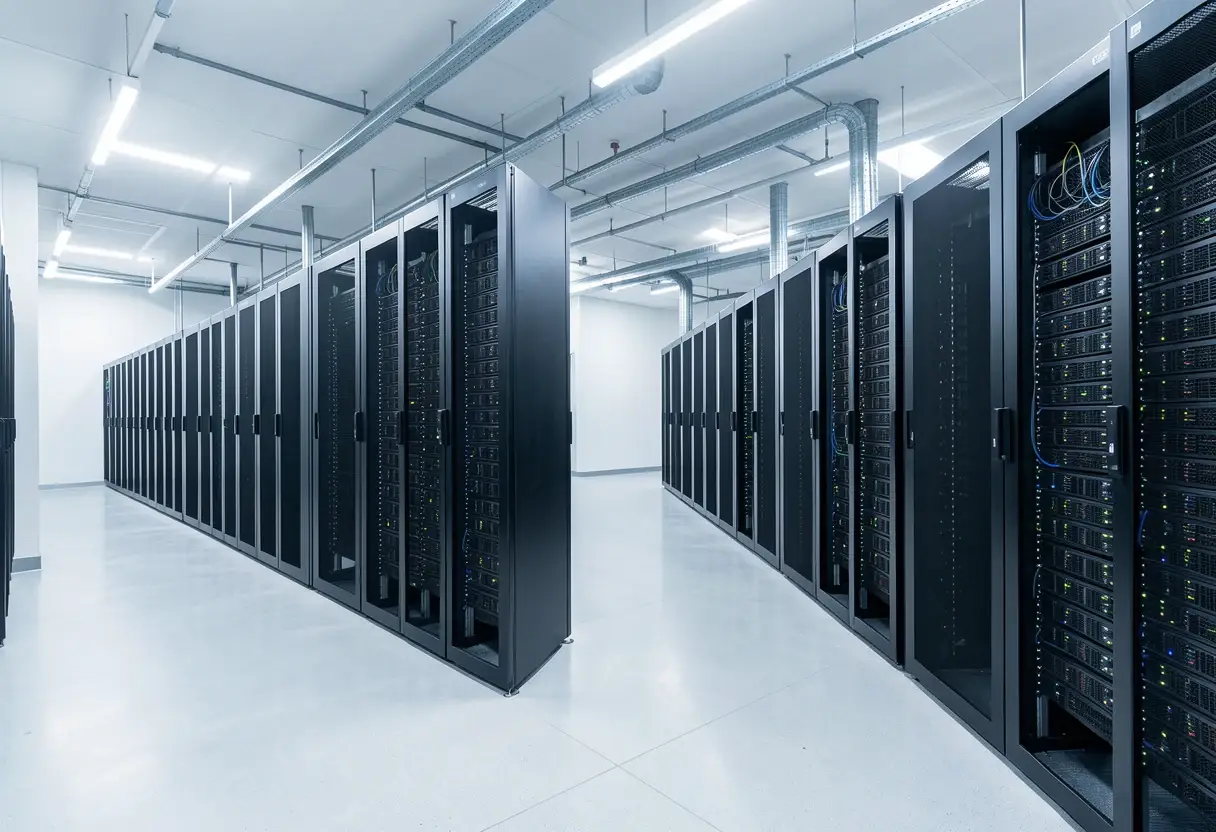
Her comments land at an awkward moment for Meta. The company runs data centers in 23 states and plans five projects of one gigawatt or more, including one in Texas. Now some of those investments could face political resistance after candidates ran on explicitly anti-data-center platforms during the midterms.
Why did data centers end up on the ballot?
Powell McCormick argued the backlash against data centers is really a backlash against AI itself, with the buildings serving as the visible target. "The visible sort of manifestation of AI is a data center, and it's something that people can say, 'I don't want this in my community,'" she explained. "I think there's an underlying bigger issue, which is how people feel about AI in general."
Meta's counter-strategy rests on demonstrating value — both to the local communities hosting the facilities and to users of the technology itself. She framed the stakes in expansive terms: "The stakes of who builds the technology that cures cancer, that gives access to education, that is also a very fundamental difference…Mark [Zuckerberg, Meta CEO] is very 'long human,' and he's betting on humans more than machines."
"And that's what we mean when we say the future is for everyone. That people should not be left behind," she continued. "But the way to ensure that is that this technology is democratized, that people have access to it in a very fair and transparent way."
What deal terms does Meta now offer communities?
The company has spent two decades building data centers, a consequence of the compute demands of its social networking products. Powell McCormick laid out the template Meta now uses to close local deals. Successful projects share several features:
- Meta pays for its own electricity
- Tax surpluses generated by the data centers go toward teachers and first responders
- The labor force stays local
- The project wins bipartisan political support
She expects future projects to face more review and to be weighed against whether constituents actually want them. "I think it's going to be harder," Powell McCormick said. "It has been hard, I should say, but I also think it's becoming clear what models work, and the states want those models that work."
The implication is a split market: states and communities that see a payoff will keep welcoming gigawatt-scale projects, while those that do not will block them.
Where does the compute pay off?
Meta has pinned its AI ambitions on its consumer agent, Muse, scaling far beyond the 10 million users it has today into a business that serves billions. The data centers underpin that plan. But Powell McCormick offered a hedge: even if Muse stalls, the compute itself remains a sellable asset.
"We're getting calls every day to lease that compute [we've built], and so one way or another, we're seeing a path to monetization," she said.
That lease demand matters because it decouples Meta's infrastructure spending from the success of any single AI product. The buildings become inventory. If consumer sentiment keeps hardening against data centers, though, the harder question is not whether Meta can monetize the compute it has built — it is whether it can keep building at all in states where voters have turned against the projects.
By Daniel Okafor
Original: youtube.com
More from Daniel Okafor
Show full bio
Correspondent covering money, funding and market shifts around entrepreneurship, startups and venture funding at Business Bearings.
1,497 articles