Nike Bets on Tuned Air to Reverse Slump as Revenue Falls
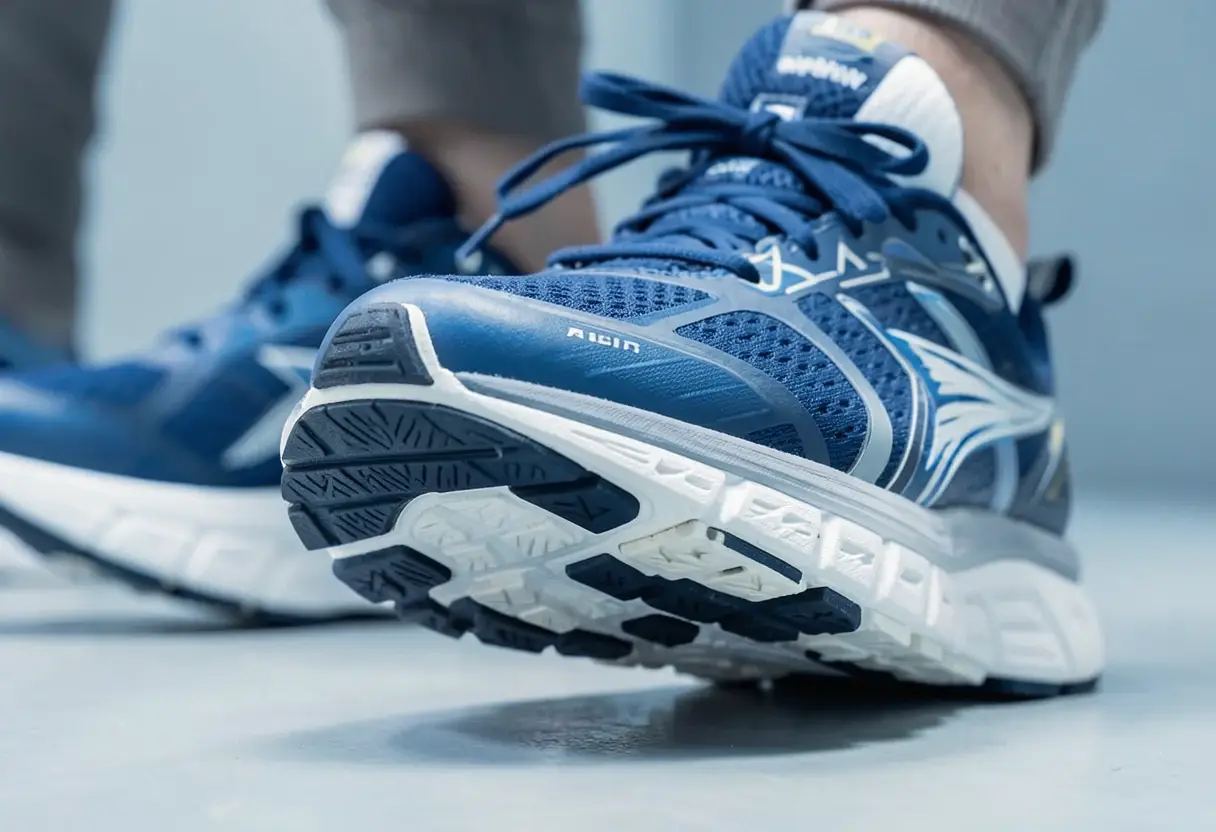
Nike has unveiled Tuned Air, a precision-tuned cushioning platform, one day before results. Revenue fell 4% to $11.2 billion last quarter as rivals Brooks and Hoka overtook it in running.
By Daniel Okafor
4 min read
What's News
- Nike's revenue fell 4% to $11.2 billion last quarter; full-year sales are expected to drop by a high single-digit percentage.
- Nike now ranks third in running behind Brooks and Hoka.
- Tuned Air manufacturing moves 70% faster from idea to product than Nike's typical process.
- The first Tuned Air running shoe launches within a year.
- China sales fell 26% and Converse dropped 28% last quarter.
Nike has unveiled Tuned Air, a re-engineered version of its flagship cushioning, one day before it reports quarterly results and lays out a turnaround plan for a business that shrank 4% to $11.2 billion last quarter.
The technology debuts in a running sneaker that will launch within a year. Nike sees Tuned Air as a broader platform, with plans to extend it into other sports, including soccer, and into apparel such as the Air Milano jacket, where air pockets would improve temperature regulation. Lifestyle shoes are also on the table. "How could we make an Air Force 1 using a sock liner that is Tuned Air, so you get comfort and support?" said Phil McCartney, Nike's chief innovation, design, and product officer.
What makes Tuned Air different?
The original Air technology, developed at NASA and first placed in a 1978 running shoe and later the Air Max 1, used two sheets of plastic to create tough pockets of nitrogen. The gas sat evenly distributed, giving uniform cushioning. Tuned Air adds a chemical before the sheets are pressed together, letting Nike print a pattern. Engineers can now control where the gas sits and how much air fills each pocket.
That means one zone of the sole can be soft and springy while another stays firm and stable. "It allows us to completely change the relationship between cushioning and support, and precision-tune the experience," McCartney said. Nike has placed the technology with runners over the past few years. Their verdict, according to McCartney: "It feels like no other cushioning system out there. Incredibly well cushioned, but also has stability. That's the sort of holy grail that we've been trying to unlock in Air."
Nike has also streamlined manufacturing. The company says it can now move from idea to product 70% faster than its typical pace — a critical advantage against rivals that ship new products quickly.
Who is Nike chasing?
Nike's competitors have attacked the same cushioning-versus-stability problem with their own systems:
- Brooks uses DNA Tuned foam with dual-cell construction: large heel cells to cushion landings, smaller forefoot cells for responsive toe-off.
- Hoka's H-Frame places a firm strip of foam in the midsole, surrounded by softer cushioning.
- On's CloudTec uses hollow foam tubes molded to the sole, plus a steel plate in the midsole.
In running, a category Nike once dominated, the company now ranks third, trailing Brooks and Hoka. In lifestyle footwear, Adidas has scored repeated hits with the revived Samba and Gazelle, and New Balance has turned the retro 550 into a bestseller. Nike has not produced a lifestyle sneaker hit in years.
The numbers behind the pressure are stark. Nike expects full-year sales to fall by a high single-digit percentage. Sportswear, nearly half the business, dropped by double digits last quarter. China sales fell 26%, and Converse sank 28%. Nike has announced a restructuring plan that will cut more jobs after several rounds of layoffs in recent years.
Can Tuned Air change the trajectory?
There is one bright spot. Nike's running business has grown by double digits for more than a year, helped by the Vomero line. "We're seeing market share gains almost daily right now," McCartney said.
Historically, Nike built running technology for elite athletes chasing fractions of seconds, and that innovation took years to reach shoes for average buyers. Tuned Air skips that wait. It targets the everyday runner from the start. "The entry point will be that everyday run," McCartney said. "When you're just trying to log your Tuesday morning run, you want the maximum amount of running with precision-tuned support."
McCartney, a three-decade Nike veteran who ran the footwear business from 2016 until last year, now leads innovation, design and product across Nike, Jordan, and Converse under CEO Elliott Hill. He describes an operating formula of "athlete, science, solution": teams gather insights from athletes, then test ideas at the Nike Sports Research Lab in Beaverton, Oregon, and through field teams in Eldoret, Kenya, London, and Shanghai. His team's motto borrows from two Nike legends — "Create epic shit. Make athletes better" — the first phrase from Kobe Bryant, the second from cofounder Bill Bowerman.
"There's no better innovation that speaks to our formula than Air," McCartney said.
Whether enough consumers get excited about Tuned Air — and the sneakers built on it — remains unclear. When Nike presents its long-term financial plans, investors will see exactly how much ground the company still has to recover.
By Daniel Okafor
Original: nike.com
More from Daniel Okafor
Show full bio
Correspondent covering money, funding and market shifts around entrepreneurship, startups and venture funding at Business Bearings.
2,189 articles