Paar Autonomy Raises Rs 10 Crore for GPS-Free Drone Navigation
Paar Autonomy’s Rs 10 crore round, led by AdvantEdge Founders, will scale AI camera production and GPS-independent navigation for unmanned defence platforms.
By Grace Kim
3 min read
What's News
- Rs 10 crore raised in a round led by AdvantEdge Founders
- Rs 3.5 crore pre-seed round led by Venture Catalysts
- Founded in June 2024 by Vignesh Sivaram Jayaraman
- Sentinel portfolio spans five models for aerial, ground and maritime vehicles
- Two funding priorities: expand AI camera production and build GPS-independent navigation
Paar Autonomy has raised Rs 10 crore in a funding round led by AdvantEdge Founders, according to Ascendants. The Bengaluru-based deep-tech defence startup will use the capital to expand production of AI-powered camera systems and develop drone navigation that works without GPS.
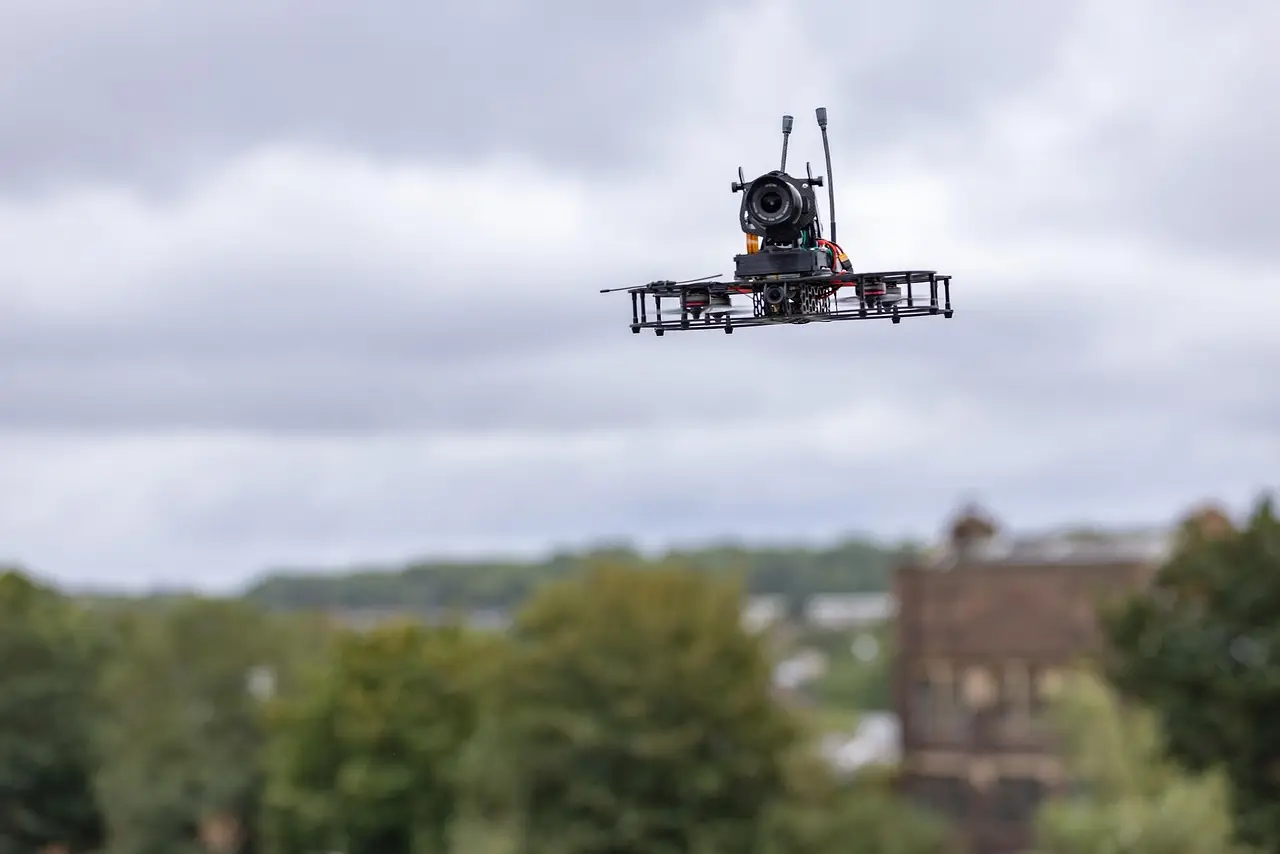
Founded in June 2024 by Vignesh Sivaram Jayaraman, Paar Autonomy builds camera systems and AI software for drones and other unmanned defence platforms. Ascendants said the systems help autonomous machines interpret their surroundings, track targets and navigate when satellite navigation or communication links become unavailable or disrupted.
What will the Rs 10 crore fund?
Paar Autonomy will direct the new capital toward two priorities: scaling production of its AI-powered camera systems and advancing navigation technology for GPS-denied environments. These systems need another way to determine position and understand their surroundings when satellite-based navigation cannot be relied upon, Ascendants reported.
The round follows a Rs 3.5 crore pre-seed round led by Venture Catalysts. Paar Autonomy used that earlier capital to establish its first manufacturing line and deliver pilot units.
In practical terms, the new money funds both manufacturing scale and drone navigation that does not depend on GPS.
How does its GPS-free navigation work?
Paar Autonomy’s technology portfolio spans edge-based AI, visual-inertial navigation independent of GPS and Global Navigation Satellite Systems, and gyro-stabilised camera payloads that combine inputs from multiple sensors, Ascendants reported. The company designed these capabilities for environments where GPS signals or communication links are disrupted or contested.
The startup also uses AI models to interpret environmental information in real time, improve situational awareness and support target tracking during autonomous operations. Its onboard software processes visual information and helps unmanned platforms respond to their surroundings.
The technical proposition is a sensing and navigation stack that can keep unmanned systems operating when conventional navigation signals or communications fail.
What does the Sentinel range cover?
Paar Autonomy develops perception systems for unmanned aerial, ground and maritime vehicles, including drones, ground rovers and unmanned boats, according to Ascendants. Its portfolio covers machines operating across air, land and water.
The company’s Sentinel series comprises five products: Sentinel 1, Sentinel 2, Sentinel Nano, Sentinel Nano Dark and Sentinel Nano Dual. These systems combine camera payloads with onboard AI software.
Defence remains Paar Autonomy’s primary market. Its systems target border surveillance and tactical tracking applications. The company also serves civilian uses, including industrial inspection, infrastructure monitoring and disaster response.
The Sentinel range gives Paar Autonomy five named products across three vehicle environments, with defence at the centre of its commercial strategy.
Which investors are backing the sector?
Paar Autonomy’s round comes amid continued investment in India’s defence technology, robotics and autonomous-systems sector. Ascendants cited several transactions involving navigation, sensing and unmanned-platform startups:
- Aeron Systems raised $4.7 million in a pre-Series B round in September 2026 to expand navigation, sensing and monitoring technologies for defence and aerospace applications.
- Yaanendriya raised Rs 15 crore from Piper Serica in July 2026 to develop indigenous navigation controllers and sensors for robotics and aerospace.
- General Autonomy secured $3.8 million from Elevation Capital and India Quotient in 2026 to advance robotics and autonomous systems.
- Raphe mPhibr raised $100 million in a round led by General Catalyst in June 2025.
- Unmannd secured $2 million from Speciale Invest and Accel in September 2025 to commercialise autonomous aerial logistics and counter-drone systems.
The comparable rounds show that Indian investors are funding a broad group of companies building navigation, sensing and autonomous-system technologies.
What must Paar Autonomy prove next?
Paar Autonomy’s immediate focus is expanding manufacturing capacity and advancing navigation technology for unmanned platforms, Ascendants reported. Its earlier pre-seed capital established the first factory line and produced pilot units; the Rs 10 crore round provides the next step toward scaling that operation.
According to Ascendants, Paar’s ability to expand production while developing systems that function without dependable GPS access will define its next phase of growth. The coming test is whether the new capital can turn that first manufacturing line and its pilot units into scaled production of GPS-independent defence systems.
Source: GN: Startup Funding
More from Grace Kim
Show full bio
Market editor covering people, launches and day-to-day practice in entrepreneurship, startups and venture funding at Business Bearings.
1,210 articles