Palmer Luckey and Ben Lamm Launch Warhound With $200 Million
Palmer Luckey and Ben Lamm's new startup Warhound raised $200 million to clone and gene-edit military dogs, with the first modified puppies due in 2027.
By Daniel Okafor
3 min read
What's News
- Warhound launched with $200 million in funding to genetically engineer dogs for the U.S. military.
- The first litter of gene-edited puppies, mostly Belgian Malinois, Labradors and shepherds, is expected in 2027.
- 80% of the more than 2,200 U.S. military dogs currently come from Europe.
- More than half of dogs considered for military service fail their training, the company says.
- Anduril has received more than $25 billion in government and defense contracts.
Warhound has emerged from stealth with $200 million to genetically engineer dogs for the U.S. military and equip them with high-tech gear. The startup was conceived by Ben Lamm, co-founder of the de-extinction company Colossal, and Palmer Luckey, co-founder of Anduril Industries and founder of Oculus VR. Its founders call the venture a modernization of America's military working-dog program.
Both founders arrive with deep track records in the two fields this company straddles. Colossal is best known for its attempts to "de-extinct" several animal species, including the woolly mammoth and the dodo. Anduril has received more than $25 billion in government and defense contracts.
Why breed better dogs?
The founders argue the current system wastes money and animals. More than half of the dogs considered for military service fail to complete their training, according to the company, driving up costs and making the program less reliable. The reasons range from poor eyesight to health problems such as cancer or hip dysplasia.
"Every day, we ask dogs to put their lives on the line to protect ours. They detect explosives, protect our troops, and run toward dangers that most people are trained to run away from. Yet we're still relying on outdated approaches to breeding and training these extraordinary animals," Lamm said in a statement.
Through gene editing, Warhound wants to eliminate those failure points while enhancing traits such as speed and sense of smell, which are critical to detecting bombs and other hazards. The goal, its founders say, is not to create a new breed of dog but to improve the performance of existing breeds.
What does the pipeline look like?
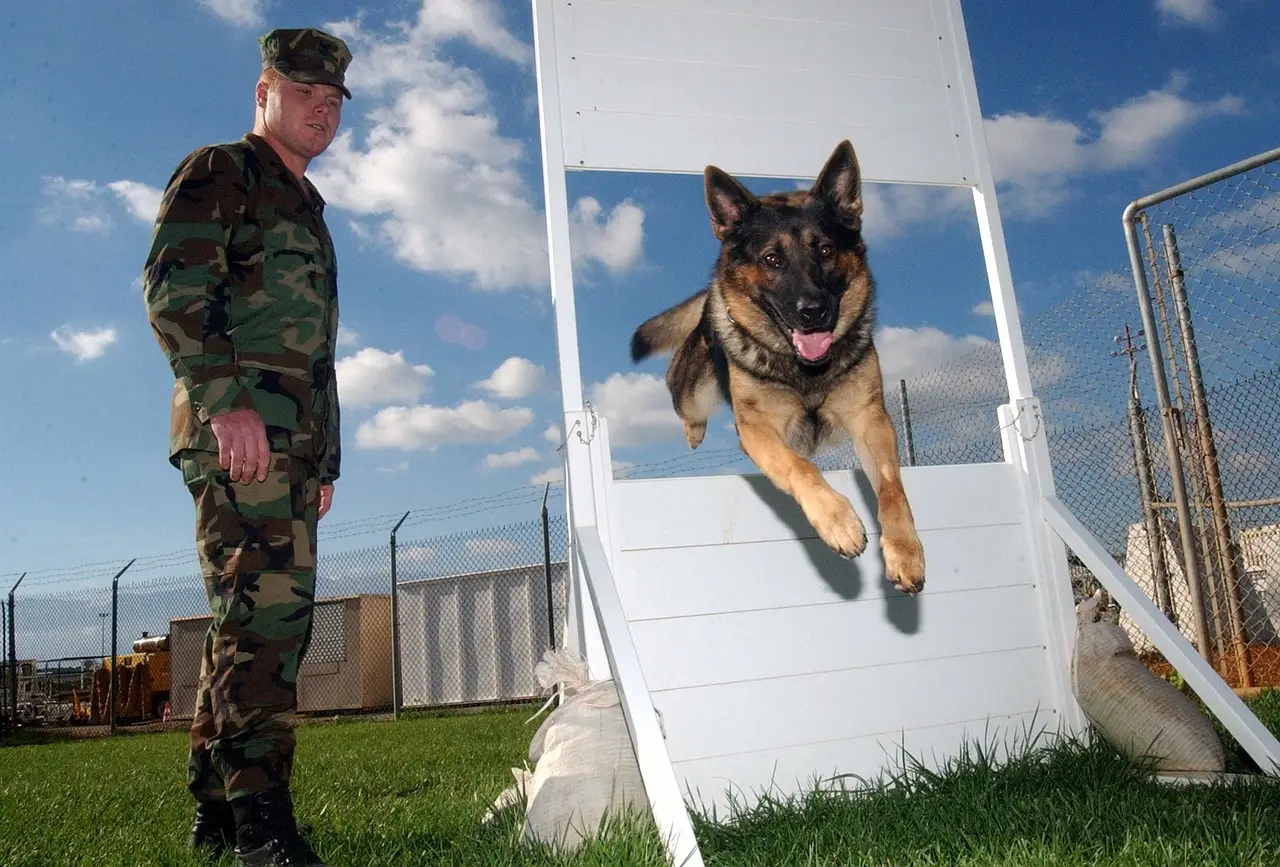
Warhound is already working on its first batch of genetically modified dogs. It is collecting blood samples from what it says are top-performing service animals in military, police, and first responder operations. The company plans to clone those dogs and edit their genes to improve their performance.
The first litter of genetically modified puppies, expected in 2027, will consist primarily of Belgian Malinois, Labradors, and shepherds.
The dogs will also carry "Anduril's advanced cybernetic Augments, software, and battlefield situational awareness," according to the company's announcement. The kit will include body armor as well as eye and ear protection.
"Man's best friend deserves man's best tech," Luckey said.
How does this fit U.S. policy?
The effort aligns with the Trump administration's emphasis on domestic production. In announcing the company, the founders noted that 80% of U.S. military dogs, of which there are currently more than 2,200, come from Europe, "creating a critical interdependency on foreign nations for an asset the Pentagon itself calls irreplaceable."
Luckey and Lamm first conceived Warhound several years ago after a conversation at a moonshot summit.
Who runs it, and who watches the animals?
Genetically modifying dogs could raise concerns among animal welfare advocates. Warhound says animal welfare will be a core part of its operations. The company is working with the American Humane Society, which will certify Warhound's training programs and support efforts to reunite retired military working dogs with their former handlers.
"Working dogs are extraordinary animals whose courage and loyalty save lives," said Robin Ganzert, president and CEO of American Humane Society. "Success means helping these dogs thrive throughout their lives—from training and active service to the loving, dignified retirement every canine hero deserves."
David Spirk, a Marine Corps veteran and former senior counselor at Palantir, will serve as Warhound's CEO. The company will be based in Dallas. Colossal holds equity in the business, while Luckey is a partner but does not have an ownership stake.
If the 2027 litter delivers healthier, sharper dogs on U.S. soil, Warhound will have turned a 1599 Shakespeare stage direction into a working procurement channel for the Pentagon.
Original: nosweatshakespeare.com
More from Daniel Okafor
Show full bio
Correspondent covering money, funding and market shifts around entrepreneurship, startups and venture funding at Business Bearings.
1,115 articles