RadianX raises $5 million to build solar panels that run devices forever
RadianX raised a $5 million seed led by SOSV and Twynam, plus $4 million non-dilutive from Pacific Union, to mass-produce perovskite panels it says run devices on light alone.
By Daniel Okafor
3 min read
What's News
- RadianX raised a $5 million seed round led by SOSV and Twynam.
- Pacific Union Technology Precision Manufacturing added $4 million in non-dilutive investment for a dedicated production line.
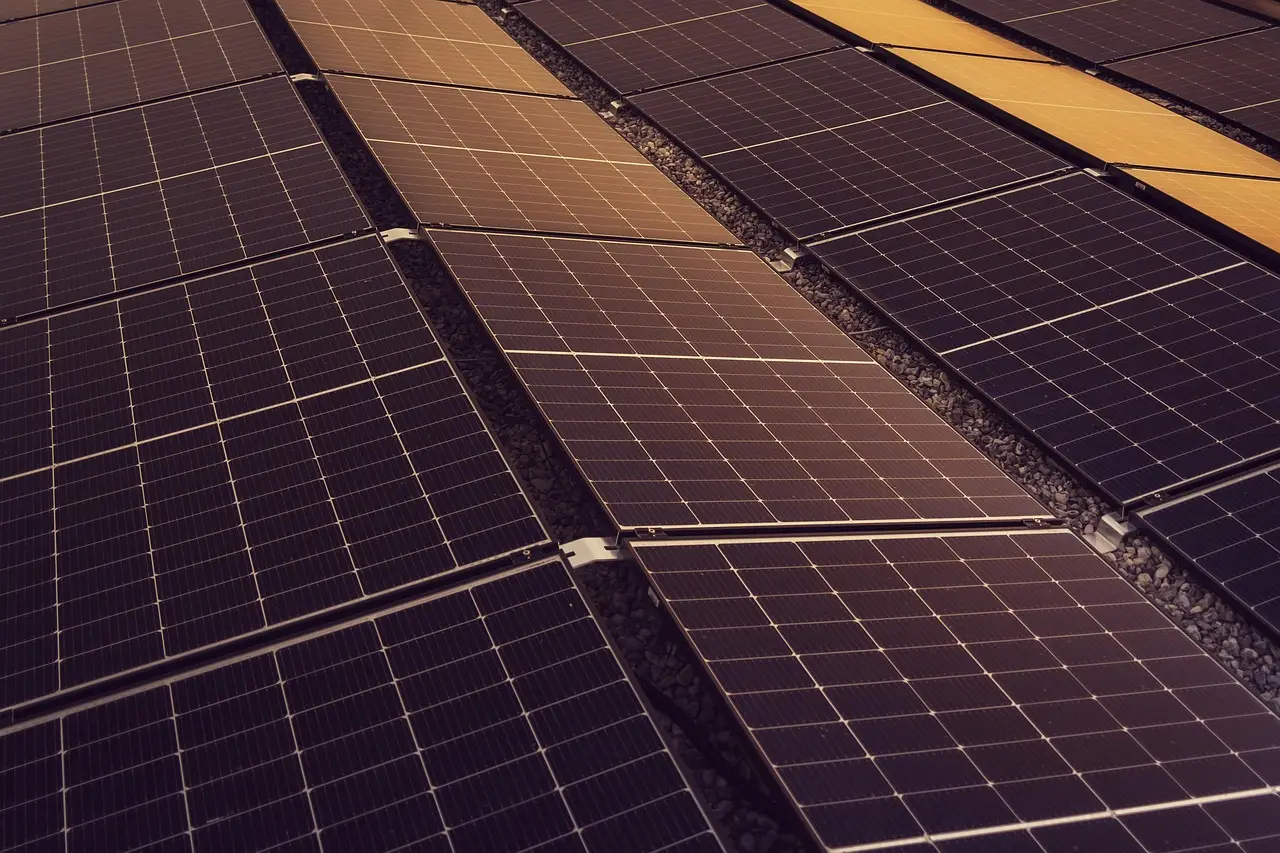
- The company's 1.2m x 0.6m perovskite panel reaches 22.33% efficiency, which RadianX calls a record.
- Panels can be as thin as 0.7 millimeters and sized to fit devices.
- The material works twice as well as conventional panels at harvesting indoor light.
RadianX has raised $5 million in a seed round led by SOSV and Twynam to build a production line for solar panels the startup says can keep portable devices running indefinitely. Pacific Union Technology Precision Manufacturing is adding $4 million in non-dilutive investment to construct a dedicated manufacturing line, the company told TechCrunch.
The round, announced exclusively to TechCrunch, also drew backing from One Small Planet, Sachsen Ventures, Avila VC, California Innovation Fund, quantumEDGE, Riceberg Ventures, and Alumni Ventures.
What makes the technology work?
RadianX builds its panels from perovskites, a family of solar materials that has long attracted research interest. The company says its material performs as well as conventional panels outdoors and twice as well indoors, where traditional silicon falls short.
"We can harvest any kind of photon, whether it's an outdoor or indoor photon, and keep the device running longer — or running forever," Josh Douglas, co-founder and COO, told TechCrunch.
The company's 1.2 meter by 0.6 meter panel converts light at 22.33% efficiency, which RadianX said is the best figure on record for the format.
Co-founder and CEO Vivian Qu points to power density as the differentiator. "It's power density," she told TechCrunch. "The reason why perovskites have been so interesting is the high power density."
Why perovskites failed before — and why RadianX thinks now is different
Perovskite solar is not a new idea, and the material class has struggled commercially. Perovskite panels cost more than silicon ones and historically wore out faster, though Qu notes the materials have improved in recent years.
RadianX attacks the durability problem from two angles. First, the company says it has hit a key industry durability standard. Second, its target market is indoor devices, where panels face far less wear and tear than rooftop installations. The panels can also be cut as thin as 0.7 millimeters and sized to fit specific products.
The concept itself is decades old — solar calculators have existed since the 1970s-era category took hold — but modern devices draw more power than conventional panels can supply, which pushed solar charging to the margins.
What does the company actually sell?
RadianX is not selling bare panels. It packages the solar material with power electronics designed specifically for perovskites, because most existing electronics are tuned for silicon.
"Silicon has a very different light soaking characteristic," Qu said.
The company frames the product around what it calls "edge energy": power delivered at the device rather than from a grid or a battery. "RadianX is trying to package all of this and sell this to device makers as something they don't need to worry about," Qu said.
Which devices come first?
The near-term targets are e-readers that never need charging and IoT sensors that never need a battery swap. Factory sensors, long-runtime robots, and wearables constrained by limited battery capacity are also on the list, and the founders expect uses they have not anticipated.
Qu and Douglas say the power packages could land in everything from e-readers to industrial sensors — and possibly markets they have not yet imagined.
The $9 million in combined funding now goes toward reaching commercial-volume production, the step where perovskite startups have historically stumbled. If RadianX can hold its efficiency and durability claims at scale, device makers gain a way to remove the battery — the component that sets the size, weight, and service schedule of most portable hardware.
Original: radianx.co
More from Daniel Okafor
Show full bio
Correspondent covering money, funding and market shifts around entrepreneurship, startups and venture funding at Business Bearings.
1,489 articles