Rythm Health Raises $157M as Post-Theranos Blood Startups Return
Rythm Health has raised $157 million since 2024 and grown subscribers 20-fold by October 2026, as Superpower and Function chase the same post-Theranos market with celebrity backers.
By Grace Kim
2 min read
What's News
- Rythm Health raised $157 million in total financing since its 2024 founding.
- Subscriber base grew roughly 20-fold by October 2026, founder Robby Wade told Inc.
- Rythm tests 25+ biomarkers from a ~1-milliliter sample using a Tasso device.
- Wade says Rythm uses the same lab equipment as Quest Diagnostics and Labcorp.
- Startups Superpower and Function are also raising hundreds of millions in the sector.
At-home blood testing startup Rythm Health has secured $157 million in total financing since its founding in 2024, part of a new wave of post-Theranos diagnostics companies pulling in hundreds of millions of dollars and celebrity endorsements.
The money is arriving at an awkward cultural moment. A24's documentary "You Can See Everything" has pushed Elizabeth Holmes and her failed blood-testing empire back into the spotlight, and every founder in the category now fields the same first question: how are you not Theranos?
Rythm's founder, Robby Wade, gets that question constantly. He has no affiliation with Holmes's defunct enterprise, and he's quick to draw hard lines between the businesses.
How does Rythm's test actually work?
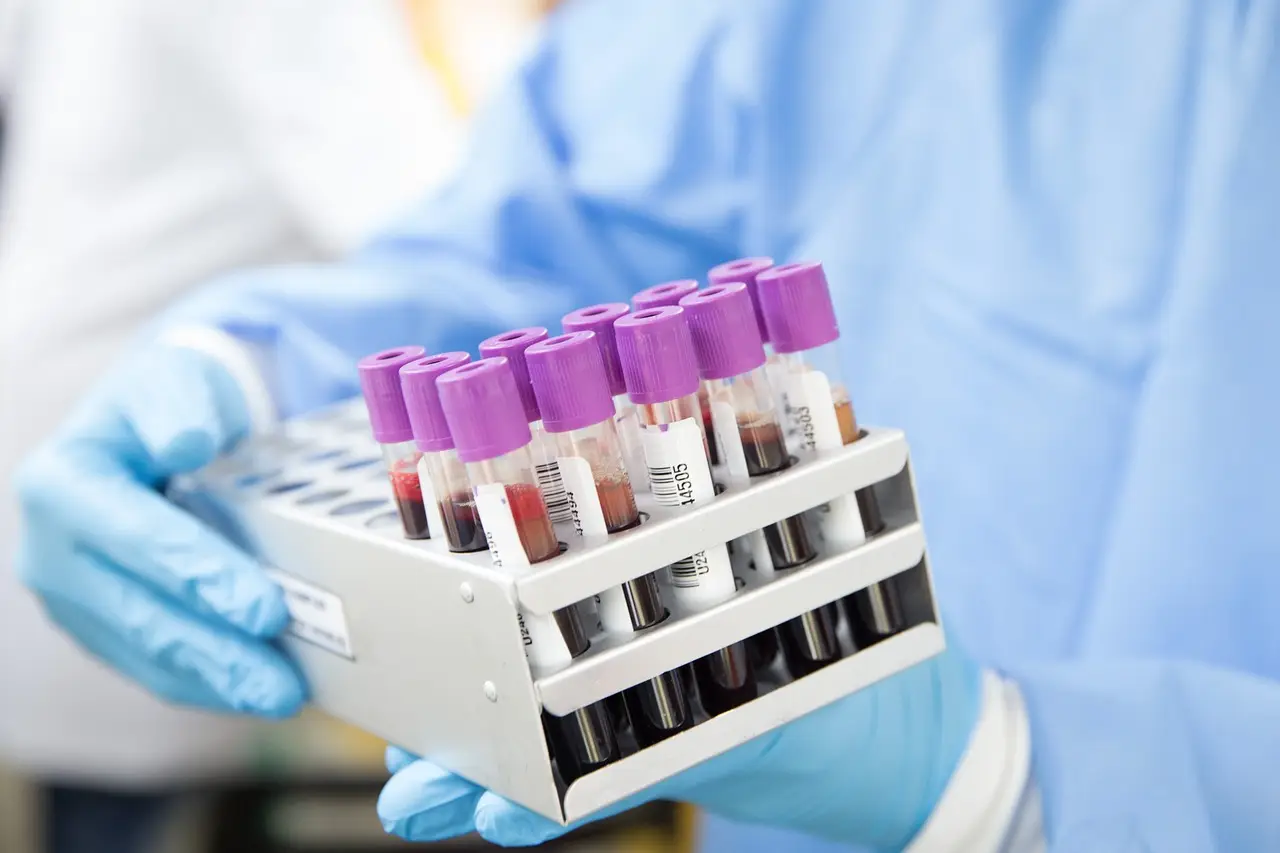
Unlike Theranos, Rythm isn't selling a proprietary machine that claims to run a battery of tests on a few drops of blood. The company offers a monthly subscription built around a painless collection kit: a heat pack, a Tasso device, and a roughly one-milliliter vial, according to the company's website. Users send the sample back to Rythm's own lab, which tests it for more than 25 biomarkers.
The equipment matters too. Wade told Inc. that Rythm uses the same laboratory equipment as Quest Diagnostics and Labcorp — the two giants of clinical diagnostics. That's a deliberate contrast with Holmes, whose downfall centered on Edison, a device whose capabilities she overclaimed.
Who else is in the race?
Rythm isn't alone. Startups including Superpower and Function are also raising hundreds of millions of dollars to bring blood testing outside traditional clinical settings, according to Inc. And they're recruiting famous faces to win consumer trust — from DJ Diplo to NBA star Giannis Antetokounmpo, with Matt Damon and Pedro Pascal also betting on the category.
Rythm's own user lineup leans heavily on star power. The company's website features DJ Diplo, NFL player Odell Beckham Jr., Spanx founder Sara Blakely, and Marquis Jet co-founder Jesse Itzler.
Is the growth real?
The numbers Wade shared suggest rapid adoption. He told Inc. that by October 2026, Rythm had grown its subscriber base roughly 20-fold from the year prior. That's a 20x expansion in twelve months for a company that didn't exist before 2024.
The takeaway in plain words: consumers are paying monthly for biomarker tracking at a scale Theranos never legitimately reached.
Can the sector escape the comparison?
Probably not soon. As Inc. notes, comparisons between companies like Wade's and Theranos remain inevitable, because both ultimately sought the same thing — making blood testing more accessible outside traditional clinical settings. That promise became notorious after Holmes's startup collapsed.
The difference this time, founders argue, is transparency about methods: standard lab equipment, named devices, and published biomarker counts rather than a black-box machine.
Whether that's enough depends on execution. The sector's test now is keeping clinical credibility while scaling fast — the exact balance Theranos failed to strike.
Source: inc.com
More from Grace Kim
Show full bio
Market editor covering people, launches and day-to-day practice in entrepreneurship, startups and venture funding at Business Bearings.
2,582 articles