Starcomm Link Raises Series A+ and A++ to Scale 6G Network
Starcomm Link has closed Series A+ and Series A++ rounds to speed global rollout of its 6G space-ground integrated network, the company announced, without disclosing round sizes or investors.
By Olivia Hart
3 min read
Updated
What's News
- Starcomm Link closed both a Series A+ and a Series A++ financing round.
- Proceeds are designated to accelerate global deployment of its 6G space-ground integrated network.
- The announcement, reported by 36Kr, did not disclose round sizes, investors, or valuation.
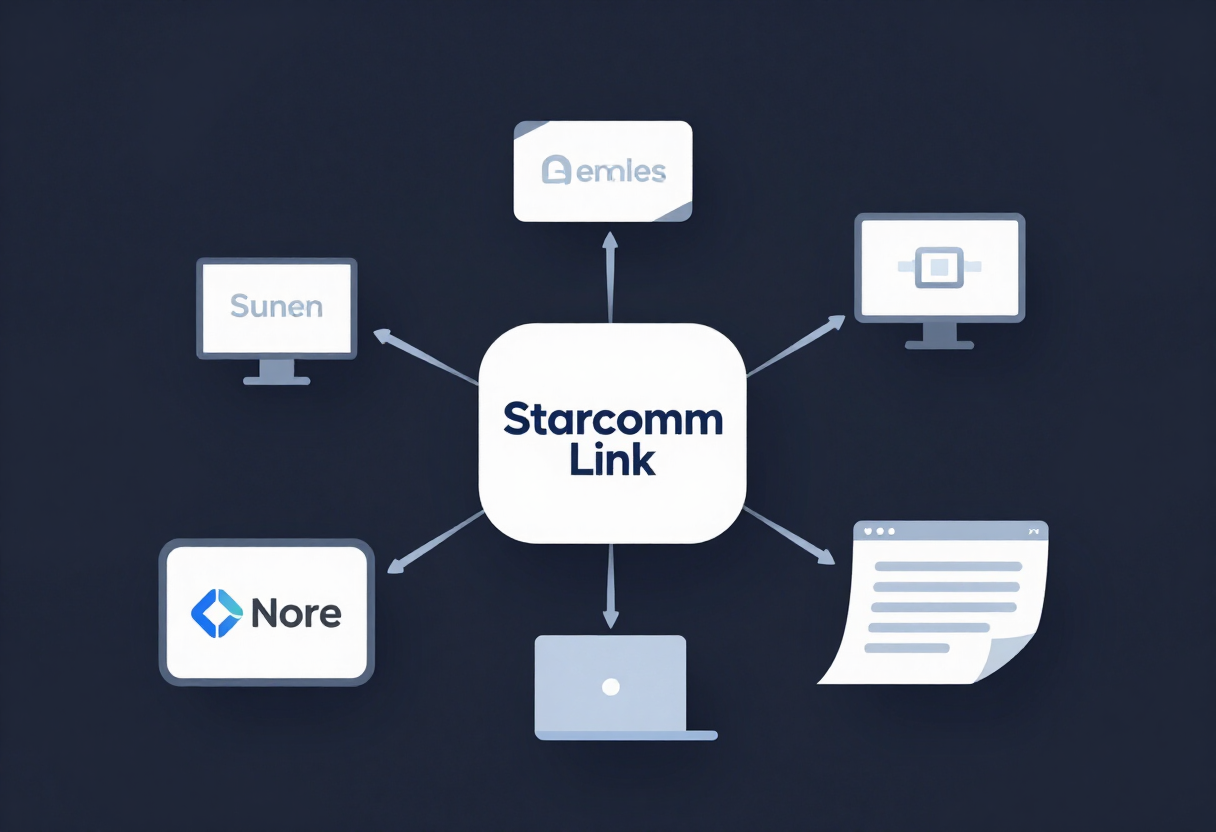
Starcomm Link has closed two consecutive funding rounds — a Series A+ and a Series A++ — with the proceeds earmarked to accelerate the global deployment of its 6G space-ground integrated network, according to an announcement reported by 36Kr.
The back-to-back structure of the rounds signals investor appetite for the company's core proposition: a network architecture that links satellites in orbit with terrestrial infrastructure into a single 6G-ready system. Starcomm Link positions this integrated approach as the foundation for next-generation connectivity, where coverage extends beyond the limits of ground-based towers.
The company did not disclose the combined value of the two rounds, the identities of the participating investors, or the valuation attached to the deals in the announcement. The financing follows the company's original Series A, making Starcomm Link one of the ventures extending its runway through incremental plus-rounds rather than jumping directly to a full Series B — a pattern increasingly common among deep-tech and space-sector startups seeking to fund capital-intensive infrastructure without resetting valuation terms.
What the money is for
According to the announcement, the capital will fund acceleration of the global deployment of the space-ground integrated network. That deployment ambition places Starcomm Link in a race with far larger players. Satellite-to-phone connectivity has moved from concept to commercial service in recent years, with major constellation operators and telecom equipment vendors racing to define the standards that will govern 6G.
The space-ground integration thesis rests on a straightforward premise: terrestrial networks cover densely populated areas well but leave oceans, deserts, air corridors, and remote regions underserved. A network designed from the outset to treat satellites and ground stations as one system — rather than bolting satellite links onto existing mobile infrastructure — could deliver continuous coverage and lower latency for global users. Starcomm Link is building toward that 6G-era architecture.
The plus-round playbook
The decision to raise a Series A+ followed by a Series A++ tells its own story. For infrastructure startups, capital needs arrive in stages: technology validation, prototype constellation deployment, early commercial pilots, then scale. Staged plus-rounds let a company match fundraising to technical milestones while giving earlier investors protection against dilution and later investors a fresher entry price.
For a venture building space hardware and network software simultaneously, the burn profile is steep. Satellite manufacturing, launch costs, spectrum licensing, and ground-station construction all demand cash well before subscription revenue materializes. The two new rounds give Starcomm Link the balance sheet to push through that gap.
The 6G clock is running
The timing matters. Standard-setting bodies and major telecom players have begun sketching the requirements for 6G, with consensus building around the idea that non-terrestrial networks — satellites, high-altitude platforms, and airborne relays — will be native components of the standard rather than add-ons. Companies that have deployed working space-ground infrastructure before the standard solidifies around 2030 will hold an advantage in patents, spectrum positions, and operator partnerships.
Starcomm Link's announcement frames its financing squarely within that timeline. The stated purpose — accelerating global deployment of the 6G space-ground integrated network — positions the company not as a component supplier but as an architecture owner.
What to watch
The announcement leaves the key commercial questions open: the size of the rounds, the investor roster, the state of the company's constellation, and its first target markets. Each will shape whether the fresh capital translates into deployed infrastructure or extended development time. The next visible milestones will likely include constellation launch activity, partnerships with telecom operators, and any disclosure of the round sizes in regulatory or trade filings — the details that will reveal whether Starcomm Link's acceleration is a sprint or a long march.
Source: GN: Venture Capital
More from Olivia Hart
Show full bio
Staff writer covering industry trends and analytics at Business Bearings.
228 articles