Sunrun and Overview Energy: The Grid AI Needs Is Already Built
Sunrun's 5 GWh of home batteries and Overview's space solar could power a quarter of U.S. load growth, CEOs said — if regulators let existing grid assets work harder.
By Grace Kim
4 min read
What's News
- Sunrun had 1.06 million subscribers and 5 GWh of networked home battery storage as of Sept. 30
- Meta signed an April deal for up to 1 GW of Overview's space solar capacity, with an orbital demo in 2028 and delivery by 2030
- U.S. electricity prices rose roughly 40% on average over the past five years, Fortune reported
- At least 14 Ohio municipalities passed data center bans or restrictions on Election Day
By Grace Kim
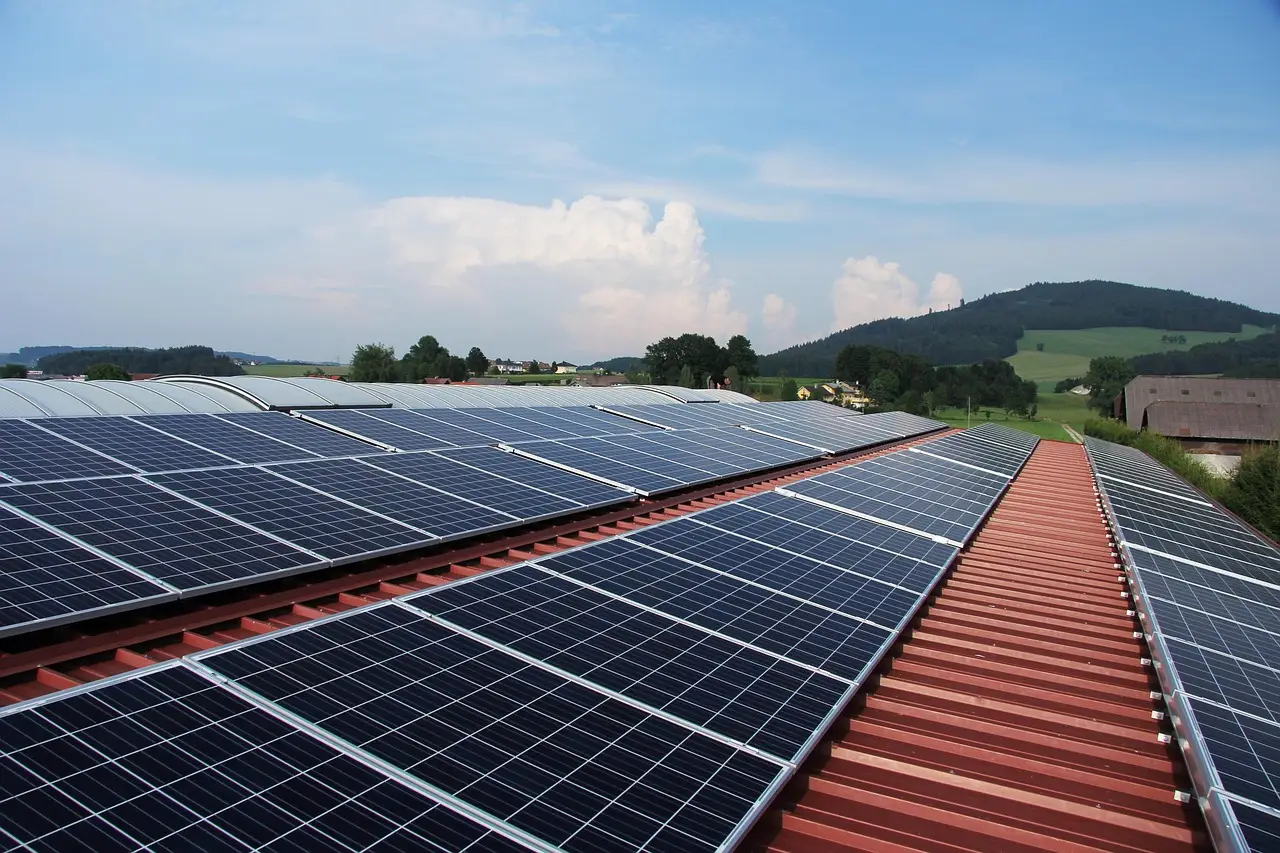
Sunrun sits on 5 gigawatt-hours of networked home battery storage, and CEO Mary Powell wants to use every kilowatt of it to solve AI's energy crunch. As of Sept. 30, the rooftop solar and battery company counted roughly 1.06 million subscribers — a fleet Powell calls an untapped power plant waiting for the right market rules.
Speaking at the Fortune 500 Innovation Forum in Detroit this week, Powell and Overview Energy co-CEO Abdullah Al-Shakarchi argued that the answer to AI's soaring power demand isn't only new construction. It's squeezing more out of what the grid already has.
"We need more generation, that's true, but we already have all these assets on the grid that we're just not taking advantage of," Al-Shakarchi said. "Gas plants are 60, 70% utilized based on where you are. Transmission often sits doing nothing. And so what are the right solutions that we can build to take advantage of what we've already got? Because that lets us lower the amount of things that we need to build. And I think that is the future of energy."
Powell agreed: "Ultimately, it is about having power generated right where it's needed. I mean, the grid was constructed as it is over 100 years ago. And it's just time that we really advance it."
The session was moderated by Fortune's Allie Garfinkle.
Why data centers became a political problem
The efficiency push lands as the AI buildout has turned into an affordability issue on the ballot. In this month's midterms, Democrat Abdul El-Sayed won Michigan's Senate race arguing that data centers should pay for their own power. At least 14 Ohio municipalities passed data center bans or restrictions on Election Day.
"The voters told us what we knew, right?" Al-Shakarchi said. "Energy prices are high. People are scared of data centers. We need these data centers. They're clearly inevitable in many ways. And the grid needs to step up to fix these challenges."
Powell put a number on the pressure: "Electric rates have gone up, what, 35% in the last five years. And people are really concerned." She was, if anything, conservative — Fortune has reported U.S. electricity prices rose roughly 40% on average over the past five years.
What is Overview Energy building?
Overview Energy is building satellites that collect sunlight in space, where it always shines, and beam it down as near-infrared light onto existing utility-scale solar farms so they keep producing after dark. "We're creating solar power at night," Al-Shakarchi said.
The payoff comes from hardware already in the ground. "If in the U.S. you build no more utility-scale solar farms by the year 2030 and you simply switch them on at night, we can power a quarter of the country's load growth over the next decade without building anything new on the ground," he said.
Meta signed on in April, agreeing to early access to up to 1 gigawatt of Overview's space solar capacity, with an orbital demonstration planned for 2028 and commercial delivery expected by 2030. Cheaper, reusable rockets make the economics work, Al-Shakarchi said: "That makes us competitive with something like natural gas."
Do home batteries and space solar compete?
Not at all, said Al-Shakarchi — he called it "a great partnership." Overview could power a solar farm overnight, send that energy over idle transmission lines, and top off home batteries before a storm or evening peak.
"If we can charge the battery not only once during the day but during the day and night, all of a sudden the cost of that battery to the consumer is lower," he said.
Powell, who has made a "storage-first" strategy central to Sunrun, said the real bottleneck is regulatory. Some markets still bar home batteries from sending power back to the grid, and she expects more to change that within the next year or two.
From NIMBY to BANANA
Powell spent roughly two decades at Vermont's Green Mountain Power, much of it as CEO, before joining Sunrun. Speed, she said, is now the whole game: "Utility solutions, I ran a utility for a couple decades; they take a long time. And in many ways, they're getting harder to build. It's really gone from NIMBY to BANANA. Build absolutely nothing anywhere near anyone."
Asked whether electricity will be cheaper or more expensive in 2036, Al-Shakarchi said: "I don't know if it will be cheaper or the same, but it won't be more expensive." Powell said the path to affordability is giving people "more direct ownership over your energy future."
Asked what she'd want a crystal ball to reveal about the year ahead, Powell didn't name a technology. She wants to count "awakened regulators" and market reforms.
"The solutions are sitting there," she said. "We have solutions sitting on the grid. We just need enlightened market reform and changes to make it happen."
Source: fortune.com
More from Grace Kim
Show full bio
Market editor covering people, launches and day-to-day practice in entrepreneurship, startups and venture funding at Business Bearings.
2,419 articles