Synthesia Brings AI Video Creation and Editing Into Claude Chats
Synthesia's new Claude connector, announced November 18, 2026, lets users generate and edit AI videos conversationally, with automated workflows fed by Slack, Notion, BambooHR and GitHub.
By Nathan Brooks
3 min read
What's News
- Synthesia announced its Claude connector on November 18, 2026.
- Syren was built into production in one week, mostly using Opus 5.5.
- The integration supports Claude Starter, Pro and Enterprise plans.
- Example workflows include a 30-second launch video per Slack post and a daily BambooHR onboarding video.
- Syren videos in Claude consume the same credits as videos made in Synthesia.
Synthesia announced on November 18, 2026 a custom connector that brings its AI video platform directly into Claude, letting users create and revise videos inside a conversation without switching tools. The connector also works alongside other Claude connectors, so material from connected business apps can feed individual videos or run automated workflows.
Here's the practical shape of it. A user starts with a short prompt or source material — a document, deck or spreadsheet. One request can summarize a Notion document and turn it into an explainer, or condense a Slack thread before generating a video. An in-chat widget handles workspace, template, brand-kit and avatar selection before generation begins. Afterward, the user asks in plain language for a new opening, a shorter cut or a different tone.
What Are the Two Editing Paths?
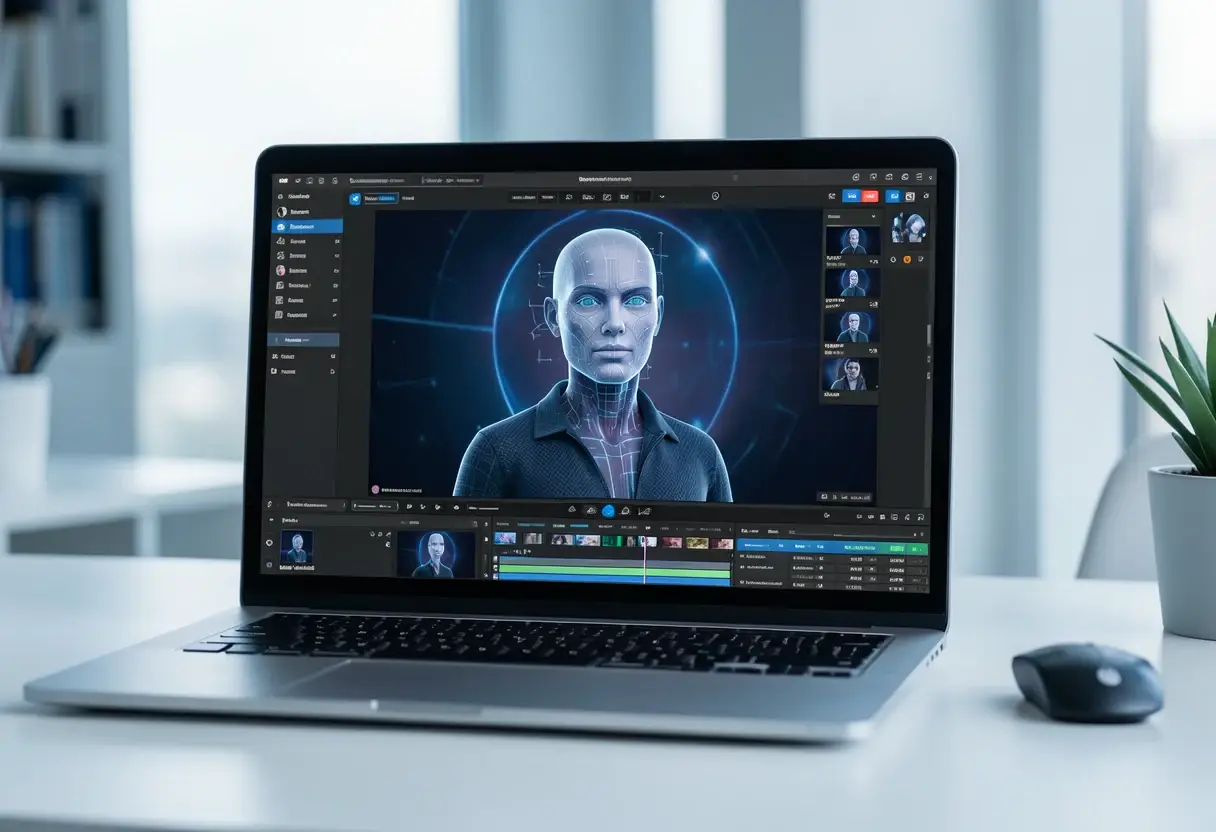
The in-chat Synthesia player defaults to Syren, the company's AI video agent for business. Controls cover the avatar or voiceover, visual treatment, and the video's length and format. Every round of edits is versioned, so users can reverse a change or recover an earlier draft. Claude can export the finished video at full quality, or the user can open it in Synthesia.
Synthesia says Syren uses Opus 5.5 to map out each video, produce its narration, and represent scenes as code for the company's rendering engine. The company also says Anthropic models helped its engineers build the proof of concept and then complete the production version in one week, mostly with Opus 5.5. Syren targets explainers, how-tos, launch videos and marketing content.
Studio is the second path, built for cases where a script must stay exact or a specific template is required. It assigns an avatar to deliver the text without altering a single word, then opens a draft in Synthesia Studio's editor for scene-level adjustments. The split is clean: prompt-led drafting goes through Syren, precise language and direct scene control go through Studio.
How Do Automated Workflows Run?
Workflows can trigger on demand, on a schedule, or when something new lands in Slack or an inbox. Synthesia's examples give a sense of the range:
- Turning each post in a product-releases Slack channel into a 30-second launch video
- Using a Zoom call transcript to create a 60-second recap covering next steps
- Checking BambooHR every weekday morning and generating a welcome video for each person joining that day
- Producing how-to videos from new help-center articles
- Building changelog videos from GitHub release notes and merged pull requests
That BambooHR example is the one to sit with. A daily onboarding video per new hire, produced with zero human steps, is the kind of repeatable output this integration is designed for.
What Does Access and Setup Require?
The integration supports Claude's Starter, Pro and Enterprise plans. Users connect by adding a custom connector in Claude with Synthesia's server address, leaving the OAuth fields blank, signing in to Synthesia, and activating it through the plus menu in a new chat. A free Synthesia account can be created during connection.
Team and Enterprise workspaces need administrator setup first: the connector is added through Organization settings, after which members connect individually. Syren videos made in Claude draw on the same credits as videos made in Synthesia, so there's no separate billing bucket to track. Brand kits remain an Enterprise-plan feature.
What Does This Change for Enterprises?
For enterprise buyers, the central shift is that connected business systems can now supply both one-off videos and repeatable production pipelines inside Claude. Administrator setup, plan-based brand controls and Studio editing give organizations governance over automated output — the difference between a demo and something you'd let near customers.
The bet underneath it: if a production-grade video agent can be shipped in a week on Opus 5.5, conversational video stops being a novelty and starts being another output format for the systems companies already run.
Source: unite.ai
More from Nathan Brooks
Show full bio
News editor covering regulation, policy and their impact on entrepreneurship, startups and venture funding at Business Bearings.
2,352 articles