This Butterfly Tracker Weighs as Much as a Grain of Rice — No Battery
CTT's BlūMorpho — 3.5 cm, grain-of-rice weight, solar-powered — is tracking monarchs from Ontario, with about 1,500 butterflies tagged this year.
By Nathan Brooks
3 min read
What's News
- The BlūMorpho transmitter is 3.5 cm long, weighs roughly a grain of rice, and runs on a solar panel smaller than a dime's torch.
- About 1,500 butterflies were tagged in 2025, up from 400+ last fall; the goal exceeds 2,000.
- In spring 2025, 30 tracked butterflies were released from Ontario, Canada, under Project Monarch.
- CTT, in telemetry since 2007, brought manufacturing in-house during the COVID-19 pandemic.
- Transmitters are attached with nontoxic eyelash glue after 20 minutes of chilling in a fridge.
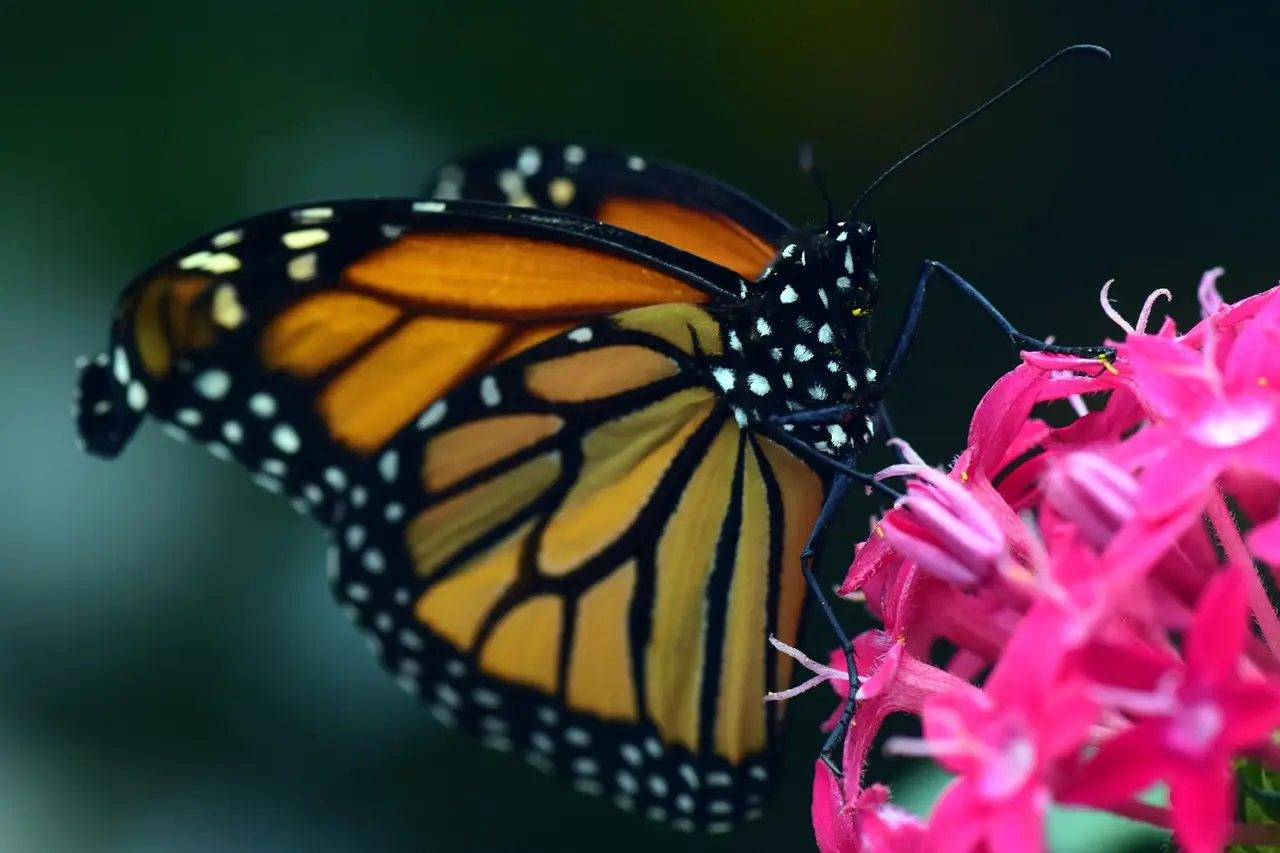
A New Jersey company has built the smallest wildlife tracking device on the planet: a 3.5-centimeter transmitter that weighs about as much as a grain of rice and carries no battery at all. The device, called BlūMorpho, was designed by Cellular Tracking Technologies (CTT) specifically to ride on the back of a monarch butterfly — a creature that often weighs less than a gram.
CTT has operated in wildlife telemetry since 2007, and its core business has always pushed toward lighter hardware. "We've been a telemetry company since 2007, and we work primarily with birds, so everything is about saving weight," David La Puma, CTT's vice president of global market development, told Fast Company. Designing for a butterfly, he said, was "an extreme constraint," and bringing the product to life took significant investment.
How do you power a tracker with no battery?
The BlūMorpho solves the weight problem with a solar panel smaller than the torch on the back of a dime, mounted at the top of the transmitter. The rest of the device is essentially a skinny antenna running down the butterfly's body, transmitting data to fixed receiver stations on the ground.
CTT's ability to manufacture at this scale is itself a business story. The company brought its manufacturing in-house during the COVID-19 pandemic, which let it produce minuscule parts on its own rather than depending on outside suppliers. That vertical integration is what made a device this small commercially feasible.
What does the tracker change for researchers?
The device is already deployed at scale through Project Monarch, a research collaboration. In spring 2025, 30 butterflies carrying BlūMorpho transmitters were released from Ontario, Canada, to track their southward migration. More than 400 butterflies were tagged and tracked last fall. That number grew to roughly 1,500 this year, and researchers aim to pass 2,000 after tagging over the winter.
At the Vermont Center for Ecostudies, conservationists are using the trackers to answer a basic question they've never been able to answer before: how many Vermont monarchs actually make it to Mexico — and if they don't, where along the route the threats and bottlenecks are. They're also testing whether butterflies that migrate earlier in the year have better survival odds.
The tagging process itself is unglamorous but precise. Staff chill each butterfly in a fridge for about 20 minutes to slow it down, pin it on a spreading board with small weights holding its wings open, then glue the transmitter to its thorax with nontoxic eyelash glue that dries in 15 minutes. After a short check in a temporary cage, the butterfly goes back into the wild.
"With these transmitters, it's the first time we can actually see the movements of individuals. We've never been able to do that before," Desirée Narango, a conservation scientist at the center, told Fast Company.
Why the data matters now
The findings are already reshaping how conservationists think about habitat. The tracked butterflies take varied migratory paths across a broad geographic area, and the data reveals their flight speed, distance, sustained flight duration, and roughly where they stop to refuel on nectar — whether that's a backyard pollinator garden, a school planting, or a spot near threats like roadways and pesticides.
"Being able to see just how important these small patches of habitat are for their migratory journeys has been eye opening," Narango said.
The timing matters. Butterflies are in decline due to climate change and habitat loss, and granular movement data could sharpen conservation spending. The center is already discussing putting the transmitters on dragonflies and bumblebees next. "There are a number of migratory insects here in North America that we know almost nothing about," Narango said. "This technology will really revolutionize our understanding of migratory behavior."
Original: images.fastcompany.com
More from Nathan Brooks
Show full bio
News editor covering regulation, policy and their impact on entrepreneurship, startups and venture funding at Business Bearings.
1,309 articles