CMB.Tech Crude Tankers Earn Nearly $150,000 a Day
CMB.Tech's largest crude tankers earned nearly $150,000 a day in Q3, almost five times last year's rate, as Hormuz disruptions tighten ship supply. Traders now target a break above $17.
By Grace Kim
3 min read
What's News
- CMB.Tech's biggest crude tankers earned nearly US$150,000 a day on the spot market in Q3, almost five times the year-earlier rate.
- In Q4 so far, CMB.Tech has booked an average of about US$635,000 a day for 59% of its available days.
- Strait of Hormuz disruption is tying up tankers for longer, reducing available ships and supporting freight rates.
- StoneX Trading's chart levels: gap resistance at $17, targets at $18 and $19, bullish bias invalidated below $14, with the $14.42 double bottom as a tighter stop.
- The stock's October high was $19.10; a double bottom formed above the 200-day EMA before Tuesday's strong-volume gap higher.
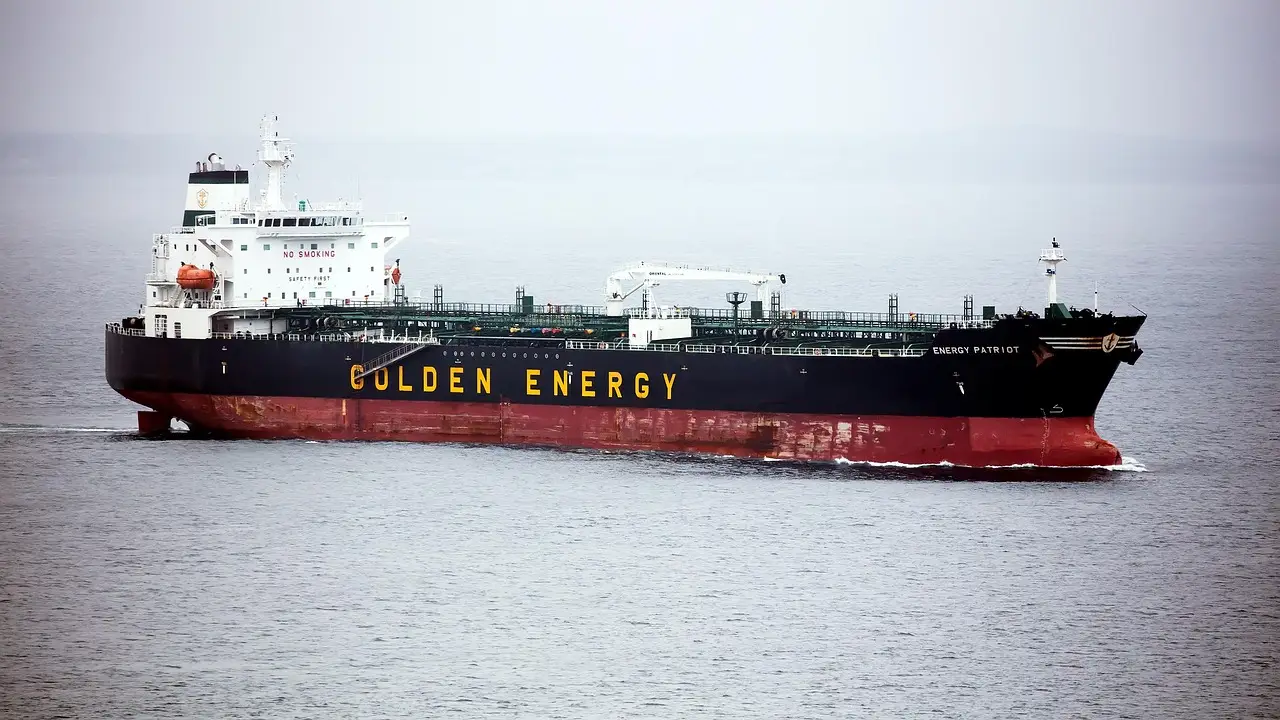
CMB.Tech's biggest crude tankers earned nearly US$150,000 a day on the spot market in the third quarter, according to StoneX Trading's analysis of the Euronext-listed carrier (CMBT). That's almost five times the rate the same vessels commanded a year earlier.
The acceleration hasn't slowed. So far in the fourth quarter, CMB.Tech has booked an average of roughly US$635,000 a day for 59% of its available days, StoneX Trading reported in its chart note on the stock.
Here's the part that matters for anyone tracking the trade: the rate surge isn't driven by booming oil demand. Disruption around the Strait of Hormuz is keeping tankers tied up for longer voyages, which leaves fewer ships available and supports freight rates. Longer trips effectively shrink the fleet, and the market pays for the scarcity.
Why the Stock Chart Matters Now
CMB.Tech's stock remains in an uptrend on the daily chart, and StoneX Trading sees signs that the correction from the $19.10 October high may be ending. Two technical signals stand out:
- A double bottom formed above the 200-day exponential moving average, a level traders often watch as the dividing line between longer-term strength and weakness.
- The stock gapped higher on Tuesday on strong volume, signaling buyers stepping in with conviction rather than drifting upward on thin trade.
For bulls, the ideal setup isn't chasing Tuesday's move. StoneX Trading suggests prices retrace toward Tuesday's gap, which would offer a better reward-to-risk ratio for anyone entering long. In plain words: wait for a pullback, then buy the dip.
What Are the Price Targets?
The levels are clearly mapped. Gap resistance around $17 is the first upside target. That's the number the bulls are eyeing, as the analysis headline puts it — the "bulls eye break above $17."
A break above $17 would bring $18 into focus, followed by $19, which sits near the October high of $19.10. The progression is straightforward: clear the gap, clear $18, then retest the peak.
Where Does the Trade Fall Apart?
Every setup needs an exit. A break below $14 would invalidate the bullish bias, according to StoneX Trading. Traders wanting a tighter risk control could use the $14.42 double bottom as a stop reference instead, which limits downside while giving the position room to work.
The distance between the $14.42 stop and the $19 target frames the trade's potential: roughly $4.50 of upside against about $1.70 of defined risk from current levels near the gap — the kind of asymmetry chart-driven buyers look for.
Freight Rates or Chart Pattern — Which Runs This Story?
Both, and they point the same way. The fundamental driver is supply tightness in the tanker market, not demand growth. Hormuz disruptions extend voyage times, tie up vessels, and keep spot rates elevated — CMB.Tech's Q3 earnings and its $635,000-a-day Q4 bookings are the direct readout.
The technical picture adds timing. An intact uptrend, a double bottom above the 200-day EMA, and a strong-volume gap higher all suggest the pullback from $19.10 is losing steam. StoneX Trading's base case: a move toward $17 first, with $18 and $19 following if the break holds.
The caveat is built into the levels. Below $14, the thesis is dead; above $17, it's live. As long as Hormuz-driven disruptions keep tonnage scarce, the freight side of the story continues to work in the fleet owner's favor — and traders will be watching whether the chart confirms it.
Source: tradingview.com
More from Grace Kim
Show full bio
Market editor covering people, launches and day-to-day practice in entrepreneurship, startups and venture funding at Business Bearings.
2,728 articles