Democrats Take Both Chambers, Markets Rally and AI Debt Hits $623 Billion
Democrats took Congress 54-44 in the Senate and 228-129 in the House, markets rallied on gridlock, and AI-linked tech debt hit a record $623 billion, topping dot-com era levels.
By Olivia Hart
4 min read
What's News
- Democrats won the Senate 54-44 and the House 228-129 in the midterms.
- AI-linked tech debt reached $623 billion in 2025, about 15% of non-bank corporate debt, per Wells Fargo.
- The S&P 500 has gained an average 14.4% in the 12 months after every midterm since 1946, per Deutsche Bank.
- Trump said he is "absolutely willing to accept those results" and work with Democrats.
- Brent crude fell to $102 a barrel; Bitcoin rose to $78,406.
By Olivia Hart
Democrats will control both chambers of Congress after Tuesday's midterms—the Senate at 54-44 and the House at 228-129 as of Wednesday morning—delivering what dozens of front pages called a "stunning rebuke" to President Trump. It was only the third time in 50 years that a party lost both chambers at once, according to Fortune's Catherina Gioino.
The Wall Street Journal headlined: "Democrats Take Congress in Stunning Rebuke of Trump." The New York Times declared: "Party Flips Senate and House as Voters Deliver Stunning Rebuke to Trump." France's Le Monde later swapped "stunning rebuke" for "spectacular rejection" after sensing the phrase was overused.
Trump told Fox News: "I think the Democrats did a good job, I really do, I think they did a good job. They fought hard." He told the New York Times he was "absolutely willing to accept those results" and would work with Democrats: "We'll probably work something out."
Will the defeat change Trump's policies?
Probably not. Chris Ruddy, the president's friend and CEO of Newsmax, told the BBC the results were "horrendous" for Trump but predicted no course correction on the war, tariffs, or gas prices. "He's not a man that reflects. He's got sort of two drives, fast and faster, in his gearbox. I think he's going to continue to pursue his policies by executive order and there will be a lot of battles," Ruddy said. He added: "The president likes to respond usually with brute force."
The Republican losses carry a fiscal footnote: Trump had promised every adult $5,000 if Republicans kept Congress, a payout taxpayers will now avoid. Fortune also reported what it called possibly "the biggest defeat for big money in politics"—billionaires poured hundreds of millions into Tuesday's races and still lost.
What does gridlock do for markets?
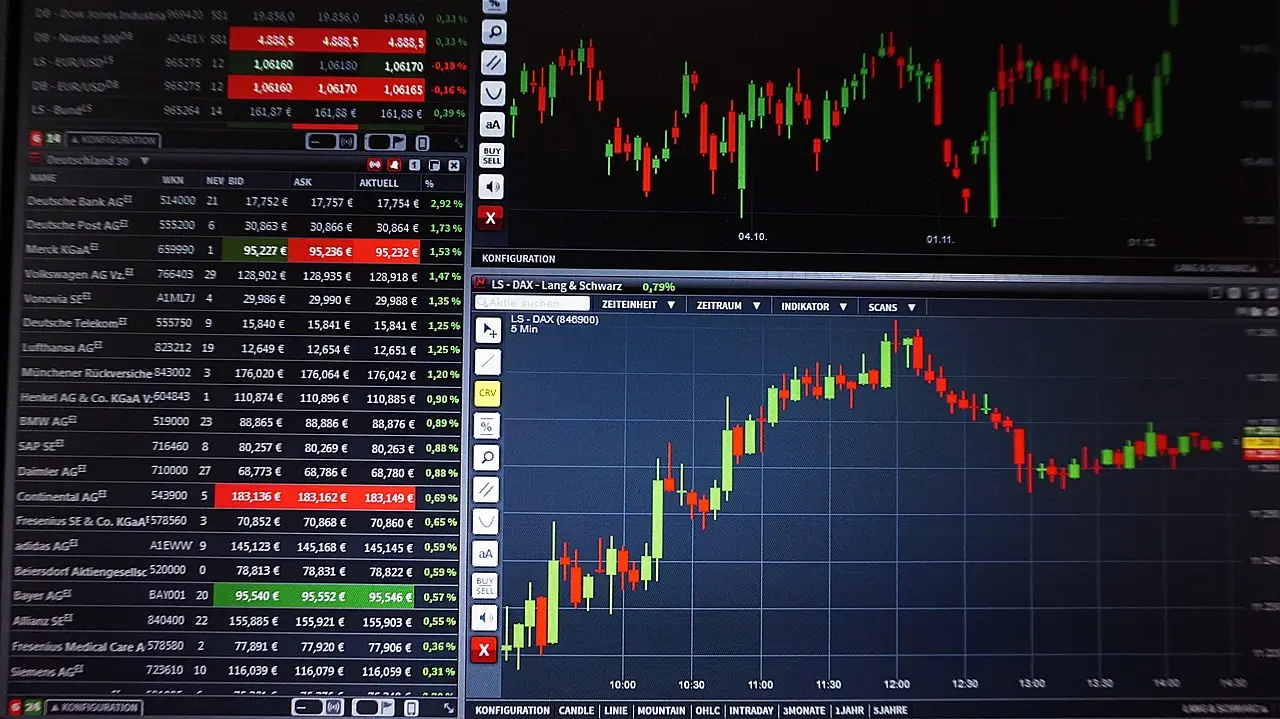
Global markets rallied on the certainty that legislative surprises are now off the table. The S&P 500, down 2.64% over the past month, closed up 0.36% Tuesday, and U.S. futures rose another 0.8% Wednesday morning.
- Europe's Stoxx 600 gained 1.14% in early trading; the FTSE 100 rose 0.85%.
- China's CSI 300 jumped 2.31%; India's Nifty 50 rose 0.63%; South Korea's KOSPI added 0.62%. Japan's Nikkei 225 fell 1.42%.
- Brent crude declined to $102 per barrel. Bitcoin rose to $78,406.
History favors the rally lasting. "The S&P 500 has been higher 12 months after the election-day close following every midterm from 1946 to 2022. The average gain is +14.4% and the median +13.7%," Deutsche Bank's Jim Reid told clients. IG's Chris Beauchamp noted the index has risen after every midterm since 1998, with average annual gains of nearly 12%.
The caveat is obvious: past averages guarantee nothing about a Congress that has yet to sit.
How big is the AI debt buildout?
AI-linked tech debt has surpassed dot-com era levels, according to Wells Fargo's Ohsung Kwon and colleagues. "We estimate 33% of capex has been funded with debt this cycle as of 3Q, including off-balance sheet activity," Kwon wrote—up from 22% in the second quarter.
Companies issued another $141 billion in AI debt in October, bringing the 2025 total to $623 billion. That surge pushed tech debt to roughly 15% of all non-bank corporate debt, an all-time high. Voters noticed: Ohio, which already has 125 local data center moratoriums, approved more restrictions via its 21 ballot measures on AI infrastructure, Fortune's Sasha Rogelberg reported.
Is Paris actually burning?
No, despite the plywood on shop windows. Fortune found the French capital functioning through protests over education funding—770 arrests nationwide on Saturday and Molotov cocktails notwithstanding. The interior minister admitted in October that police had "lost control," but the visible city remains, by one reporter's account, unremarkable to a New Yorker.
The real risk is fiscal, not civic. Neither Marine Le Pen nor Jean-Luc Mélenchon has offered spending plans the market takes seriously ahead of April's elections. If France's finances fail, the ECB's options are a bond-buying bailout or a Greece-style austerity program—the latter cut Greek GDP by 25% and pushed unemployment to 28%.
Elsewhere on the radar
- AllianceBernstein's Inigo Fraser Jenkins charted a decline in couple formation, strongest among those without a degree, with timing that "would seem to fit" the launch of smartphones, even if the evidence is circumstantial.
- Susan Collins' Maine concession could leave New England without a Republican in Congress for the first time since the 1850s.
- Democrats taking the House puts Trump's family businesses first in line for subpoenas.
- Novo Nordisk shares jumped 6% on Wegovy pill sales; Google plans a $15 billion data center expansion in Malaysia.
- A prankster who faked a $10 Apple Pay theft from Red Baron pizza worker Walt Z., a Michigan father of four, became an online pariah while a GoFundMe for Walt raised $761,514. "It's not a joke to me," Walt said. Red Baron posted: "He's got a fan club. Including us."
The through-line for investors: gridlock is priced in, but $623 billion of AI debt and an unresolved French budget fight are not going away with the election.
Original: wsj.com
More from Olivia Hart
Show full bio
Staff writer covering people, launches and day-to-day practice in entrepreneurship, startups and venture funding at Business Bearings.
1,511 articles