European Insurers Cap Riot Coverage as Losses Hit Billions
European insurers are capping riot coverage as French protest losses near €1.2 billion, with SRCC risk now treated like a natural catastrophe across the industry.
By Nathan Brooks
4 min read
What's News
- French insured losses from recent protests expected below €1.2 billion, per Morningstar DBRS
- June 2023 French riots cost €730 million; Gilets Jaunes protests cost about €220 million
- France's state-backed riot fund takes effect in January, funded partly by a 0.8% premium increase
- Howden Re launched its UNREST analytics program in September
- Verisk Maplecroft's Europe unrest gauge is at its highest since 2021
European insurers are capping coverage, raising deductibles and — in the highest-risk locations — dropping riot cover entirely, as a wave of street protests drives insured losses that could exceed €1.2 billion in France alone. Marcos Alvarez, who oversees global insurance at Morningstar DBRS, says the industry is drawing a stark conclusion from the severity of recent events.
"Because of the severity and the magnitude of losses, SRCC is now behaving like a natural catastrophe," Alvarez said. "These aren't secondary threats anymore."
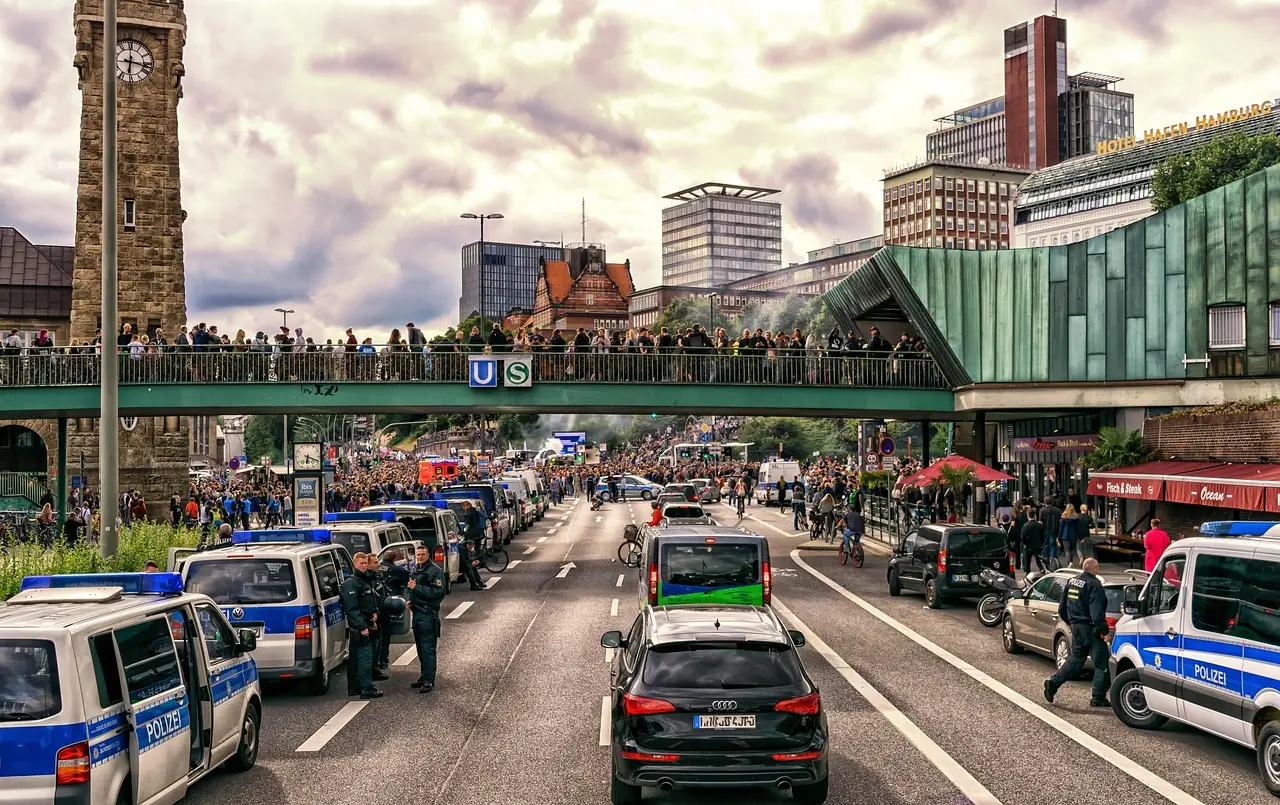
SRCC stands for strikes, riots and civil commotion — a category of risk that has spread across Europe in recent weeks. Student protests that began in France have morphed into region-wide demonstrations over affordability, while anger over planned data centers has fueled additional unrest. Protests have also hit cities in Germany, Belgium and Portugal.
What does this change for businesses?
In practice, commercial policyholders face tighter terms across the board. Nicolas Aubert, CEO of Howden France, says the shift is "actively reshaping" coverage.
"Insurers have had to move quickly to speed up claims payments and support affected businesses," Aubert said. "The strain shows in tighter terms — higher deductibles, lower limits and coverage restrictions" — all of which is "leaving some policyholders exposed."
More than half a million people marched across France in mid-October, with violence and looting damaging public buildings and stores. Police have since stepped up their presence and introduced new requirements to keep marches peaceful.
AM Best, the insurance-focused credit-rating firm, notes that SRCC coverage — historically bundled as a standard part of commercial policies — is now being underwritten separately to reflect the potential for significant losses.
"As evidenced by multibillion-dollar losses from the unrest in Minneapolis and New Caledonia in 2020 and 2024, the 2025 Nepal riots, and the recent widespread destruction in France, SRCC events can have a significant impact," Mathilde Jakobsen, senior director at AM Best, said in a recent note.
How big are the numbers?
The French loss trajectory tells the story. The Gilets Jaunes protests of 2018-19 caused roughly €220 million in insured losses, according to Morningstar DBRS. The June 2023 riots generated about €730 million — more than triple the earlier figure. The current round has already disproportionately hit commercial premises and public buildings, with expected losses below €1.2 billion — a number Morningstar DBRS says may be revised higher if unrest continues.
Alvarez points to a structural shift: "Typical riots were concentrated in one city for a couple of days, but now the violence is being correlated across a country or even across several countries." Simultaneous multi-property losses, he says, put "a different type of strain on insurers' capital, earnings and capital ratios."
Allianz SE, Europe's biggest insurer, now advises companies to treat SRCC as a risk of high-income countries, not just emerging markets. Ian Humphries, who heads Allianz's political violence and terrorism unit in London, says the insurer isn't applying "any broad reactive restrictions" to the latest protests. Underwriting is "case-by-case," factoring in "proximity to areas that may be more susceptible to civil unrest," he said.
New tools and a state-backed backstop
The industry is racing to model the risk. In September, Howden Re launched UNREST, an analytics program giving insurers and reinsurers access to recent data on strikes, riots and civil unrest. Howden says the model identifies where exposures concentrate, how events might unfold and potential portfolio impacts — because older models, the broker argues, no longer capture localized, increasingly frequent SRCC threats.
Verisk Maplecroft, which models SRCC catastrophe risk, calls the current protests Europe's "most significant concurrent unrest" in years, with its risk gauge for large-scale unrest at its highest since 2021. "Large demonstrations do not inevitably descend into rioting or looting, but the pattern seen in recent weeks — whereby initially peaceful protests have at times been joined or exploited by more confrontational groups — means that further damaging unrest cannot be ruled out," said Jess Middleton, senior Europe analyst at Verisk Maplecroft.
France is moving toward a structural fix. This year it approved a state-backed fund providing mandatory riot coverage in property policies for all businesses and homeowners. Expected to take effect in January, it will be financed by levies on insurers plus a 0.8% premium increase for policyholders, with insurers retaining 10% of the loss exposure.
"It ensures they still have skin in the game," Alvarez said. For risk managers, the message is direct: standalone SRCC terms, tighter limits and government backstops are becoming the new architecture of riot cover in Europe.
Source: insurancejournal.com
More from Nathan Brooks
Show full bio
News editor covering regulation, policy and their impact on entrepreneurship, startups and venture funding at Business Bearings.
2,029 articles