Hybrid Crabs Now Outnumber Snow Crabs in Bering Sea Survey
Hybrid crabs outnumber snow crabs in the Bering Sea after a heatwave killed 10 billion snow crabs. Legally unclassifiable, they now fill more than half the commercial catch — and quotas are frozen.
By Amara Osei
4 min read
What's News
- NOAA's 2026 survey found commercial-sized hybrid males now outnumber snow crabs in the Bering Sea.
- A 2018-2019 heatwave killed about 10 billion snow crabs, closing the fishery from 2022 to 2024 at a cost of hundreds of millions of dollars.
- 2025 hybrid counts exceeded the historical average by more than 13 times.
- Hybrids have no legal status or quota; they are sold as snow crabs and consume the snow crab quota.
- The North Pacific Fishery Management Council meets in January to discuss separate hybrid harvest rules.
Hybrid crabs now outnumber snow crabs among commercial-sized males in the Bering Sea, according to NOAA's 2026 survey. The surge follows a marine heatwave that killed roughly 10 billion snow crabs, and it has left US fisheries management without a legal category for more than half of the commercial catch.
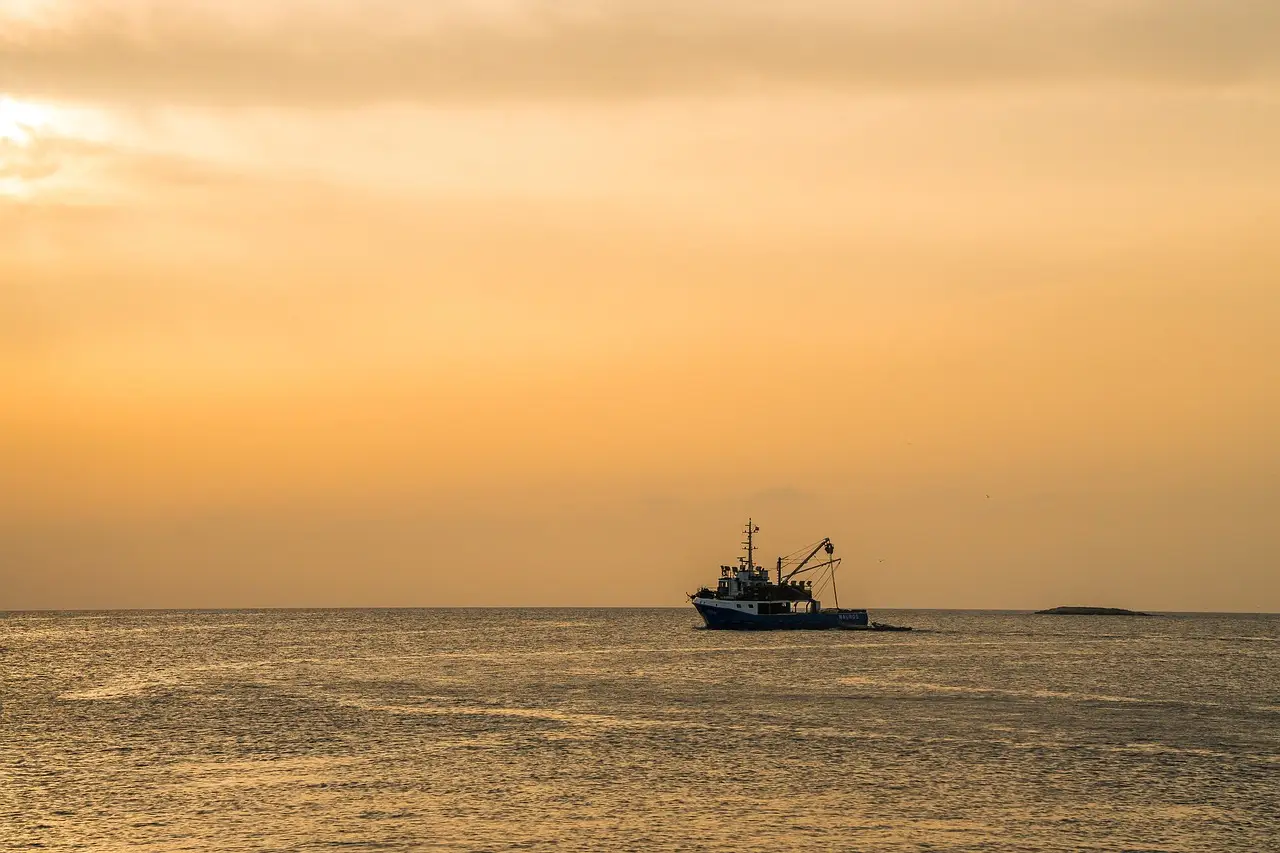
Researchers first clocked the anomaly in 2025, recording more than 13 times more hybrids than the historical average. On this summer's survey aboard the trawler Alaska Knight, hundreds of miles off Alaska's coast, the pattern held.
"The very first station we sampled, I was seeing all of these large male hybrids," said Erin Fedewa, a biologist at NOAA's Alaska Fisheries Science Center. "It was sort of like an affirmation for me."
What do the hybrids look like?
The animals are crosses between snow crabs — spider crabs that can reach a metre wide with legs outstretched — and their larger relative, the tanner crab. Each hybrid carries a strange mix: a squashed M-shaped mouth blending the snow crab's flat mouth with the tanner's distinctive M, and mismatched red and green eyes, one from each parent.
"I was struck by how hybridy they are," Fedewa said.
In the zone where the two species' ranges overlap, hybrids used to be a rarity. That changed after the extreme heatwave of 2018 and 2019, when the Bering Sea became nearly ice-free by early spring. The heat drove mass starvation and a snow crab collapse; early signs appeared in 2019, the picture turned shockingly obvious by 2021 — the 2020 survey was cancelled during Covid — and the event ranks among the largest marine mass mortalities ever recorded.
In a study linking species abundance to the heatwave, Fedewa and her colleagues found the absence of snow crabs — which compete for the same resources and may also eat younger crabs — let the hybrids flourish.
Why is this a management headache?
"Legally, hybrids do not exist," said Ben Daly, regional supervisor at the Alaska Department of Fish and Game, who oversees Bering Sea crab research and management. "You're either a snow crab or you're a tanner crab. A tanner crab has two red eyes and an M-shaped mouth; everything else is a snow crab."
The practical consequence: hybrids can be legally sold as snow crabs, but every one landed burns the snow crab quota, which regulators have held at conservative levels since the collapse. The fishery was closed entirely between 2022 and 2024, costing hundreds of millions of dollars.
Fedewa's first reaction to the scale of the surge: "This is going to be such a headache for fisheries management."
Fishing fleets, hoping to capitalise on plentiful hybrids and recoup years of losses, are pushing for separate quotas. Daly sees both sides.
"That desire has validity to it," he said. "The problem is twofold. Number one, we don't know a whole lot about the ecology of hybrid crabs. Number two, snow crabs are still in a very depressed state. And so the risk is, if we set a limit based on snow and hybrids, but the fleet goes out and only targets snow crabs, all of a sudden we're overharvesting snow crabs."
What happens in January?
The North Pacific Fishery Management Council, which sets the quotas, has kept the question open. A January meeting will bring together scientists, fishery managers and stakeholders to discuss what harvesting hybrids might look like.
The science is thin. Nobody knows whether the hybrids can reproduce with each other, and Fedewa's team has brought live hybrids back to the lab to study their ecology.
Snow crab recovery, meanwhile, has stalled. After initial signs of a bounce-back following the collapse, the most recent survey showed flat progress and even declines in some size categories. Whether that connects to the hybrid boom is unknown.
Is this a one-off?
Linking a marine heatwave to such an extreme hybrid boom appears unique in the scientific literature — though that may reflect how hard these studies are to run, since closely related hybrids can look alike and slip past notice.
"I would be surprised if this isn't actually a common phenomenon," said Thomas Wernberg, a marine ecologist at the University of Western Australia and the Institute of Marine Research in Norway, who studies heatwave effects on marine ecosystems. "The impacts of marine heatwaves and extreme events are pervasive. There's really no point of the biological hierarchy that is free from these impacts."
With warnings that the world is close to breaching the 1.5C warming limit, marine heatwaves are expected to shift from anomaly toward norm. Fedewa argues the management system has to move with them.
"I think this is a perfect example of how inflexible fisheries management is in the US," she said. "As these events or these novel outcomes become more frequent in the future, our fishery management system needs to adapt to become more flexible."
Source: theguardian.com
More from Amara Osei
Show full bio
Senior reporter covering companies, deals and strategy in entrepreneurship, startups and venture funding at Business Bearings.
2,503 articles