Norway's Supreme Court Voids Three North Sea Oil and Gas Permits
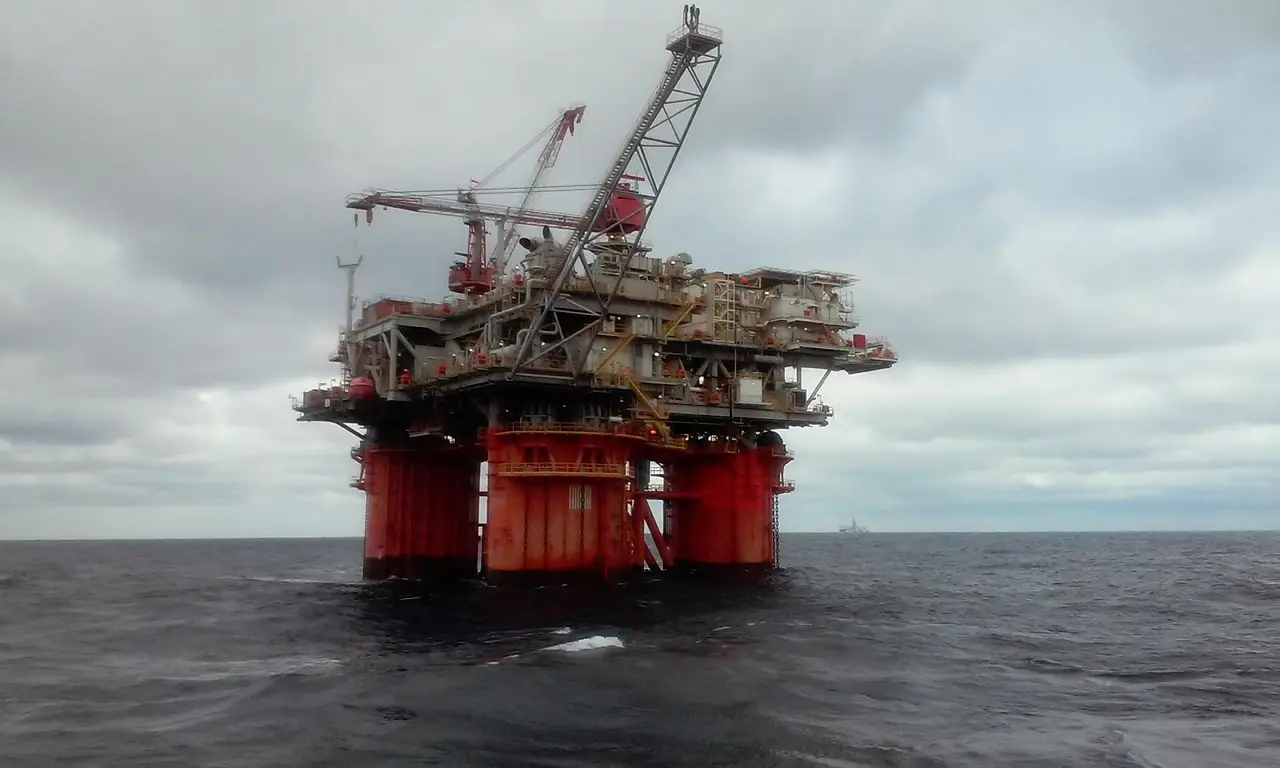
Norway's top court voided three North Sea oil and gas permits as Cop31 negotiators turn to electrification, with China out of the Cop33 race and Gore's data backing a 35% electricity goal.
By Daniel Okafor
5 min read
What's News
- Norway's supreme court declared three North Sea oil and gas permits invalid on climate grounds.
- China ruled out hosting Cop33 in 2028; Uzbekistan, Thailand, Korea and Indonesia remain potential bidders.
- Meeting a 35% electricity share of final energy by 2035 could cut 4-8 billion tonnes of CO2 equivalent per year.
- The IEA expects about 12,000 gigawatts of new electricity generation in the next decade, up from 5,000 in the last.
- Trump sent no US delegation to Cop31 for the second year; Senator Sheldon Whitehouse is the only US senator present.
Norway's supreme court has declared three North Sea oil and gas permits invalid because the state did not account for the harm caused by burning the fuels. The decision does not revoke the permits or shut down the fields. It does force the government to weigh global pollution impacts before awarding future licenses.
The ruling arrived two days after Norwegian prime minister Jonas Gahr Stør told Cop31 leaders that "Norway will do its part" — in a speech that never mentioned the country's ongoing expansion of oil and gas infrastructure.
Tessa Khan, executive director of Uplift, which led legal challenges against the UK's Jackdaw and Rosebank oilfields, called it a "historical ruling" with global reach.
"Today's decision affirms what scientists and campaigners have been saying for years: burning more oil and gas is incompatible with a healthy and secure planet," Khan said. "As Europe's largest petrostate is forced to account for its climate harms, and with El Niño looming large, it is a timely reminder to all governments that their obligation to protect the public from climate harms is not up for political discussion. It is a legal requirement."
What is Norway's counter-argument?
Norway claims its oil and gas is produced more cleanly than that of other major exporters, and that cutting its output would push Europe toward dirtier fuel from countries with worse human rights records. Studies estimate that for every 10 barrels Norway stops producing, other suppliers add six to nine. Campaigners dismiss this as "the drug dealer's defence", noting every exporter wants to be the last one extracting.
Why is China out of the Cop33 race?
The Guardian revealed that China has ruled out hosting Cop33 in 2028 after months of deliberation. Under the 1992 UN Framework Convention on Climate Change, an Asian country should host that summit. India dropped its own early-stage bid months ago, leaving Uzbekistan, Thailand, Korea and Indonesia as potential bidders. No decision is expected at Cop31.
Al Gore, the former US vice-president, said he was disheartened: "I would be very much in favour of that idea [of China hosting the summit]. It's too bad."
China's renewable generation capacity has now outstripped coal, its emissions appear to have declined slightly this year, and clean and low-carbon sectors make up more than a tenth of GDP. Gareth Redmond-King, international lead at the Energy and Climate Intelligence Unit, said China's position as an industrial powerhouse made it a formidable contender. "As a leadership story, China hosting Cop33 would be a big deal," he said. John Kerry, the former US secretary of state, told the Guardian China was leaving the rest of the world behind in low-carbon technology.
What does the electrification push look like?
Fatih Birol, executive director of the International Energy Agency, told the Guardian the world has entered "the age of electricity". He cited one number: the world added about 5,000 gigawatts of electricity in the last decade, and the IEA conservatively expects about 12,000 gigawatts in the next ten years.
"We will still use oil and gas, but the dominant source of energy is becoming electricity," Birol said at the summit in Antalya, Turkey. Outside China, electric car sales rose 60% in the last nine months. AI datacentres and air conditioning are also driving demand.
A proposed Cop31 resolution targets 35% of final energy from electricity by 2035. New data from Climate Trace, the non-profit backed by Gore, shows meeting that goal would cut emissions by about 4 billion tonnes of CO2 equivalent per year — roughly 7% of the global total — even without fully renewable generation. With clean energy, cuts could reach 8 billion tonnes, or 14%.
"You could double the emissions reductions at a fraction of the cost, if they simply do it in the right way," Gore said. He pushed electrified cooking, heating and heat pumps, and pointed to landfills: "The emissions from uncovered landfills are greater than all of the datacentres, AI and others, in the world. It's shovel-ready — you just need sand or clay, to stop the methane."
Who else is shaping the agenda?
More than 90 world leaders have left Antalya, and negotiators from 185 countries now get to work. A first draft of the Cop31 cover decision could come within days, covering 1.5C overshoot, fossil fuel transition and finance.
Sheldon Whitehouse, the only US senator at the summit — Donald Trump sent no delegation for the second year running — wants a carbon price to "end the free to pollute business model" and an explicit denunciation of the fossil fuel industry. "This wasn't something that happened. This was something that was done," he said, adding that ignoring industry denial is "like telling the story of Little Red Riding Hood, but leaving out the wolf."
The UK, meanwhile, still has no plans to publish its suppressed report on ecosystem collapse and national security. Prime Minister Andy Burnham told the summit the UK would reach net zero by 2050 and appointed Madeleine Alessandri, former head of the joint intelligence committee, as climate security adviser. Her report warned of food shortages, mass migration and nuclear conflict; it remains under wraps.
Greenpeace added street theatre, unveiling Danish artist Thomas Dambo's 6-metre Trojan horse in Antalya, stuffed with plastic rubbish and a sign reading: "Stop Plastic. Big Oil's Trojan horse." The first cover decision draft will show whether any of this pressure moves the text.
Source: theguardian.com
More from Daniel Okafor
Show full bio
Correspondent covering money, funding and market shifts around entrepreneurship, startups and venture funding at Business Bearings.
1,991 articles