Ring Robotics Launches $249.99 Indoor Drone and $999.99 Business Rover
Ring's new Robotics line pairs a $249.99 flying indoor camera with a $999.99 business security robot, both driven by an AI Pilot navigation system arriving in late 2026.
By Amara Osei
4 min read
What's News
- Ring Drone Cam, a flying indoor security camera, ships January 27, 2027, priced at $249.99.
- Ring Rover Cam, a business security robot, ships December 16, 2026, priced at $999.99.
- Both devices run on AI Pilot, combining computer vision, on-device sensors, and cloud processing.
- Rover Cam streams up to 4K video and was developed using feedback from Amazon Astro customers.
- Ring introduces TAKE encryption, its strongest default encryption to date, for the new devices.
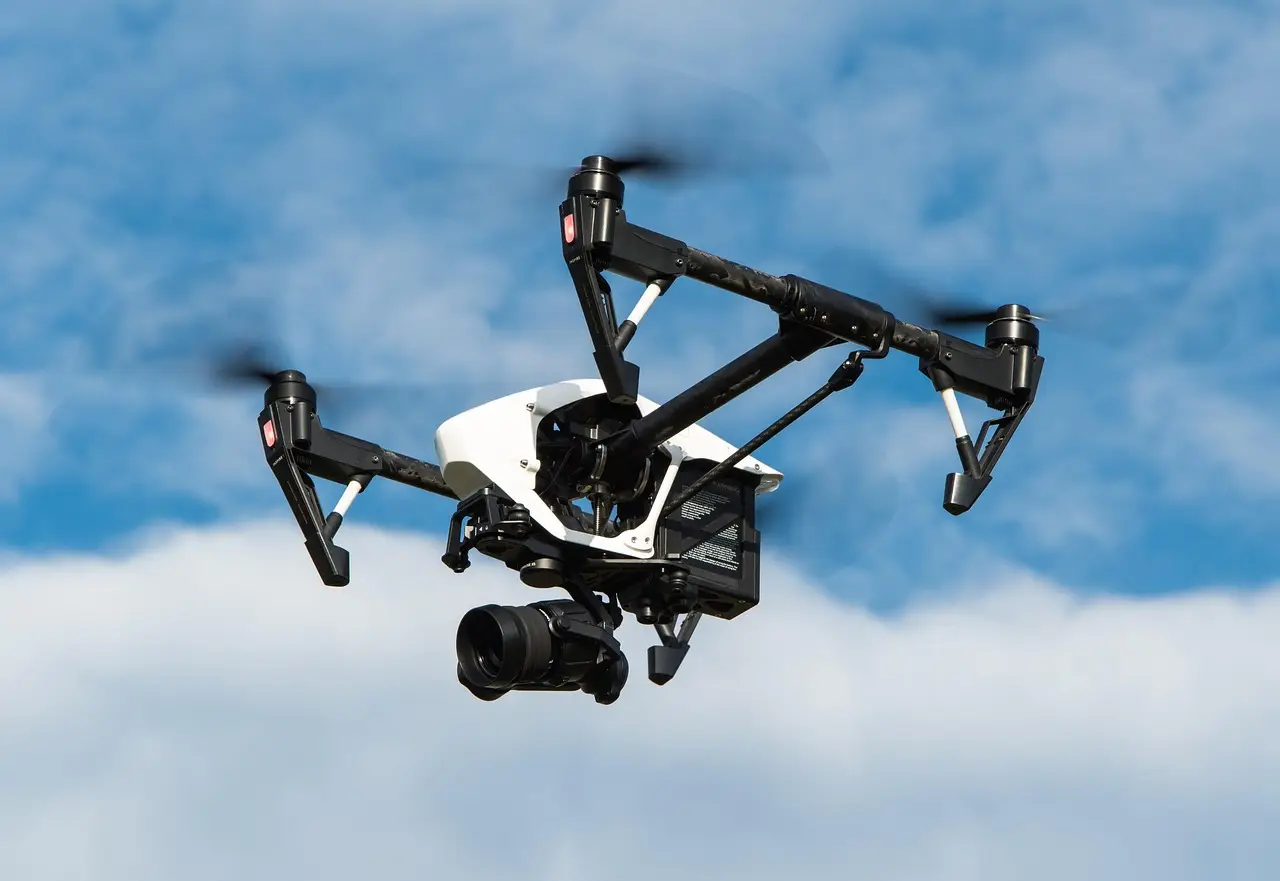
Ring will ship a $249.99 flying indoor security camera on January 27, 2027, and a $999.99 autonomous business security robot on December 16, 2026, under a new product line called Ring Robotics. The Amazon-owned company announced the category on Tuesday as its first move beyond stationary cameras, video doorbells, motion sensors, and alarm systems toward devices that patrol, investigate disturbances, and respond to potential threats on their own.
Both products run on AI Pilot, Ring's proprietary navigation and intelligence system. AI Pilot combines cameras, computer vision models, on-device sensors, and cloud processing to map indoor spaces, identify important locations, and navigate between designated patrol points.
How does the mapping work?
During setup, users can carry Ring Drone Cam through their homes or let Ring Rover Cam explore a business environment autonomously. The system analyzes the space, generates a floor plan, automatically identifies rooms, and suggests locations that may need extra security attention—entrances, windows, cash registers, storage areas, and corridors. Customers can then customize patrol points and set routes based on their preferences. Once a patrol starts, AI Pilot calculates a route while steering around furniture, shelving, and other obstacles.
The approach targets a real cost problem: instead of buying a fixed camera for every room, one mobile device covers the whole property. Ring says the technology reduces the manual effort of monitoring multiple areas.
What does Drone Cam do for homes?
Ring Drone Cam is a flying indoor camera that docks when idle. It launches manually, on scheduled flights, or in response to compatible Ring security alerts. When a connected Ring camera, sensor, or alarm detects activity, the drone can automatically fly to preconfigured patrol points.
The specs are concrete:
- 2K video resolution
- 148-degree field of view
- 360-degree rotation
- Two integrated LED lights that activate in low light
The device integrates with existing Ring cameras, doorbells, sensors, and alarms, and customers can control it through the new Alexa Home Map interface. Ring's use cases include checking whether windows are closed before leaving home or investigating an unexpected security notification while traveling. The drone still needs FCC authorization before it can go on sale in the United States.
What does Rover Cam offer businesses?
Ring Rover Cam is a purpose-built security robot for commercial spaces, and it has a direct lineage: Amazon Astro customers identified mobile security as one of that robot's most useful capabilities, and Ring says it incorporated those lessons into a device focused specifically on business use.
Business owners can send the robot to designated rooms or patrol locations through the Ring app. On arrival, it performs a 360-degree scan. Customers can schedule recurring patrols—after closing or before opening—and when a connected Ring device triggers, Rover travels autonomously to programmed locations to investigate.
The hardware is built for commercial environments:
- An adjustable periscope camera that extends above counters and shelving, with savable height settings per patrol point
- Streaming and recording up to 4K while moving or patrolling
- Continuous person-motion detection, including while docked
- A siren, a visible light tower, and two-way audio for remote communication and deterrence
Unlike systems that record only at fixed monitoring points, Rover captures footage continuously along its route. It ships to U.S. customers on December 16, 2026, at $999.99.
What about privacy and encryption?
Ring built visible and audible signals into both devices to show when they're active. Drone Cam powers down while docked, with its camera disabled until a flight starts. Rover Cam includes a Sleep Mode that retracts its periscope and disables its microphone. Both carry visible recording indicators, and Rover also displays recording information on its onboard screen.
The company is also introducing Throw Away the Key encryption, or TAKE, to protect video from the autonomous devices. Ring calls it its strongest default encryption system to date. The devices announce themselves physically, too: the drone produces audible propeller noise, and Rover's lighting and siren signal that a space is monitored—deterrence layered on top of surveillance.
Certain automated patrol and recording features require a compatible Ring Protect subscription, a recurring-revenue hook attached to the new hardware.
Why the launch matters
Ring founder and Chief Inventor Jamie Siminoff framed the launch as a category bet rather than a product refresh. "For years, customers told us they wanted eyes in the places a fixed camera couldn't reach, and peace of mind in the spots they'd never want one. The honest answer wasn't more cameras; it meant reimagining what a security device could be," Siminoff said. "That kind of invention is hard, and it takes time. But we kept at it until we got it right—and that's Ring Robotics."
He went further on the ambition: "It's not just a new category of security; it's the beginning of a future where proactive, autonomous protection is something every home and every business can have."
The strategy splits cleanly into two markets—a $249.99 flying camera for residential customers and a $999.99 mobile robot for businesses—while tying both into Ring's installed base of cameras and alarms. With Astro-derived robotics experience, AI Pilot navigation, and TAKE encryption in place, Ring has positioned autonomous patrol as its next growth layer rather than an experiment.
Source: pulse2.com
More from Amara Osei
Show full bio
Senior reporter covering companies, deals and strategy in entrepreneurship, startups and venture funding at Business Bearings.
1,952 articles