Amazon's $249 Ring Drone Cam Ships in January to an Unclear Market
Amazon's $249 Ring Drone Cam ships in January with 8 minutes of flight time per charge. But falling burglary rates and existing Ring setups leave its real market unclear.
By Nathan Brooks
3 min read
What's News
- The Ring Drone Cam starts at $249 and ships in January.
- The drone flies for 8 minutes per charge on preset indoor patrol paths.
- The FBI reports burglary fell 15.8% year-over-year in 2025, to a rate of 194 per 100,000 inhabitants.
- Amazon positions the device for indoor monitoring without installing multiple fixed cameras.
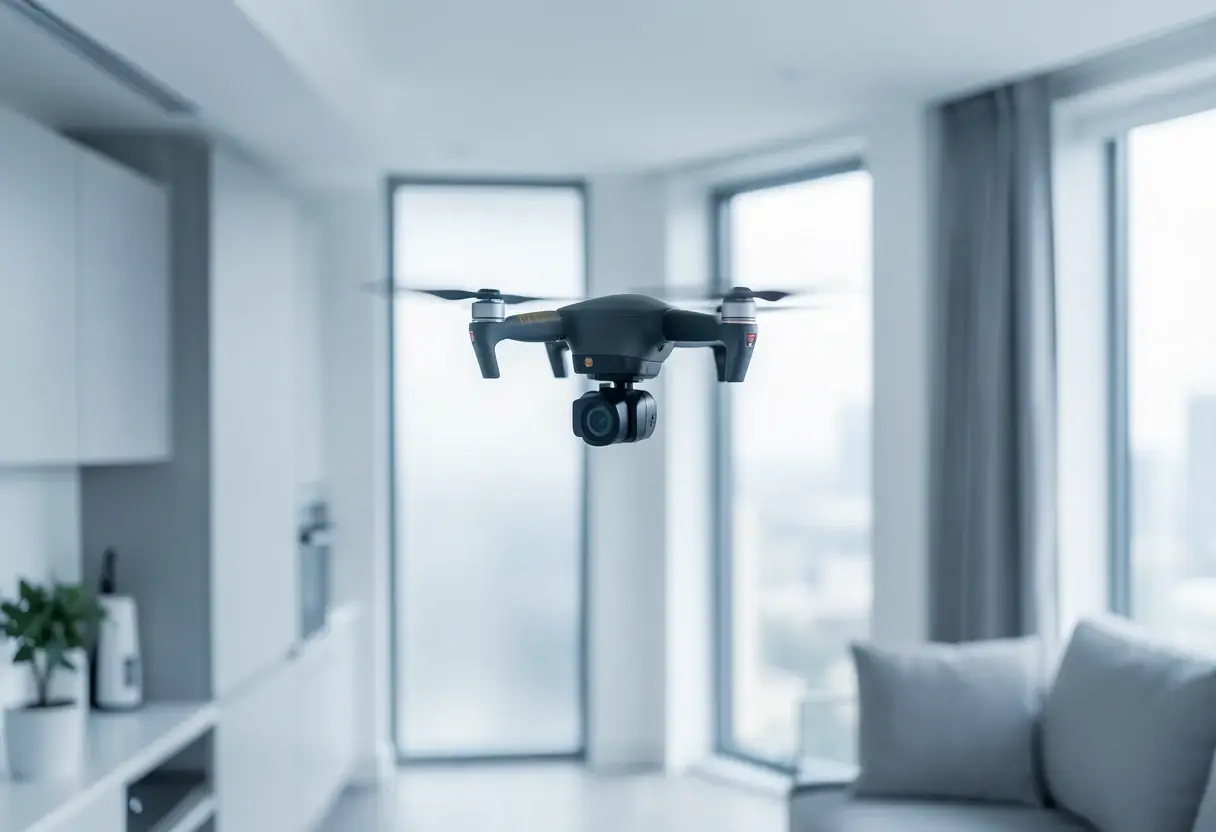
Amazon's new Ring Drone Cam starts at $249, ships in January, and flies for exactly 8 minutes before returning to its charging dock with the camera off. That's the entire hardware proposition. The device patrols preset flight paths inside your home, launching when a security alarm or alert goes off, and Amazon's demo video shows its light scaring off would-be burglars lurking in bushes or testing a door.
The product's stated purpose is straightforward: indoor security checks without installing a wall of fixed cameras. Amazon says the drone is for people who want to stay on top of what's happening inside their home while away, without the elaborate multi-camera setup. At $249, it also sits far below the high end of the security market — this isn't a luxury-only gadget by price.
What does this change for buyers?
Here's the practical question, and the honest answer is: not much, for most households. The drone only makes sense if you already run a Ring-style security stack. It flies in response to alarms, which presumes an existing system, and it complements rather than replaces the outdoor cameras and video doorbells that form Ring's core business. If you're the kind of person who buys a patrol drone, you probably already own the doorbell.
The target buyer narrows further when you look at the data. According to the FBI's report on 2025 national crime statistics, burglary fell 15.8% from the previous year. The rate has dropped from roughly 732 per 100,000 inhabitants in 2006 to a new low of 194. Studies attribute much of that decades-long decline to electronic home security systems and video surveillance — the very product category Ring already dominates. In other words, the mass-market problem this drone solves is shrinking, and largely solved.
That leaves a thin slice of genuine demand. Mansions, homes in high-crime areas, and people with elevated personal risk — public figures, judges, women dealing with stalkers — plausibly want layered indoor monitoring. But buyers with truly significant security needs, the mansion dwellers and celebrities, likely run more robust professional systems than a consumer drone. The realistic customer is what you might call the security-curious: someone without an existing indoor setup who wants flexible coverage cheaply.
The use cases that might actually work
Pet monitoring is one candidate, though most cats and dogs would probably be peeved by a loud buzzing object circling the living room. The remote-piloting angle has novelty value — flying a camera through your own house from the office is undeniably cool. Novelty, however, doesn't sustain a security subscription.
For context, the reviewer's own setup shows where mainstream demand actually sits: a Ring video doorbell for deliveries and visitors, plus an outdoor camera over the garage that captured a black bear on the driveway at night. Those are fixed, cheap, and low-friction. An 8-minute-flight indoor drone adds a moving part — literally — to a job static cameras already do.
Why Amazon is flying this anyway
For Amazon, the math is different from the buyer's. Ring's ecosystem grows with every device, and a drone at $249 is an accessible upsell to millions of existing Ring households, even if only a fraction bite. The product also extends Ring's positioning from doorbell surveillance to whole-home coverage without asking customers to drill holes for indoor cameras.
Still, the core puzzle stands. The author of the original review, a hamster owner with what he calls a moderate attitude toward home security, put it bluntly: he can't see the appeal. Unless Amazon can articulate a sharper use case than "fly around while you're not there," the Drone Cam looks like a clever gadget in search of a customer — one whose January shipment will test whether security enthusiasm runs deeper than the crime statistics suggest it should.
Source: feeds.businessinsider.com
More from Nathan Brooks
Show full bio
News editor covering regulation, policy and their impact on entrepreneurship, startups and venture funding at Business Bearings.
2,031 articles