Ten Local Governments Move to Drop Flock Surveillance Cameras
At least 10 local governments have moved since summer to curb or drop Flock Safety cameras, citing privacy, misuse and ICE access. Flock denies selling data.
By Olivia Hart
5 min read
What's News
- At least 10 local governments and police departments moved against Flock since summer 2025.
- More than 100,000 Flock cameras are in use nationwide.
- Flock cut default data retention for new customers from 30 days to seven in August.
- Two police officers faced criminal consequences in 2025 for using Flock to stalk ex-partners.
- The Flock-Off Act and Ban Flock Act were introduced in Congress in September and October.
At least 10 local governments and police departments have moved since this summer to curb, restrict, or end their use of Flock Safety technology, according to a TechCrunch tally. The backlash targets one of the fastest-deployed surveillance vendors in the United States, and it is spreading from city councils to Congress.
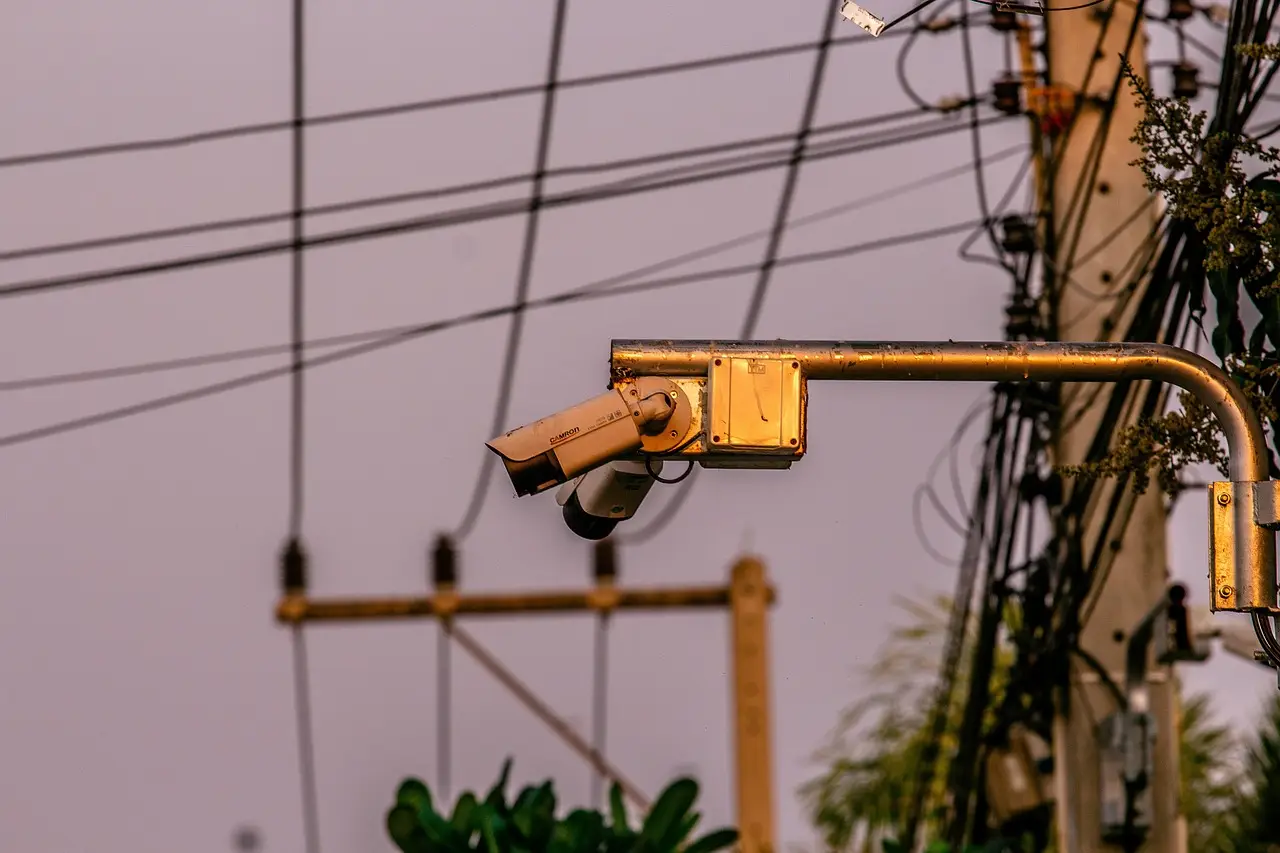
Flock, founded in 2017, sells license plate readers, drones, and microphone-based edge-computing devices that detect gunshots and other sounds. More than 100,000 of its cameras are in use nationwide. The company pitches the tools as crime-solvers — finding missing people, recovering stolen cars, locating suspects.
Which cities are pulling out?
In the past three months alone, Monroe, Ohio; Newburgh, New York; Richmond, Virginia; Hopkinton, Massachusetts; New Bedford, Massachusetts; and Lansing, Michigan have all moved to end their Flock contracts. Police in East Bridgewater and Grafton, Massachusetts, announced plans to stop using the cameras.
Just this week, residents of League City, Texas, voted against their police department's continued use of Flock's license plate readers. The cameras are now set to be removed.
Two more departures came earlier. Asheville, North Carolina, voted in August to terminate its contract, cutting off police access. In September, the El Paso County Sheriff's Office in Colorado announced it would stop using Flock. Sheriff Joseph Roybal said in a press release that discontinuing Flock was the right decision for the county.
"We have the tools, training, and experience to locate and apprehend criminals without relying on Flock cameras," Roybal said.
That is eight-plus defections in roughly one quarter — a rapid pace for procurement decisions that typically take years.
What is driving the backlash?
The stated concerns range from privacy to data-sharing practices to how the contracts were procured in the first place. Tatiana Rice, a senior director for U.S. legislation at The Future of Privacy Forum, said the backlash is not surprising and reflects "growing public skepticism toward technology." Flock is a visible target, she argued: "A camera at the end of your street is tangible in a way that everyday sharing and selling of personal data online is not."
State governments have acted too. Florida barred license plate readers from state highways this summer, while Texas paused state funding for Flock.
Misuse has been documented. In August, an officer in Brentwood, Missouri, was accused of using Flock cameras to stalk his ex-wife during their divorce. In September, an officer from East Texas was sentenced to prison for using Flock to stalk his ex-girlfriend and her family.
How did ICE get involved?
Immigration enforcement access has become a flashpoint. In March, Ithaca, New York, passed a resolution terminating its contract with the Flock Group. The city cited "proven instances of Flock Safety infrastructure being used by federal agents for information purposes even without specific authorizations from the contracting locality." The resolution also said that "either intentionally or through its negligence," Flock had allowed ICE and the ATF to "use query results from its database of state and local ALPR data to investigate and persecute immigrants throughout the United States."
Flock denies the core allegations. "Every day, police departments across the country are using Flock technology to solve serious crimes, locate suspects, find missing people, and make a measurable impact on public safety," the company said in a statement. "Every Flock customer owns its data and controls who it is shared with and how it can be used. Flock does not sell data and does not have a contract with ICE."
The company also announced changes in August: it will shorten the default data-retention period for new customers from 30 days to seven, and agencies now need a case code before searching the database. Notably, both reforms apply to new customers and search access — neither addresses the unauthorized federal access that Ithaca described.
Did residents know what was being installed?
Adam Schwartz of the Electronic Frontier Foundation, a digital privacy nonprofit that has investigated Flock, said many cities adopted the technology just a few years ago and residents likely had no idea. Police departments often decide to use Flock on their own, with little city council oversight, he said.
South Windsor, Connecticut, is the cautionary case. Flock cameras went live there last year without public warning or a vote, according to local reports. In October, the town voted to remove them.
"Grassroots activists across the country have been demanding that city councils exercise their procurement power to refuse to pay for ALPRs," Schwartz said. He added that "many city councils are listening."
Who is keeping Flock — with conditions?
Not every government is cutting ties. Cleveland, Ohio, voted this summer to extend its Flock contract, but with new restrictions. The city limited searches related to immigration and cut off database access for the Northeast Ohio Regional Fusion Center — effectively a federal intelligence agency — leaving only the Cleveland Police with access.
"They are used and needed for investigative purposes," the city said in a comment. "The Department of Public Safety is currently reviewing responses to an RFP that was sent out to other vendors that provide the same technology as Flock."
"These tools can offer real public safety benefits, but communities are clearly interested in ensuring that those benefits are not at the cost of their civil liberties," Rice said.
What is happening in Washington?
Federal action is now on the table. In September, Rep. Thomas Massie, a Kentucky Republican, introduced the Flock-Off Act to bar the use of federal money for "Flock-style surveillance" and add safeguards. In October, Sen. Bernie Sanders (I-Vt.), Rep. Alexandria Ocasio-Cortez (D-N.Y.), and Sen. Jeff Merkley (D-Ore.) introduced the Ban Flock Act to end "the rise of AI-powered surveillance cameras."
President Donald Trump, in September, said he liked Flock's technology "because of law enforcement." A Reuters poll the same month found more Americans dislike the technology than like it.
With Democrats now controlling Congress and public opinion split, surveillance procurement looks set to become a durable political fight — and Flock's retention reforms have not yet stopped the cancellations.
Original: 404media.co
More from Olivia Hart
Show full bio
Staff writer covering people, launches and day-to-day practice in entrepreneurship, startups and venture funding at Business Bearings.
1,548 articles