Fifa’s 2030 World Cup rights tender points to hydration breaks
Fifa’s 2030 World Cup TV tender flags hydration and cooling breaks, with a $2m-$9m per-game ad model and higher U.S. rights bids for 2030 under consideration.
By Amara Osei
3 min read
What's News
- Fifa’s 2030 TV-rights tender includes advertising during hydration breaks.
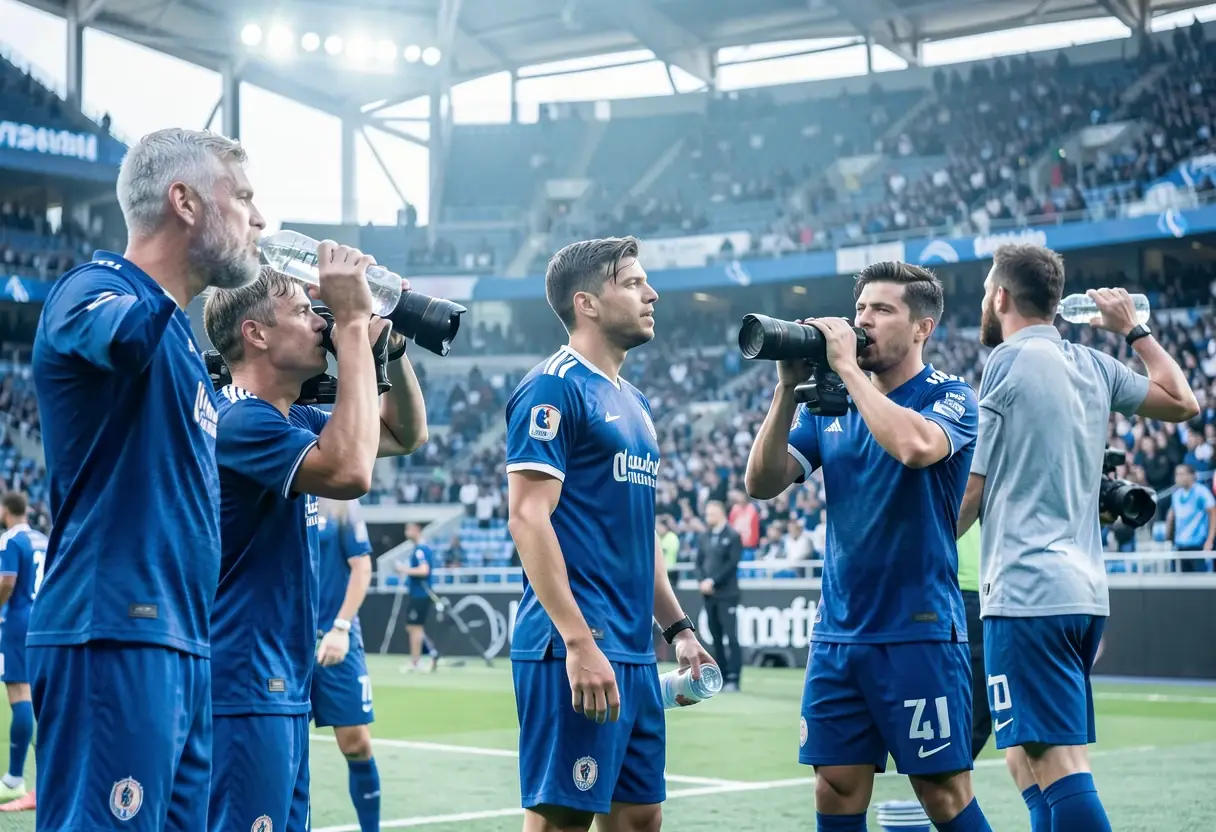
- Hydration breaks lasted three minutes midway through each half in all 104 matches at the 2026 World Cup.
- The Hollywood Reporter put hydration-break advertising at $2 million-$9 million per game; estimates put Fox’s take at $250 million.
- Guideline valued Fox’s overall advertising yield at $835 million, nearly twice the $485 million rights fee.
- U.S. and Puerto Rico bids are due Thursday for rights expected at $1.5 billion-$2 billion.
The Hollywood Reporter reported that hydration breaks generated $2 million to $9 million in advertising revenue per game at the 2026 World Cup, fueling estimates that Fox took in $250 million. Guideline, a media sales analyst, valued Fox’s overall advertising yield from the tournament at $835 million, almost double the $485 million rights fee paid to Fifa.
Against that backdrop, Fifa’s tender documents for 2030 World Cup TV rights include a provision for broadcasters to sell advertisements during hydration breaks. The Guardian said the language strongly indicates that the controversial stoppages will remain, though Fifa insists it has yet to decide whether to use them.
What do the 2030 tender documents show?
Fifa sources told the Guardian that the tenders were designed to cover all potential options. The Guardian reported that the documents flag both the possibility of hydration breaks and their potential commercial benefits for broadcasters.
The documents also reference cooling breaks, the welfare mechanism used by Uefa that stops play for 90 seconds to three minutes when the on-field temperature reaches 28C. Morocco, Spain and Portugal will host most of the 2030 tournament, with three matches in South America.
Who is bidding for the broadcast rights?
The Guardian reported that Fifa has awarded World Cup rights to Netflix in Spain and to public-service broadcaster SBS in Australia. The sale for the United States and Puerto Rico is still underway, and Thursday is the deadline to bid.
The U.S. rights are expected to fetch between $1.5bn (£1.14bn) and $2bn in an auction that is expected to feature bids from Netflix and all streaming services alongside traditional broadcasters. The Guardian said Fifa did not benefit financially from the breaks last summer, but anticipated hydration-break advertising could drive up prices for 2030.
Fifa declined to comment on the documents. The tender gives bidders a hydration-break advertising option without settling the 2030 tournament policy.
What drove the 2026 change?
A three-minute hydration break midway through each half was introduced for the first time at all 104 matches at the 2026 World Cup. The stated purpose was player welfare, and the change created advertising inventory for broadcasters, particularly the U.S. rights holders Fox Sports and Telemundo.
Fifa said the move was “to protect the integrity of the World Cup by ensuring all matches were played in the same conditions.” The federation also acknowledged the broadcaster benefit, which the Guardian reported alongside the earlier advertising estimates.
Fifa used cooling breaks on an ad hoc basis before adopting hydration breaks wholesale for 2026. The decision followed high temperatures that produced stoppages in about 60% of matches at the 2025 Club World Cup in the United States.
The 2026 policy covered all 104 matches, including 31 played in climate-controlled stadiums. It replaced the earlier reliance on ad hoc cooling breaks with a three-minute hydration break in every game.
What happens at the 2027 Women’s World Cup?
Mandatory hydration breaks will not be used at the 2027 Women’s World Cup in Brazil, Fifa said. The Guardian reported that temperatures there are forecast to be cooler than in many cities during the men’s tournament the previous year.
Thursday’s U.S. and Puerto Rico bid deadline is the next commercial test, with rights expected at $1.5bn to $2bn. Fifa’s unresolved decision leaves bidders valuing potential hydration-break and cooling-break inventory before the 2030 tournament’s final welfare protocols are set.
Source: theguardian.com
More from Amara Osei
Show full bio
Senior reporter covering companies, deals and strategy in entrepreneurship, startups and venture funding at Business Bearings.
2,248 articles